 By Anzo Trader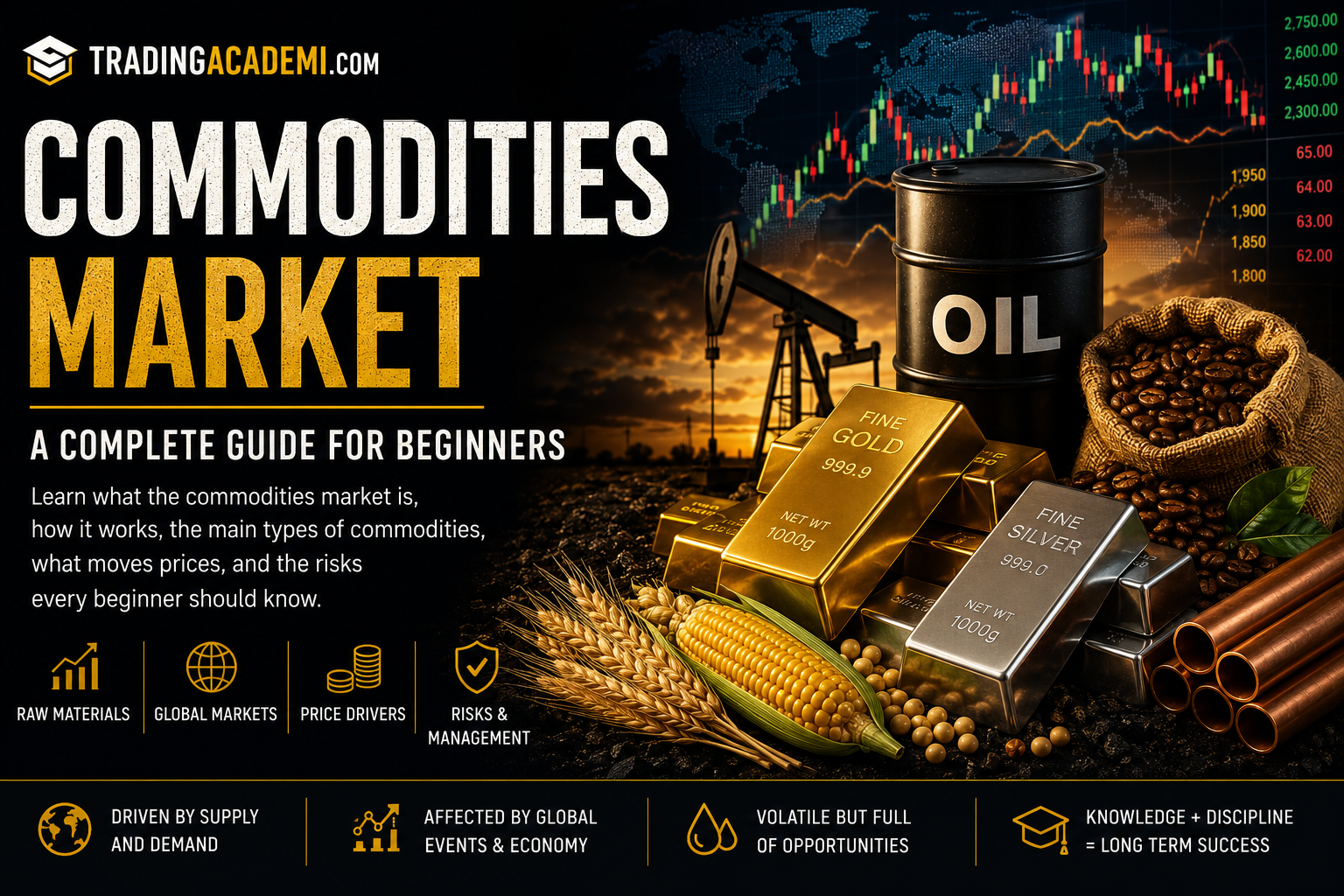
The commodities market is one of the oldest and most important financial markets in the world. Long before stocks, cryptocurrencies, or online trading platforms existed, people were already buying and selling physical goods such as gold, grain, oil, cotton, and livestock.
Today, commodities are still a major part of the global economy. Oil affects transportation and energy prices. Gold is watched during uncertain economic periods. Wheat, corn, coffee, and sugar influence food prices around the world. Natural gas, copper, and other raw materials are closely connected to industrial growth and global demand.
For beginners, the commodities market can seem confusing because it is different from the stock market. When you buy a stock, you are buying ownership in a company. When you trade a commodity, you are dealing with the price of a physical resource or raw material.
In this guide, we will explain what the commodities market is, how it works, the main types of commodities, why prices move, who participates in the market, and what risks beginners should understand before trading or investing.
What Is the Commodities Market?
The commodities market is a financial market where raw materials and primary goods are bought and sold.
A commodity is usually a basic product that can be used in commerce and is often interchangeable with the same product from another producer.
For example, one barrel of crude oil is generally treated as the same type of product as another barrel of the same grade. One ounce of gold is usually considered equivalent to another ounce of gold of the same quality.
This is different from products like cars, smartphones, or clothing, where brand, design, features, and quality can vary greatly.
Commodities are important because they are used to produce many goods and services in the real economy. Energy, food, metals, and agricultural products all affect businesses, consumers, and governments.
Why Does the Commodities Market Exist?
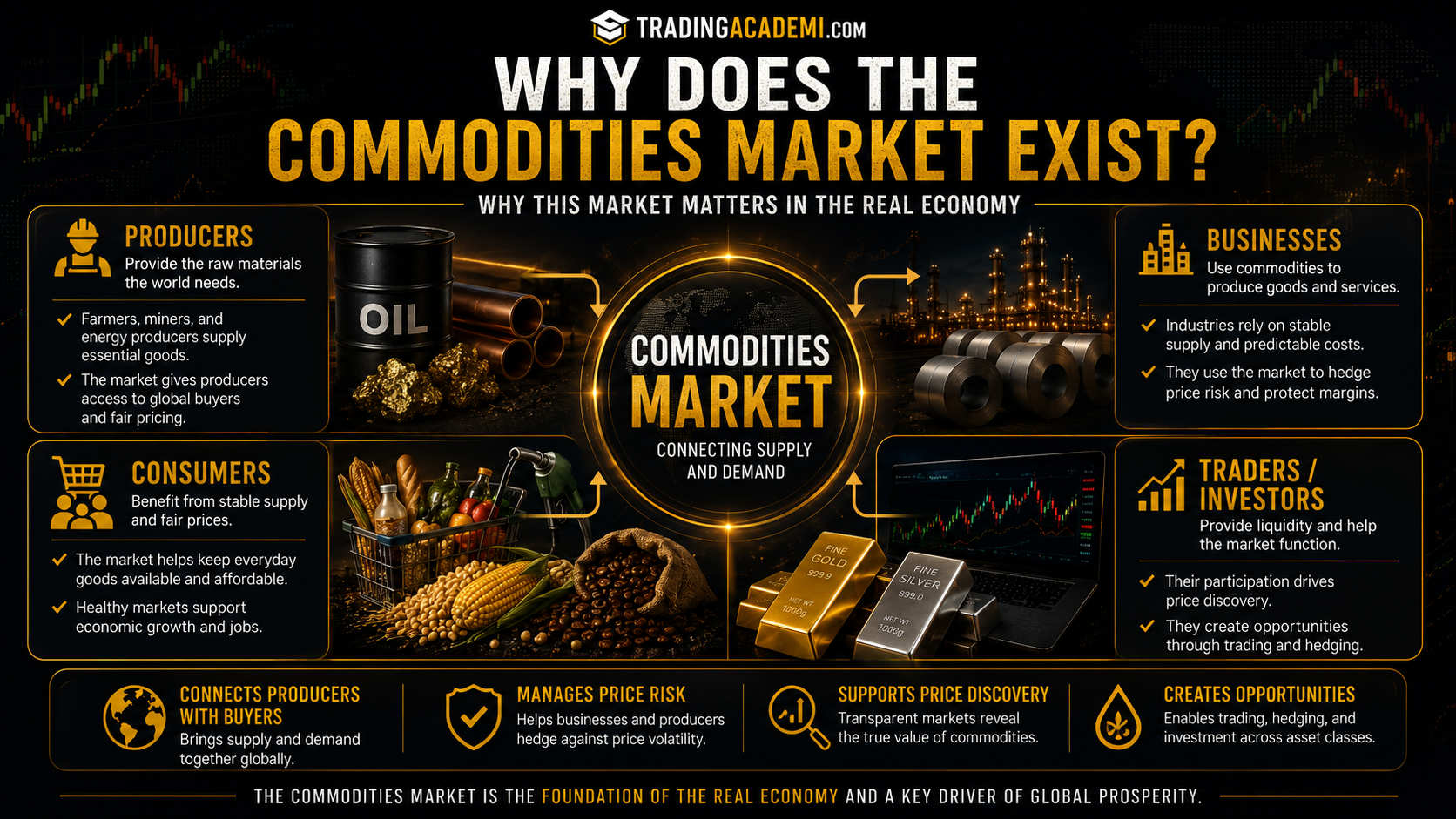
The commodities market exists because producers, consumers, businesses, and investors need a way to buy, sell, price, and manage risk related to raw materials.
A farmer may want to lock in a selling price for crops before harvest.
An airline may want to manage the risk of rising fuel prices.
A manufacturer may need copper, aluminum, or steel for production.
A trader may want to speculate on price movements in gold, oil, or coffee.
An investor may use commodities to diversify a portfolio.
Without organized commodity markets, businesses would have a harder time planning costs, managing supply, and protecting themselves from price changes.
The commodities market helps create price transparency and allows participants to transfer risk.
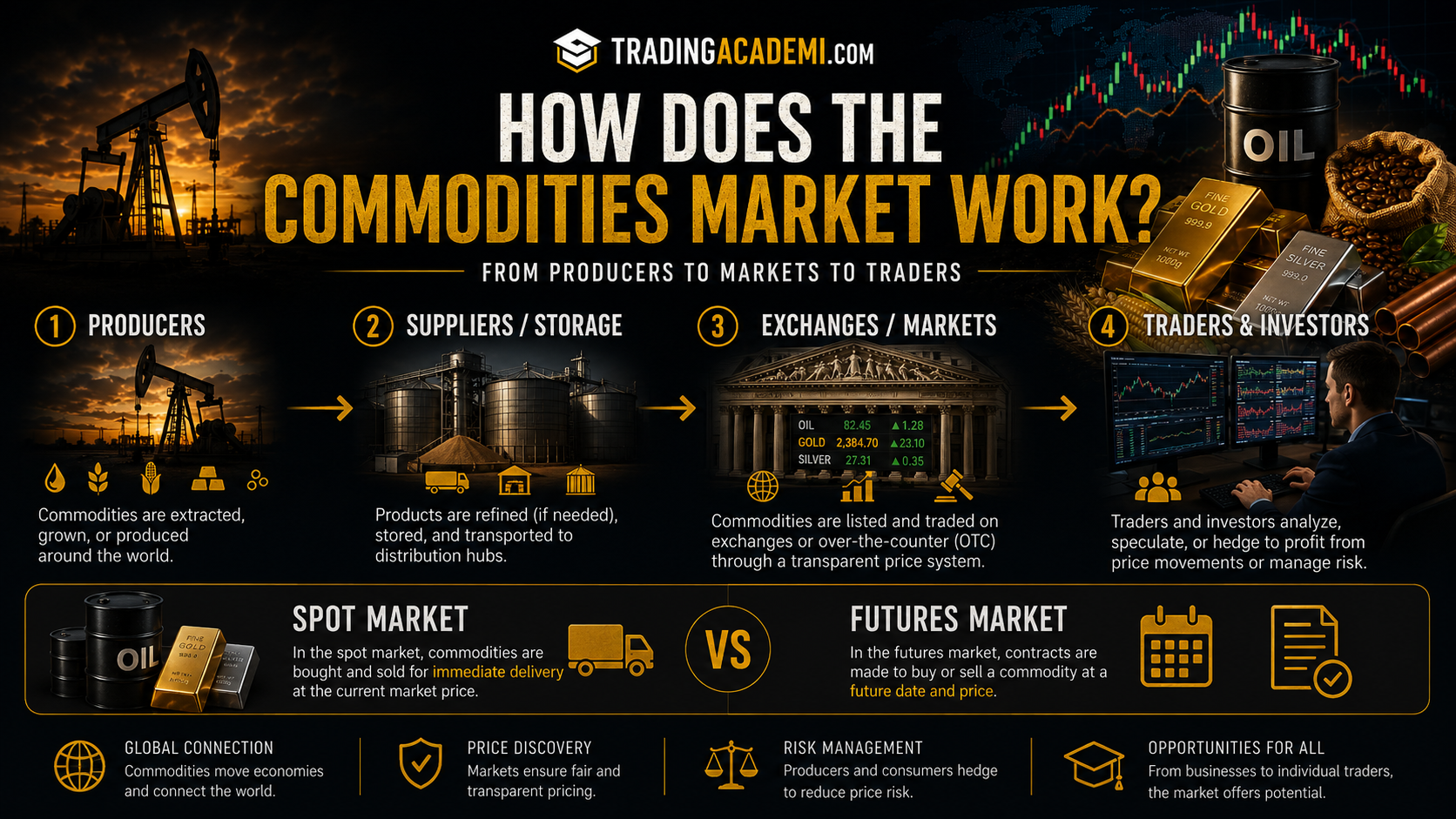
How Does the Commodities Market Work?
Commodities can be traded in several ways.
Some commodities are traded physically. This means the actual product is bought and delivered. For example, a company may buy physical crude oil, wheat, or copper for business use.
However, most traders and investors do not want to receive barrels of oil or tons of wheat. Instead, they often trade commodity-related financial instruments.
The most common way commodities are traded is through futures contracts.
A futures contract is an agreement to buy or sell a commodity at a specific price on a future date.
For example, an oil futures contract may allow a buyer and seller to agree today on a price for oil that will be delivered in the future.
Futures markets are used by both hedgers and speculators.
Hard Commodities vs Soft Commodities
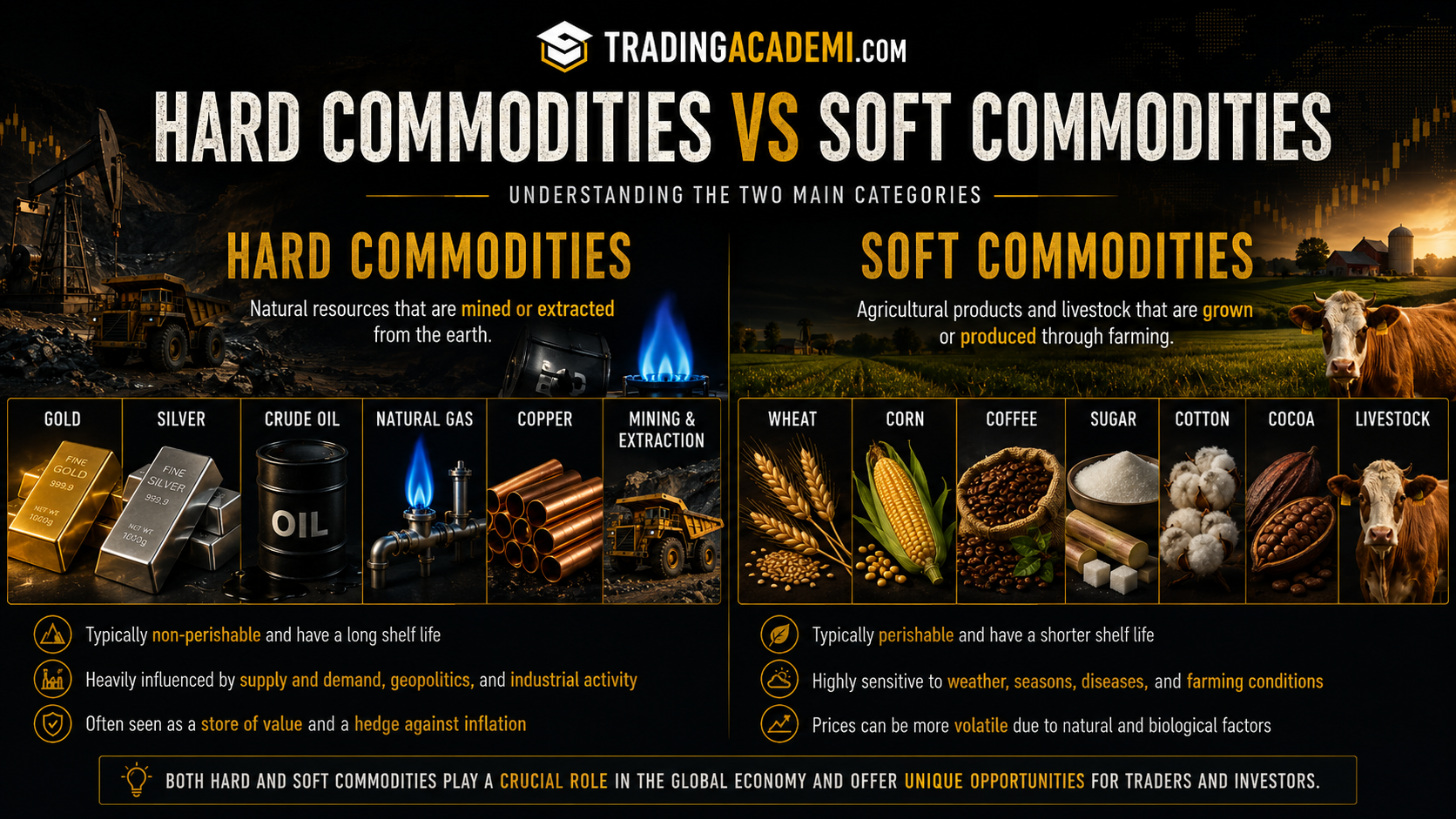
Commodities are usually divided into two main categories: hard commodities and soft commodities.
Hard Commodities
Hard commodities are natural resources that are mined or extracted from the earth.
Examples include:
Gold
Silver
Crude oil
Natural gas
Copper
Platinum
Iron ore
Hard commodities are closely linked to energy demand, industrial activity, inflation expectations, currency movements, and geopolitical events.
For example, crude oil prices can move because of supply decisions, global demand, wars, sanctions, production cuts, or changes in economic growth.
Gold often attracts attention during periods of uncertainty because many investors view it as a store of value.
Soft Commodities
Soft commodities are agricultural products or goods that are grown rather than mined.
Examples include:
Coffee
Sugar
Wheat
Corn
Soybeans
Cotton
Cocoa
Soft commodity prices can be strongly affected by weather, crop conditions, seasonal cycles, disease, supply chain problems, and global demand.
For example, a drought in a major wheat-producing region can reduce supply and push prices higher. A strong harvest can increase supply and put pressure on prices.
Main Types of Commodities
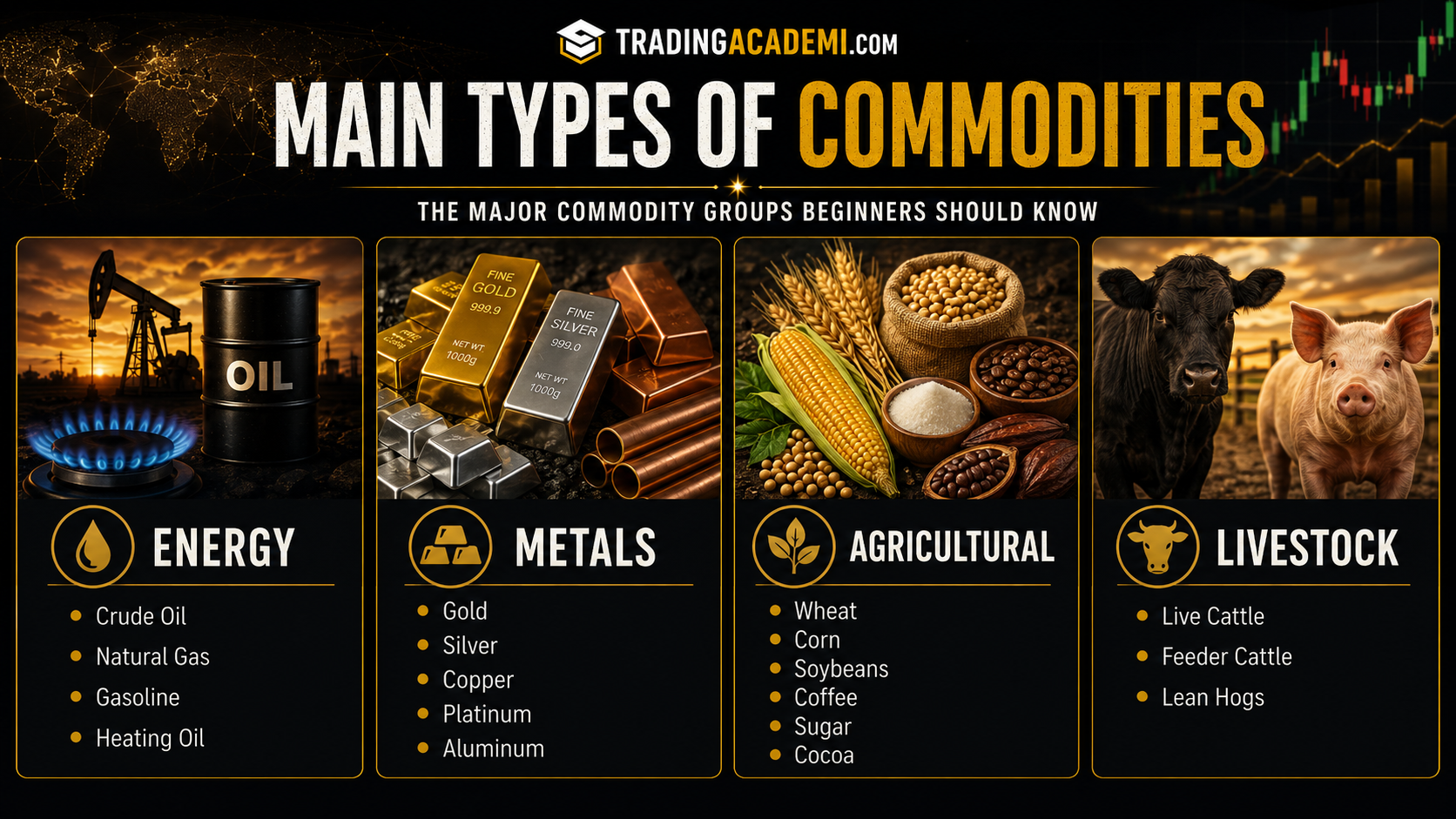
The commodities market includes many products, but beginners can understand it better by grouping commodities into major categories.
1. Energy Commodities
Energy commodities are used to produce power, fuel transportation, and support industrial activity.
Common examples include:
Crude oil
Natural gas
Gasoline
Heating oil
Energy commodities are among the most actively watched markets in the world because energy prices affect almost every part of the economy.
When oil prices rise, transportation costs may increase. This can affect airlines, shipping companies, manufacturers, and consumers.
Natural gas prices can affect heating costs, electricity generation, and industrial production.
Energy prices are often influenced by supply and demand, OPEC decisions, geopolitical tensions, weather, inventories, and global economic growth.
2. Metal Commodities
Metal commodities include precious metals and industrial metals.
Precious Metals
Precious metals include:
Gold
Silver
Platinum
Palladium
Gold is often watched as a safe-haven asset during uncertain periods. Silver has both investment demand and industrial uses.
Industrial Metals
Industrial metals include:
Copper
Aluminum
Nickel
Zinc
Iron ore
Industrial metals are closely connected to construction, manufacturing, technology, infrastructure, and economic growth.
Copper is sometimes called a useful indicator of economic health because it is used in many industries, including construction, electronics, and energy infrastructure.
3. Agricultural Commodities
Agricultural commodities include crops and food-related raw materials.
Examples include:
Wheat
Corn
Soybeans
Coffee
Sugar
Cocoa
Cotton
Agricultural prices are affected by weather, harvest expectations, global demand, export restrictions, transportation costs, and seasonal cycles.
These markets can be volatile because supply can change quickly due to droughts, floods, pests, or disease.
4. Livestock Commodities
Livestock commodities include animals and animal-related products traded in financial markets.
Examples include:
Live cattle
Feeder cattle
Lean hogs
Livestock prices can move because of feed costs, disease outbreaks, consumer demand, weather conditions, and supply levels.
This part of the commodities market may be less familiar to beginners, but it plays an important role in food supply and agricultural economics.
Spot Market vs Futures Market
To understand commodities, beginners should know the difference between the spot market and the futures market.
Spot Market
The spot market is where commodities are bought and sold for immediate delivery or near-term settlement.
The spot price is the current market price for a commodity.
For example, the spot price of gold represents the current price at which gold can be bought or sold.
Futures Market
The futures market is where contracts are traded for delivery at a future date.
For example, a trader may buy a crude oil futures contract for delivery several months later.
Futures prices can be different from spot prices because they reflect expectations about future supply, demand, storage costs, interest rates, and market conditions.
Most retail traders who trade commodities are usually trading futures contracts, commodity ETFs, or contracts for difference depending on their country and broker.
Who Uses the Commodities Market?
The commodities market is used by many types of participants.
Producers
Producers are companies or individuals that create or extract commodities.
Examples include farmers, mining companies, oil producers, and energy firms.
A producer may use the market to lock in selling prices and reduce uncertainty.
Consumers and Businesses
Many companies need commodities as inputs for their business.
For example, airlines need fuel. Food companies need wheat, sugar, coffee, or cocoa. Manufacturers may need copper, aluminum, or steel.
These businesses may use commodity markets to manage price risk.
Traders and Speculators
Traders and speculators try to profit from price movements.
They may not want the physical commodity. Instead, they focus on changes in price.
Speculators provide liquidity to the market, but they also take on risk.
Investors
Some investors use commodities to diversify their portfolios.
Commodities may sometimes behave differently from stocks and bonds, especially during periods of inflation or supply shocks.
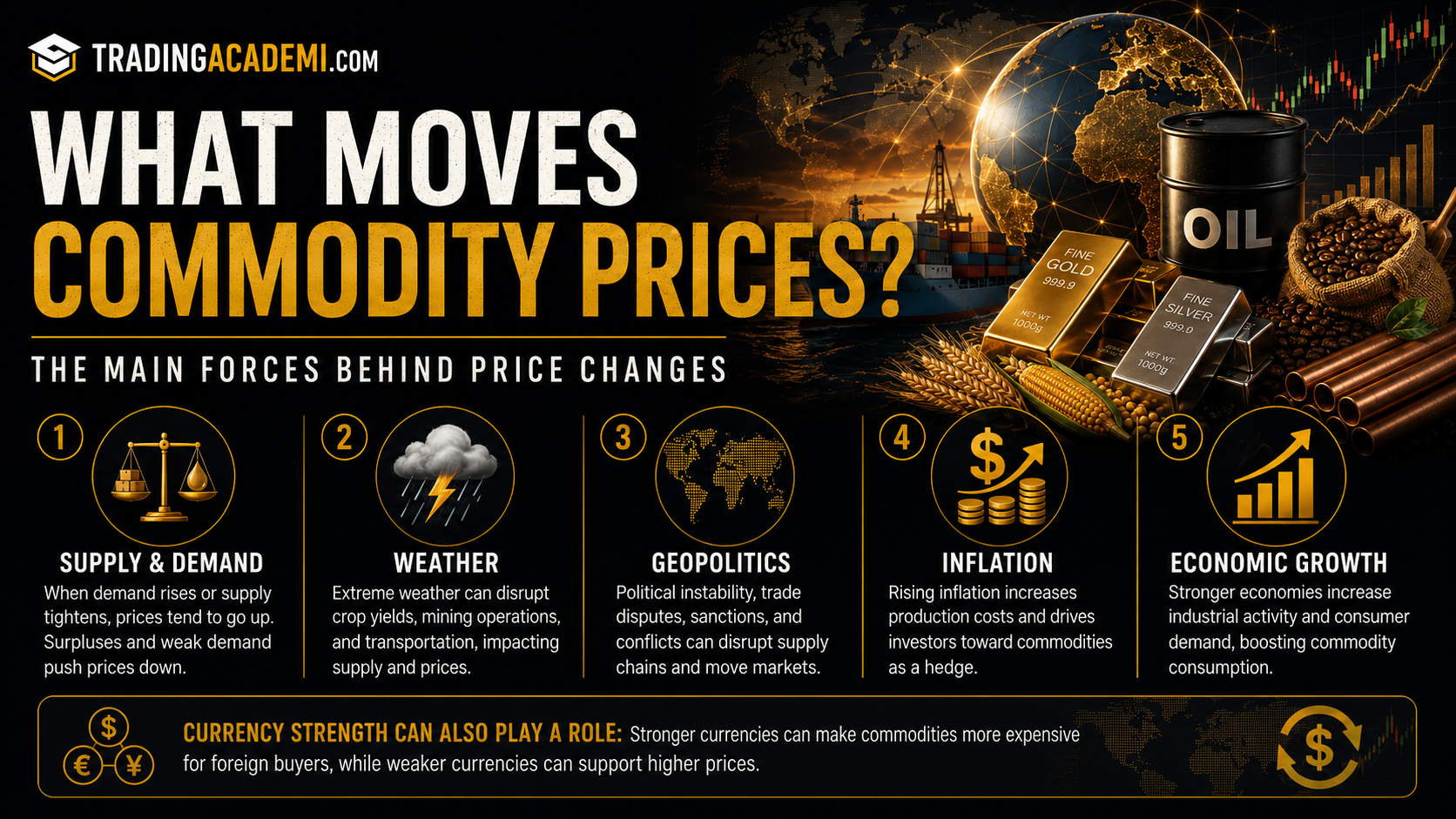
What Makes Commodity Prices Move?
Commodity prices are driven mainly by supply and demand, but many different factors can influence that balance.
Supply and Demand
If demand rises faster than supply, prices may increase. If supply is higher than demand, prices may fall.
For example, if global demand for oil increases while production stays limited, oil prices may rise.
Weather
Weather is especially important for agricultural commodities and natural gas.
Droughts, floods, storms, and extreme temperatures can affect crop yields, energy consumption, and supply chains.
Geopolitical Events
Wars, sanctions, political instability, and trade restrictions can strongly affect commodities, especially oil, gas, wheat, and metals.
Inflation
Commodities often attract attention during inflationary periods because raw material prices are closely linked to the cost of goods and services.
Currency Strength
Many commodities are priced in U.S. dollars. When the dollar strengthens, commodities can become more expensive for buyers using other currencies, which may affect demand.
Inventories
Inventory data can move prices. If inventories are lower than expected, prices may rise. If inventories are higher than expected, prices may fall.
Economic Growth
Strong economic growth can increase demand for energy and industrial metals. Weak growth can reduce demand and pressure prices lower.
Example: Why Oil Prices Move
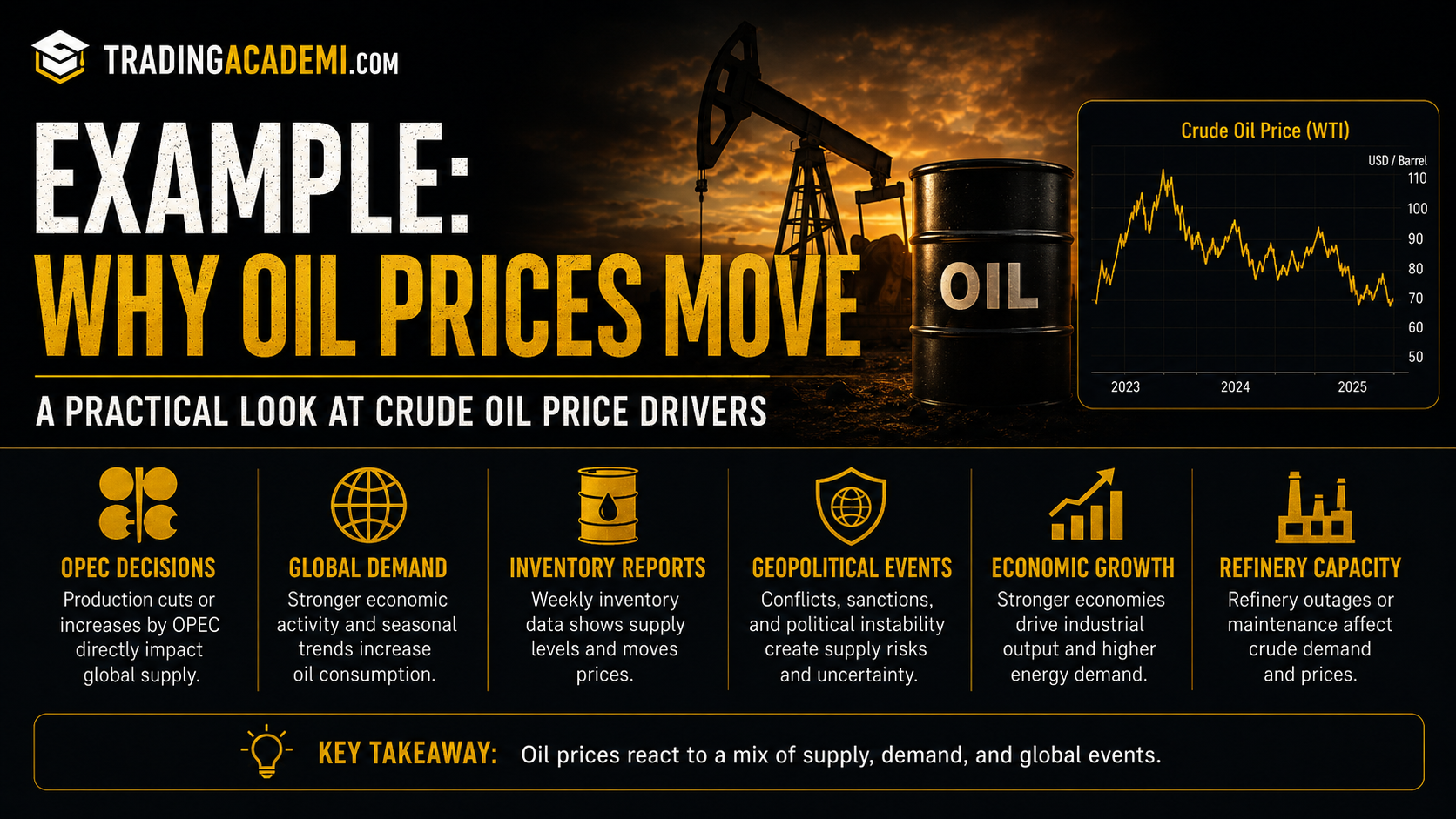
Crude oil is one of the most important commodities in the world.
Oil prices can move because of:
OPEC production decisions
Global demand
War or political instability
Inventory reports
Refinery capacity
Currency movements
Economic growth
Transportation demand
For example, if global demand increases and producers limit supply, oil prices may rise. But if the economy slows and demand weakens, oil prices may fall.
Oil is also sensitive to geopolitical risk because supply disruptions can affect global markets quickly.
Example: Why Gold Prices Move
Gold is different from many other commodities because it is not only used in industry. It is also seen by many investors as a store of value.
Gold prices can move because of:
Inflation expectations
Interest rates
U.S. dollar strength
Central bank buying
Market uncertainty
Geopolitical risk
Investor sentiment
When investors are worried about the economy or financial stability, demand for gold may increase. However, gold can also fall when interest rates rise or when the dollar strengthens.
Commodity Trading vs Commodity Investing
Commodity trading and commodity investing are not the same.
Commodity trading usually focuses on short-term price movements. Traders may use futures, charts, technical analysis, market data, and news events to make decisions.
Commodity investing is often more long-term. Investors may buy commodity ETFs, mining stocks, energy companies, or diversified commodity funds.
Trading usually requires more active decision-making and stronger risk management. Investing may be less active, but it still involves risk.
Before choosing an approach, beginners should understand the product they are using.
How Beginners Can Access Commodities
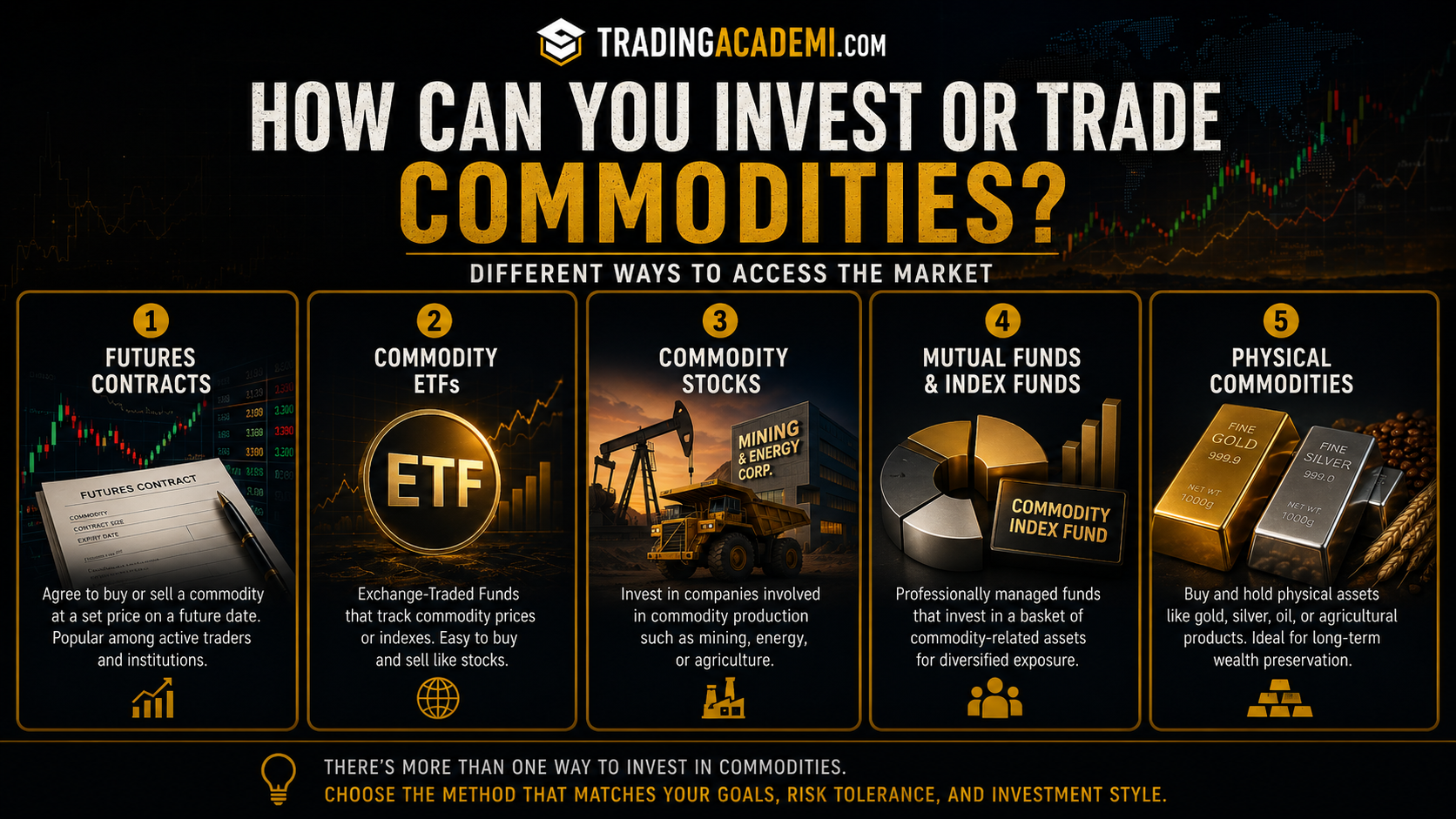
Beginners can access commodities in several ways.
Commodity ETFs
Commodity ETFs can track the price of a commodity or a group of commodities. They are easier to buy and sell than futures for many investors.
Futures Contracts
Futures contracts are common in commodity markets, but they can be complex and involve leverage. Beginners should be careful and understand contract size, margin, expiration, and volatility.
Commodity Stocks
Investors can buy shares of companies involved in commodities, such as oil companies, mining companies, or agricultural businesses.
However, commodity stocks are not the same as the commodity itself. A mining stock may be affected by company management, costs, debt, and operations.
Mutual Funds and Index Funds
Some funds provide broad exposure to commodities or commodity-related companies.
Physical Commodities
Some investors buy physical gold or silver. This involves storage, insurance, spreads, and security considerations.
Advantages of Commodities
Commodities can offer several benefits.
They may provide diversification because they can behave differently from stocks and bonds.
They may also attract attention during inflationary periods because raw material prices are connected to real-world costs.
Commodities can create trading opportunities because prices often react strongly to news, supply changes, and economic data.
Some commodities, such as gold, may be used by investors during uncertain market conditions.
Risks of the Commodities Market
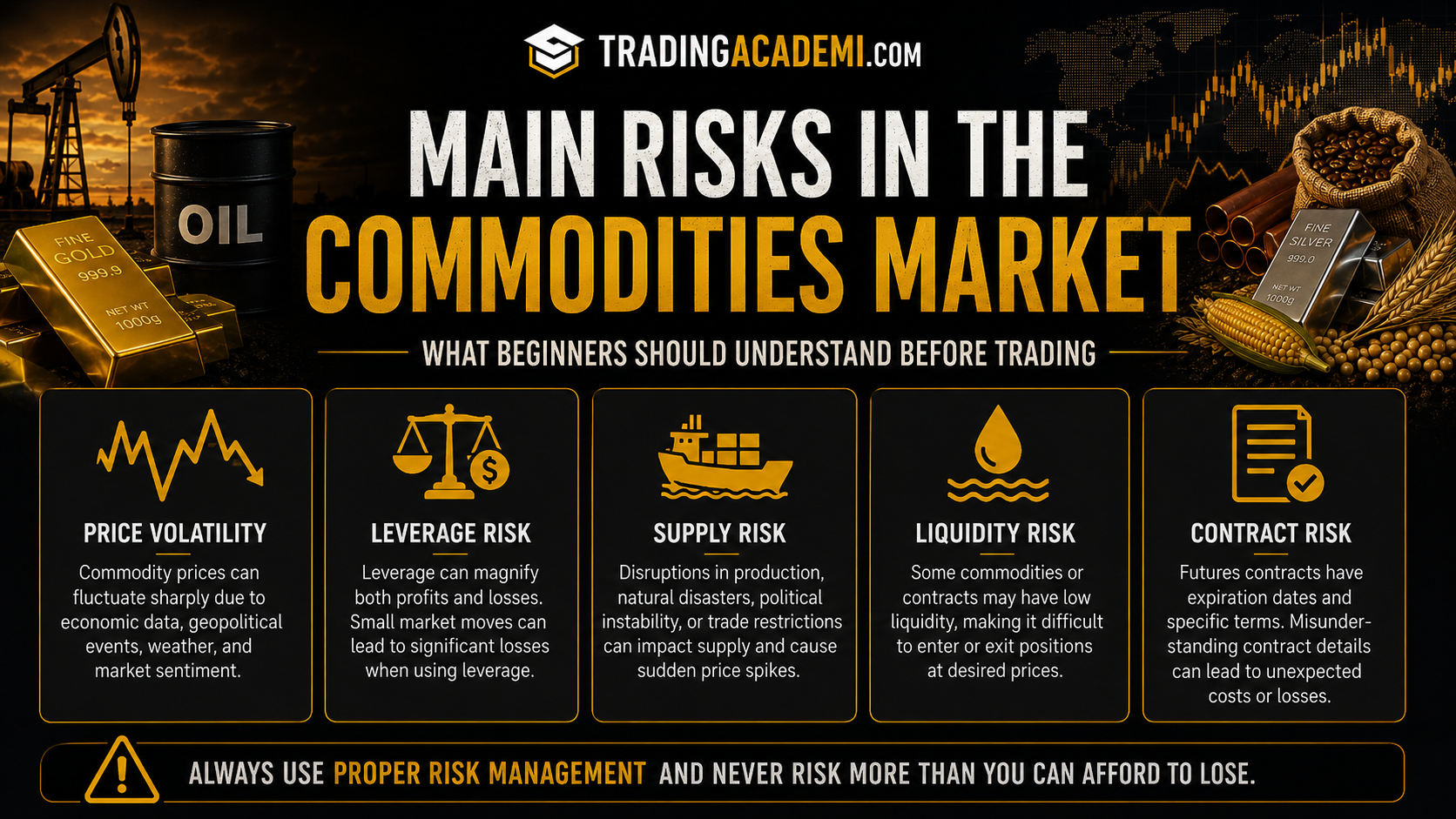
The commodities market can be risky, especially for beginners.
Commodity prices can be very volatile. A weather report, inventory release, political event, or central bank decision can move prices quickly.
Futures trading can involve leverage, which can magnify both gains and losses.
Some commodities also have complex supply chains. A beginner may look only at a chart and ignore important factors such as storage, seasonality, production costs, export restrictions, or contract expiration.
Liquidity can also vary depending on the commodity and the contract month.
This is why beginners should learn the market carefully before risking real money.
Common Mistakes Beginners Make
One common mistake is trading commodities without understanding what drives the price.
For example, trading oil without following inventories, supply decisions, and global demand can be dangerous.
Another mistake is using too much leverage. Futures contracts can move quickly, and small price changes can have a large financial impact.
Some beginners also ignore contract expiration. Futures contracts have expiration dates, and traders must understand how rollover works.
Another mistake is treating all commodities the same. Gold, oil, wheat, coffee, and copper do not move for the same reasons.
Each commodity has its own behavior.
Commodities Market vs Stock Market
The stock market is based on ownership in companies. The commodities market is based on physical goods and raw materials.
A stock investor may analyze revenue, earnings, management, and business growth.
A commodity trader may analyze supply, demand, inventories, weather, inflation, and geopolitical events.
Stocks can sometimes rise because a company grows. Commodities usually move because of changes in physical supply and demand, macroeconomic conditions, and market expectations.
Both markets can offer opportunities, but they require different types of analysis.
Recommended reading:
What Is the Stock Market?
Commodities Market vs Forex Market
The forex market focuses on currencies. The commodities market focuses on raw materials.
However, the two markets are often connected.
Many commodities are priced in U.S. dollars. This means the strength or weakness of the dollar can affect commodity prices.
Some currencies are also connected to commodity exports. For example, countries that export oil, metals, or agricultural products may see their currencies influenced by commodity prices.
Recommended reading:
What Is the Forex Market?
Final Thoughts
The commodities market is a key part of the global financial system. It connects producers, consumers, businesses, traders, and investors through the buying and selling of raw materials.
Commodities include energy products, metals, agricultural goods, and livestock. Each commodity has its own supply and demand drivers, risks, and trading behavior.
For beginners, the most important lesson is that commodities are not just chart patterns. They are real-world resources affected by weather, geopolitics, inflation, inventories, and economic activity.
A smart trader or investor does not enter the commodities market only because a price is moving. They first understand what the commodity is, what drives its price, how the trading instrument works, and how much risk they are taking.
The commodities market can offer opportunity, but it requires knowledge, patience, and discipline.
Educational Disclaimer
This article is for educational purposes only and should not be considered financial advice. Trading and investing involve risk, including the possible loss of capital. Always do your own research or consult a qualified financial professional before making financial decisions.