 By Anzo Trader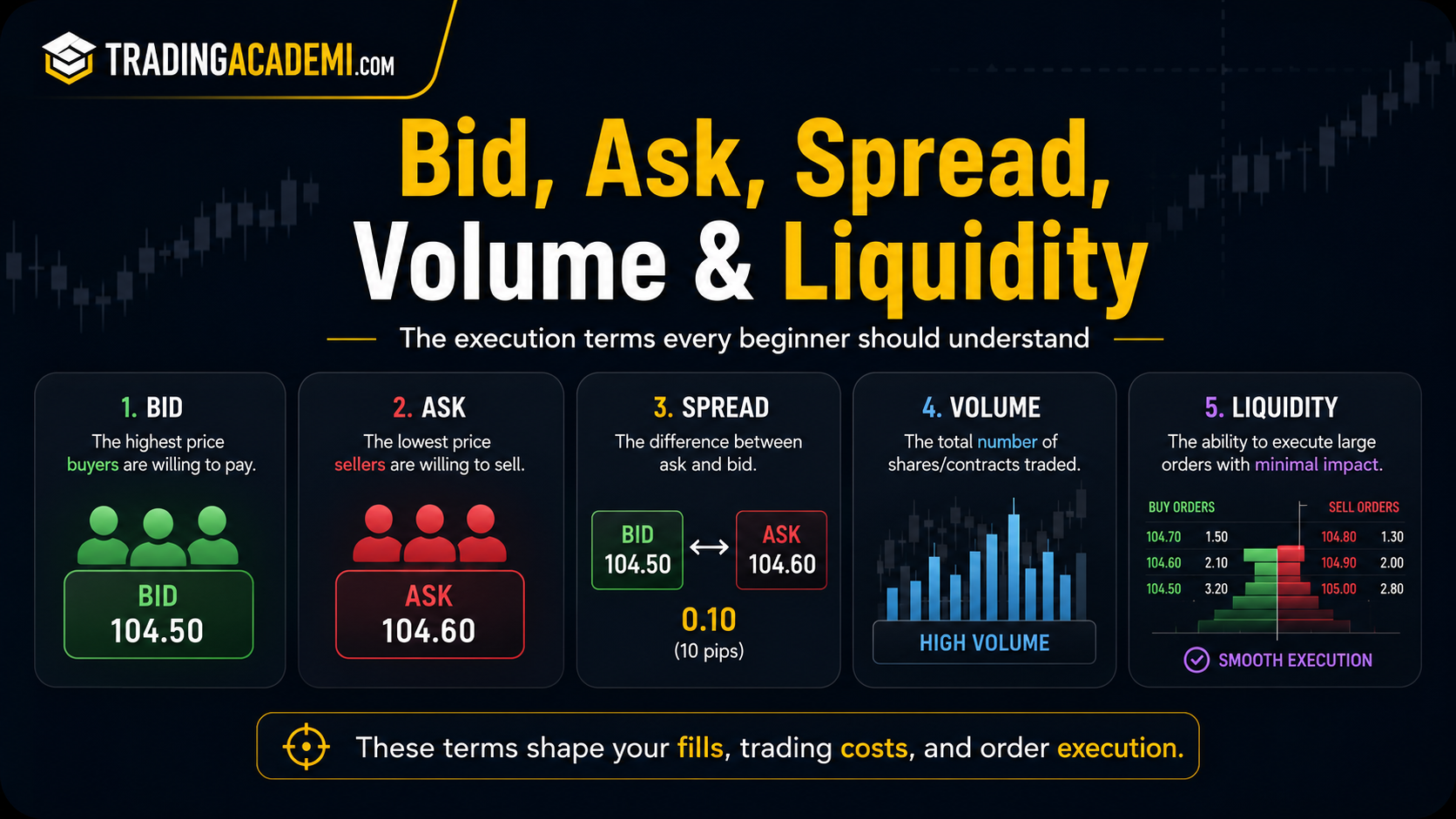
Most beginners start trading by looking at the chart and asking one simple question: is price going up or down?
That question matters, but it is not the full story. In real trading, the price you see on the chart is only part of what is happening. Behind every candle, there are buyers, sellers, orders, volume, and liquidity. These hidden details can affect your entry price, your exit price, your trading cost, and even how easy it is to close a position when the market moves quickly.
This is why every beginner should understand five important terms: bid, ask, spread, volume, and liquidity.
These terms are not complicated, but they are very important. They help you understand how buyers and sellers interact in the market, and they also explain why your order may not always fill at the exact price you expected. If you already learned about market orders, limit orders, and stop orders, these concepts will make order execution much clearer.
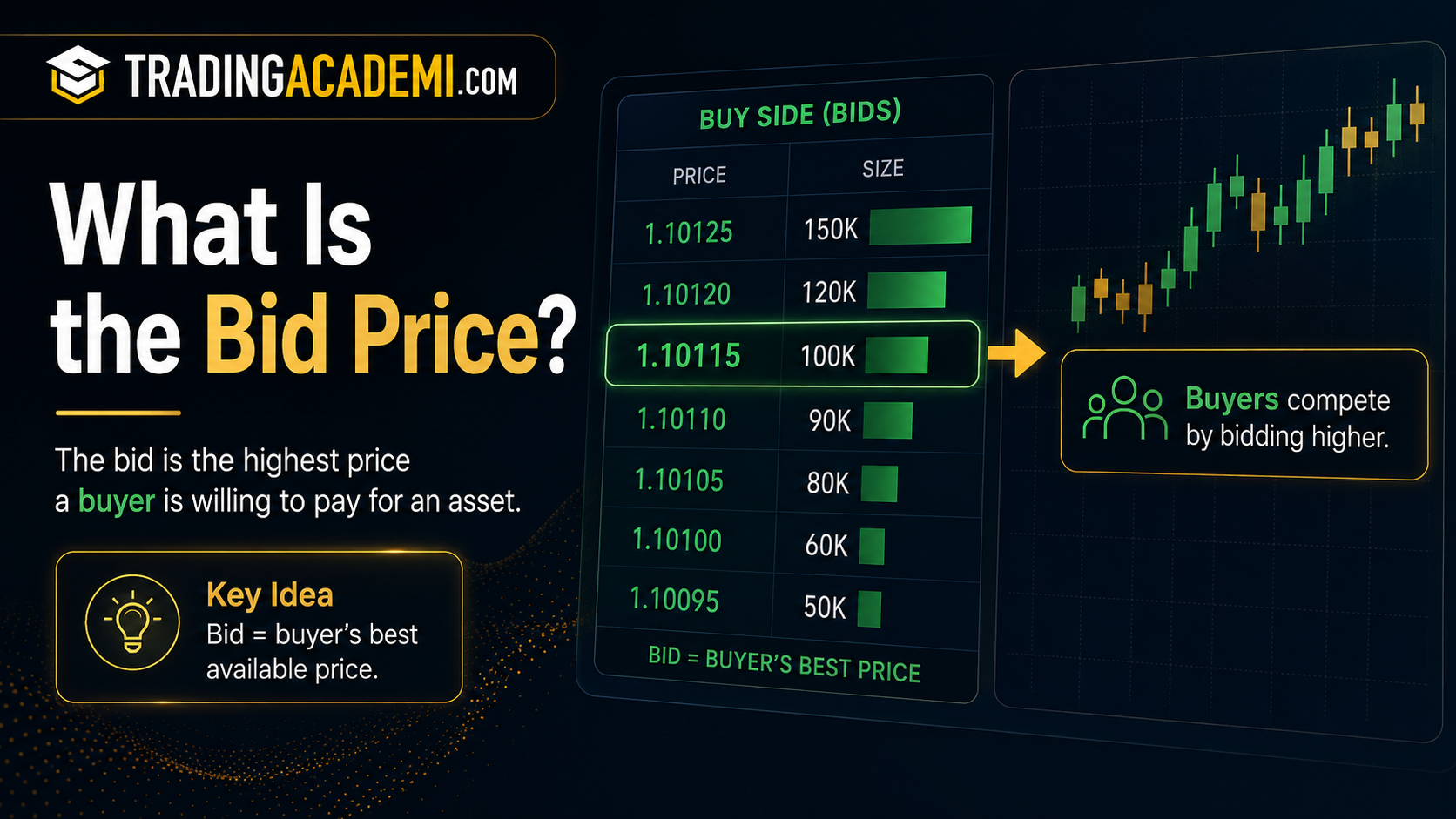
What Is the Bid Price?
The bid price is the highest price buyers are currently willing to pay for an asset.
Imagine you are looking at a stock and the quote shows a bid price of $99.98. This means that, at that moment, buyers are offering to buy at $99.98. If you want to sell immediately using a market order, your order will usually be filled near the bid price, depending on available liquidity.
In simple words, the bid represents buying interest. It shows where buyers are waiting in the market right now. When you sell quickly, you are usually selling into the bid.
This is why traders pay attention to the bid price, especially when they want to exit a trade fast. If the bid is far below the last traded price, you may not get the price you expected.
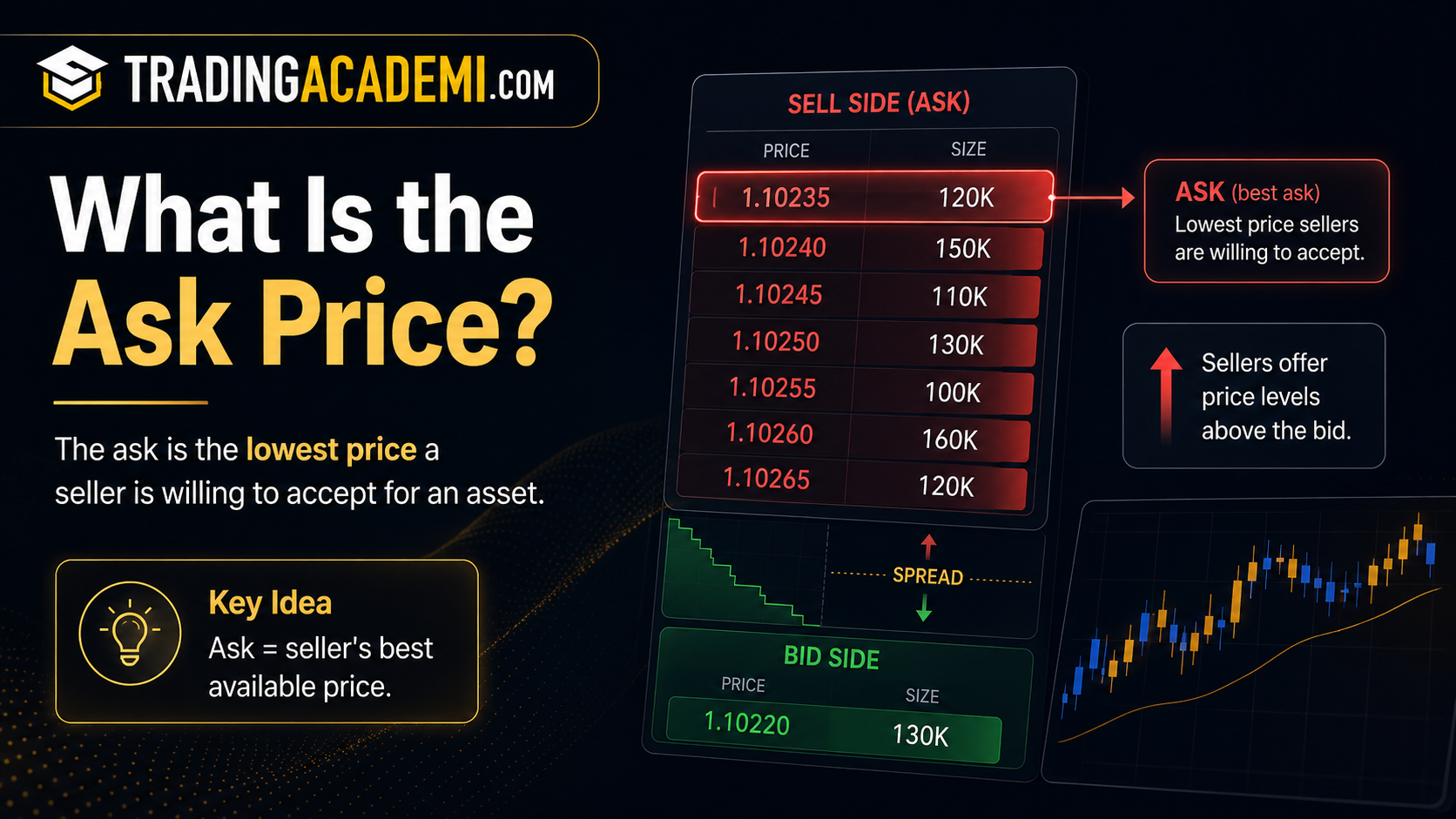
What Is the Ask Price?
The ask price is the lowest price sellers are currently willing to accept.
For example, if the ask price is $100.00, it means sellers are willing to sell at that price. If you place a buy market order, your order will usually be filled near the ask price.
So the ask represents selling supply. It shows where sellers are offering their asset to buyers. When you buy immediately, you usually buy from the ask.
A beginner may think that buying happens exactly at the chart price, but in reality, buying and selling depend on the bid and ask. This small difference matters more than many new traders expect.
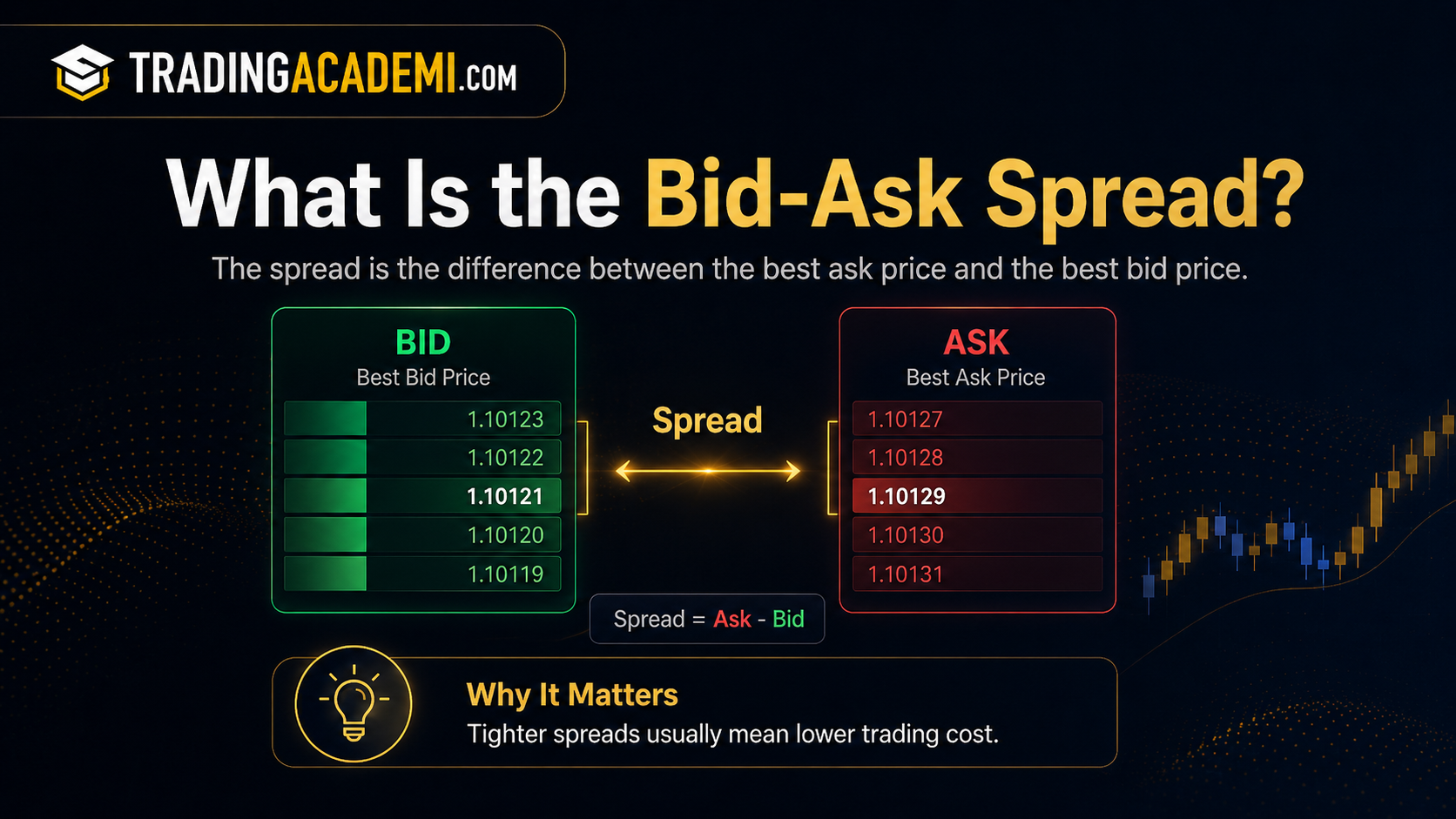
Bid vs Ask: The Simple Difference
The bid and ask are two sides of the same market.
The bid is where buyers are willing to buy.
The ask is where sellers are willing to sell.
If you are selling immediately, the bid matters more. If you are buying immediately, the ask matters more.
For example, if a market shows:
Bid: $99.98
Ask: $100.00
A buyer may pay around $100.00, while a seller may receive around $99.98. That difference between the two prices is called the spread.
What Is the Spread?
The spread is the difference between the bid price and the ask price.
Using the same example:
Bid: $99.98
Ask: $100.00
Spread: $0.02
The spread is $0.02.
This may look small, but it is part of the real cost of trading. Even before commissions or fees, the spread can affect your result. If the spread is tight, entering and exiting is usually easier. If the spread is wide, you may start the trade with an immediate disadvantage.
A tight spread usually means the market is active and liquid. A wide spread can mean the market is less active, more volatile, or harder to trade efficiently.
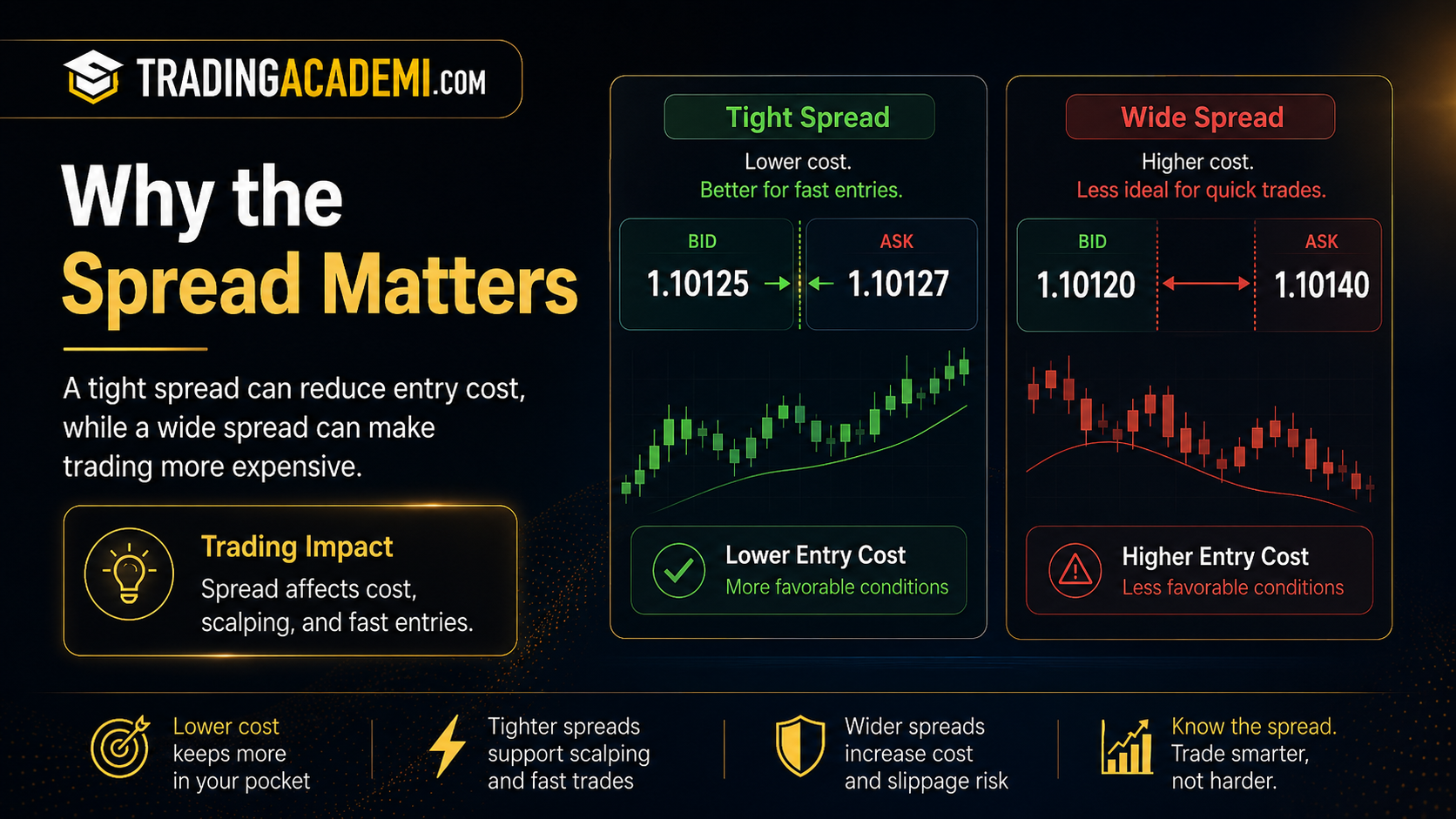
Why the Spread Matters
The spread matters because it affects how much price needs to move before your trade starts working in your favor.
For example, if you buy at the ask and immediately try to sell, you will likely sell at the bid. If the spread is wide, that difference can create an instant small loss. This is normal market mechanics, but beginners often misunderstand it.
A wide spread can be dangerous when trading fast-moving markets, low-volume assets, or news events. You may click buy or sell and get a fill that is worse than expected.
That is why beginners should always check the spread before entering a trade, especially when using a market order.
What Is Volume?
Volume shows how much of an asset has been traded during a specific period.
In stocks, volume usually means the number of shares traded. In futures, it means the number of contracts traded. In crypto, it may show how much of a coin or token was exchanged. The exact measurement changes depending on the market, but the idea is the same: volume shows activity.
When volume is high, it means many traders are participating. When volume is low, the market may be quieter.
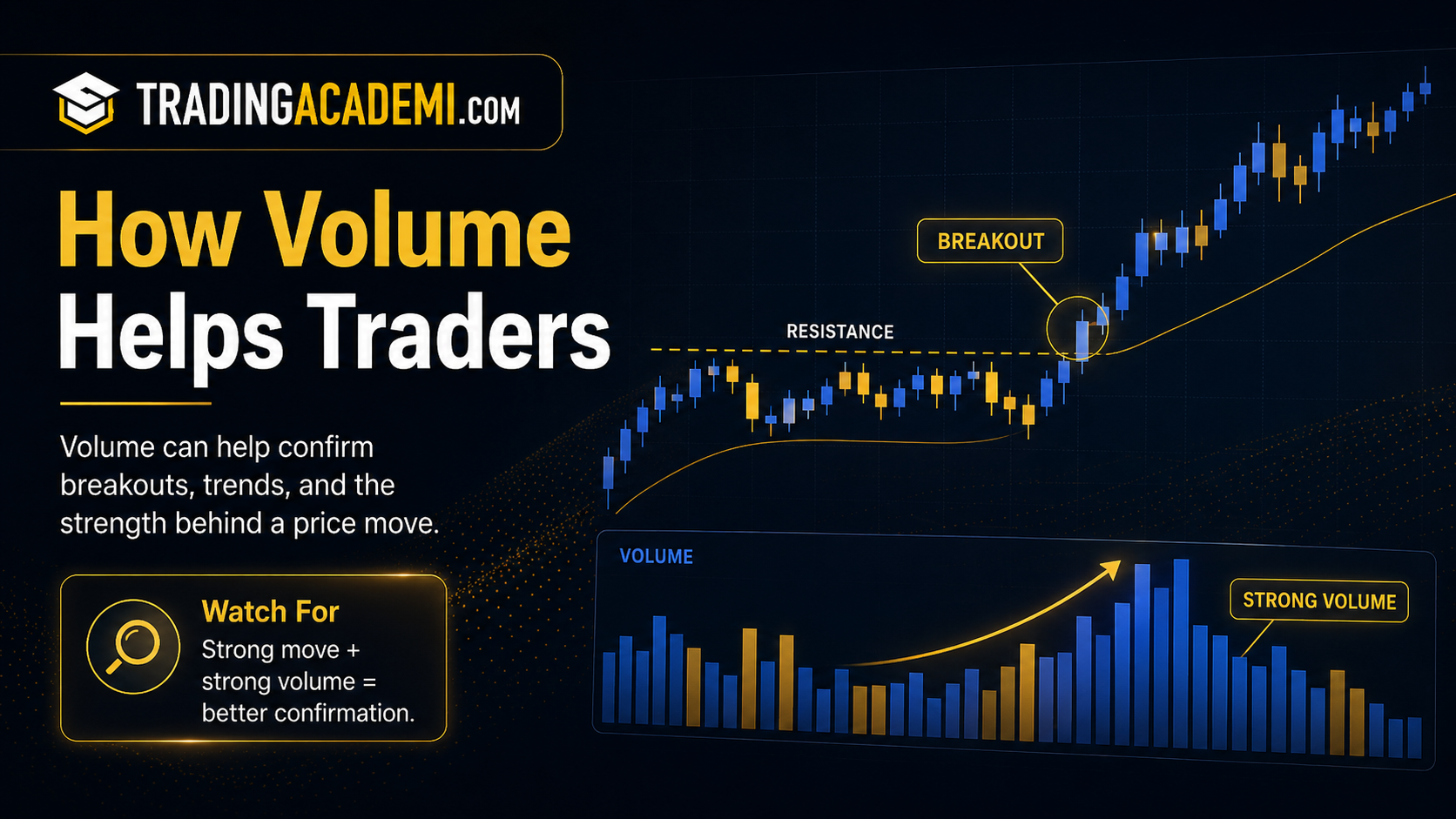
Volume is useful because it gives context to price movement. A breakout with strong volume may show stronger participation. A breakout with weak volume may be less reliable because fewer traders are supporting the move.
This does not mean volume predicts the future, but it helps traders understand how serious a move may be.
Why Volume Matters in Trading
Price can move for many reasons, but volume helps show whether the move has participation behind it.
For example, imagine price breaks above resistance. If volume increases during the breakout, some traders may see that as a stronger signal. It suggests that more buyers are involved. But if price breaks resistance with weak volume, the move may be easier to reverse.
Volume can also help traders avoid weak setups. If the market is barely moving and volume is low, execution may be poor and price may behave unpredictably.
This is why volume is often used with market structure, support, resistance, breakouts, and pullbacks.
What Is Liquidity?
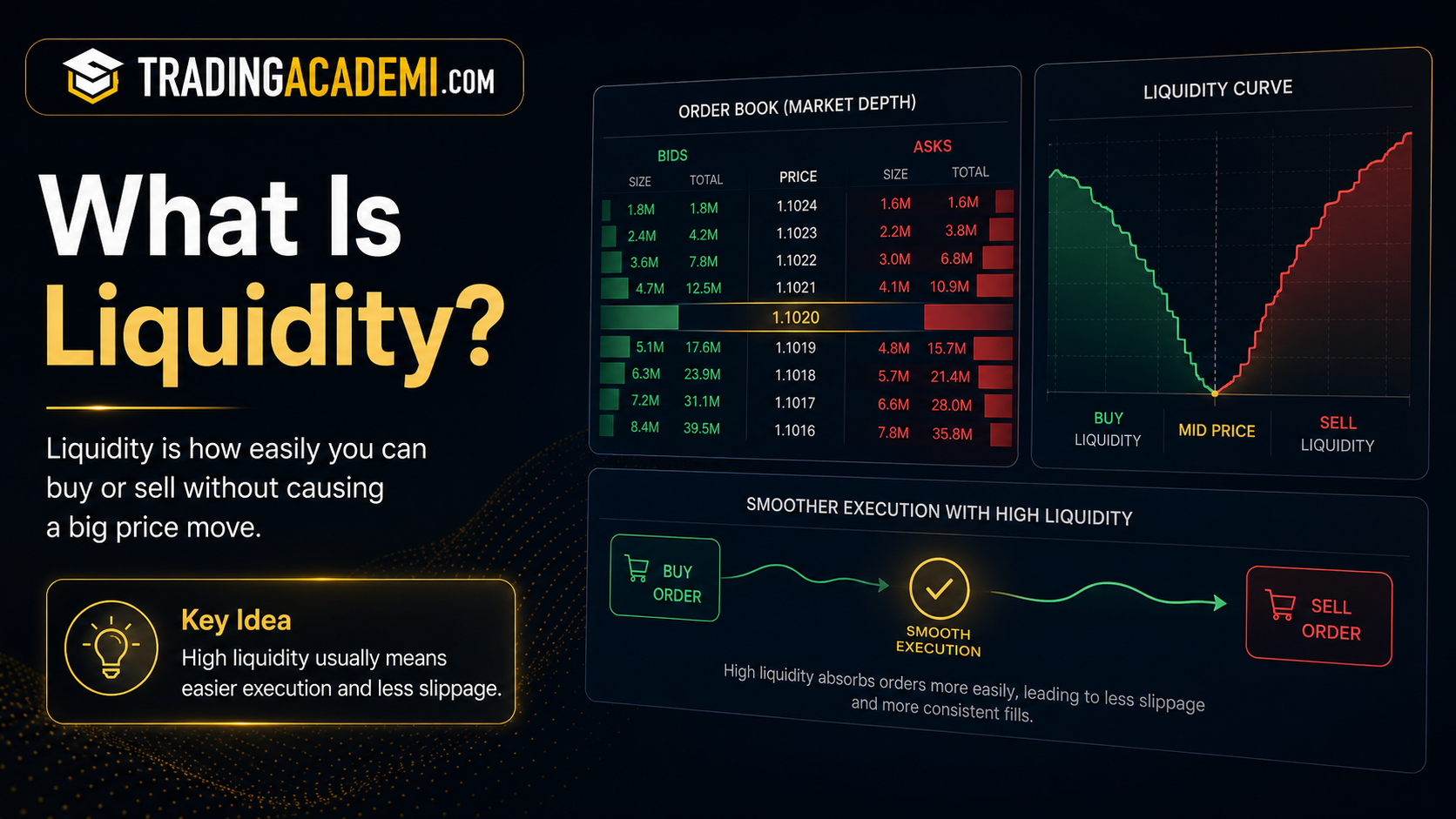
Liquidity means how easy it is to buy or sell an asset without causing a big price movement.
A liquid market has many buyers and sellers. This usually creates tighter spreads, smoother execution, and less slippage. An illiquid market has fewer participants, which can make it harder to enter or exit at a good price.
Liquidity matters because trading is not only about being right on direction. You also need to be able to enter and exit efficiently.
A market can look good on a chart, but if liquidity is weak, your order may fill badly. You may get slippage, a wider spread, or difficulty exiting when price moves fast.
In simple terms: volume shows activity, but liquidity shows how easy it is to trade.
Volume vs Liquidity
Volume and liquidity are connected, but they are not exactly the same.
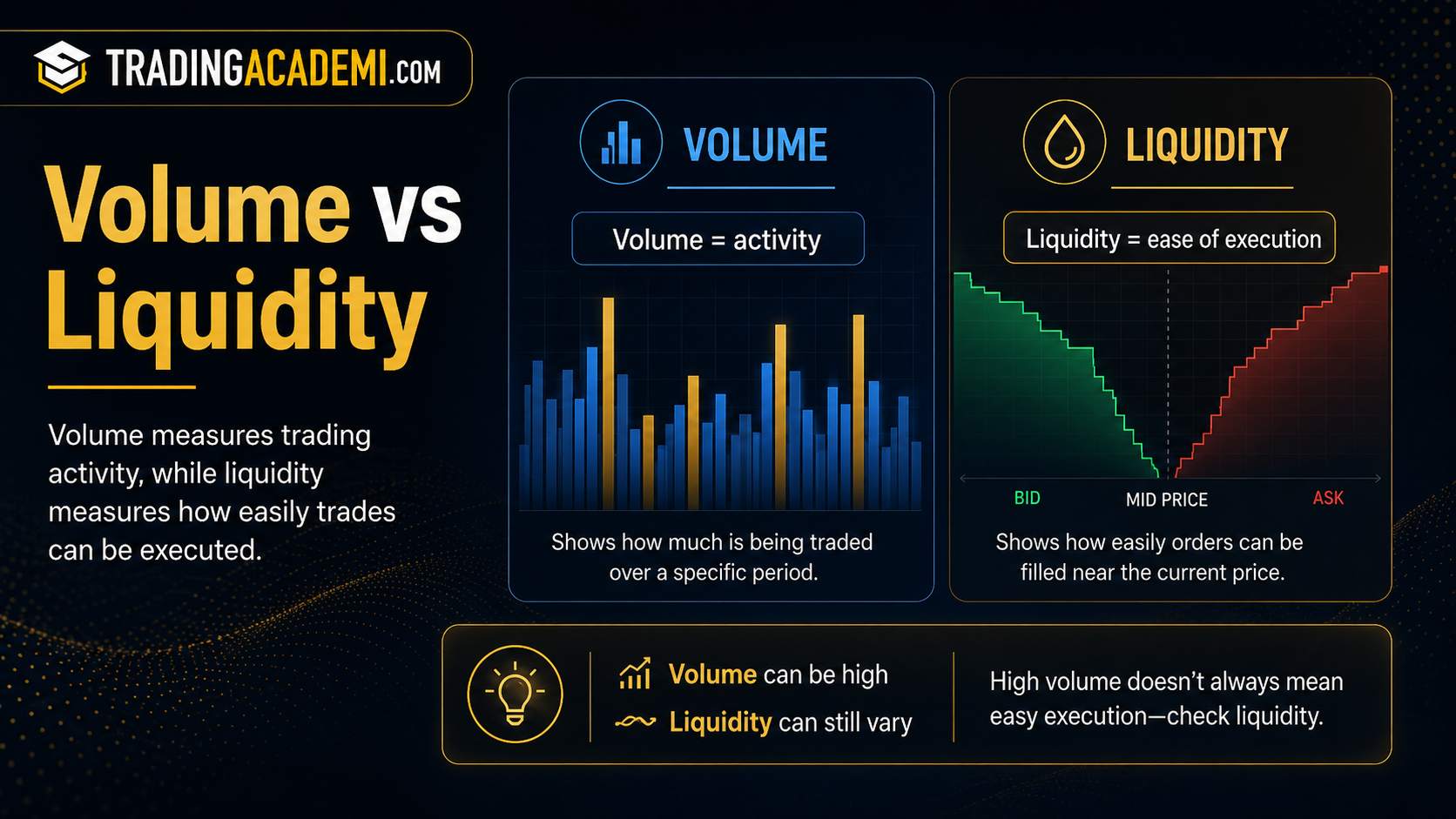
Volume tells you how much trading has happened. Liquidity tells you how easy it is to trade now.
A market can have high daily volume but still have moments where liquidity becomes weak. This can happen during news events, after-hours sessions, holidays, or sudden volatility.
The simple difference is:
Volume = how much was traded.
Liquidity = how smoothly you can trade.
Both are important. A beginner should not look at volume alone and assume execution will always be easy.
How These Terms Affect Market Orders
Market orders are strongly affected by bid, ask, spread, volume, and liquidity.
A market order is designed to execute immediately. That sounds simple, but the final price depends on what is available in the market at that moment. If the spread is tight and liquidity is strong, the fill may be close to what you expected. If the spread is wide or liquidity is weak, the fill can be worse.
This is why slippage happens. Slippage means your order gets filled at a different price than expected.
Market orders can be useful, but they work best when the market is liquid and the spread is reasonable. Using market orders in thin or fast-moving markets can create unnecessary risk.
How These Terms Affect Limit Orders
Limit orders work differently because they give you price control.
If you place a buy limit order, you choose the maximum price you are willing to pay. If you place a sell limit order, you choose the minimum price you are willing to accept.
This can help you avoid bad fills, especially when spreads are wide. However, the trade-off is that your order may not get filled.
For example, you may want to buy at a better price, but if the market never comes to your limit price, you miss the trade. That is not always a bad thing. Sometimes missing a trade is better than entering at a poor price.
Limit orders are useful when you want patience and price control instead of immediate execution.
How These Terms Affect Stop Orders
Stop orders also depend on liquidity and spread.
A stop order becomes active when price reaches a trigger level. After that, depending on the platform and order type, it may become a market order. This means the final execution price can still be affected by slippage.
For example, if you use a stop loss during a fast market drop, the stop may trigger, but the fill may happen lower than expected. This is especially common during news, low liquidity, or sudden volatility.
Stop orders are still important for risk management, but beginners should understand that they do not always guarantee a perfect fill.
Why Beginners Should Watch the Spread
One of the most common beginner mistakes is ignoring the spread.
A trader may enter a trade and immediately see a small negative result. They may think the trade moved against them, but sometimes it is simply the spread. You bought at the ask, but if you exit immediately, you sell at the bid.
This effect becomes more noticeable when the spread is wide.
Before entering a trade, especially with a market order, check whether the spread is acceptable. If the spread is too wide, it may be better to wait or use a limit order instead.
Common Beginner Mistakes
Some mistakes happen again and again because beginners focus only on the chart and ignore execution.
The most common ones are:
- Entering with market orders when the spread is too wide.
- Ignoring liquidity before placing a trade.
- Thinking the chart price is always the exact execution price.
- Confusing high volume with perfect liquidity.
- Trading during news without expecting slippage.
- Using large position sizes in thin markets.
- Forgetting that stop orders can also slip in fast conditions.
These mistakes can make a decent trade idea perform badly. Good execution is part of good trading.
Beginner Checklist Before Entering a Trade
Before placing a trade, ask yourself a few simple questions.
Is the spread tight or wide? Is the market active enough? Is liquidity strong? Am I using the right order type? Could slippage affect this trade? Am I entering during news or low-volume conditions? Is my position size reasonable?
These questions do not take long, but they can save you from many poor executions.
A good trader does not only plan direction. A good trader also plans execution.
Final Thoughts
Bid, ask, spread, volume, and liquidity are basic trading terms, but they have a big impact on real trades.
The bid shows where buyers are willing to buy. The ask shows where sellers are willing to sell. The spread is the gap between them. Volume shows activity. Liquidity shows how smoothly you can enter and exit.
If you understand these concepts, you will understand order execution much better. You will also understand why market orders can slip, why limit orders may not fill, and why stop orders can execute at a different price during fast moves.
Trading is not only about predicting direction. It is also about entering and exiting with awareness.
That is why these terms matter.
Educational Disclaimer
This article is for educational purposes only and should not be considered financial advice. Trading and investing involve risk, including the possible loss of capital. Bid, ask, spread, volume, and liquidity conditions can change quickly and may affect trade execution. Always do your own research and consider consulting a qualified financial professional before making financial decisions.