 By Anzo Trader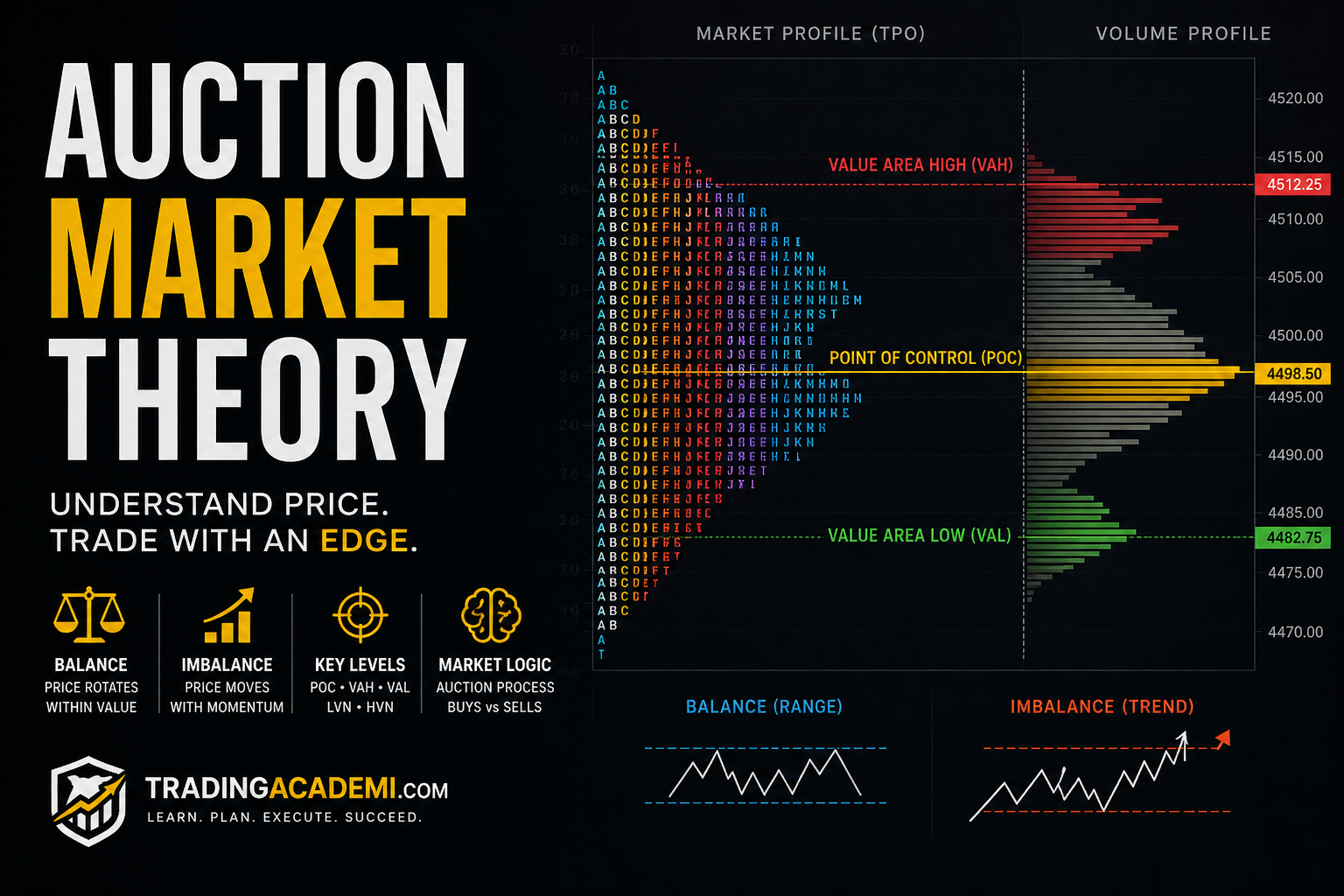
Most traders struggle in the market—not because they lack strategy, but because they don’t truly understand how the market works.
The truth is, the market isn’t random. It behaves more like a live auction, constantly moving as buyers and sellers compete for the best price.
This is where auction market theory trading comes in. It provides a clear framework to understand how price moves between value and imbalance. Once you grasp this concept, trading starts to feel less confusing and far more structured.
👉 If you’re just getting started, check out our futures trading for beginners guide to build a strong foundation.
📊 What is Auction Market Theory (AMT)?
At its core, Auction Market Theory is built on a simple idea: the market is always searching for a fair price.
Buyers want lower prices, while sellers aim for higher prices. Because of this constant negotiation, price moves up and down until both sides reach agreement.
This process creates a continuous auction in the market.
👉 For a deeper understanding of market mechanics, you can explore educational resources from Investopedia.
⚖️ Understanding Balance vs Imbalance
One of the most important concepts in auction market theory trading is identifying whether the market is balanced or imbalanced.
🔵 Balanced Market (Range / Rotation)
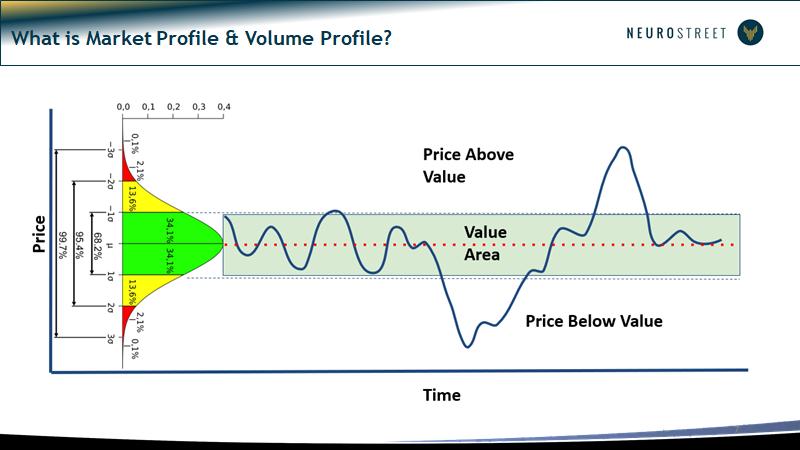
A balanced market occurs when price moves sideways. This means buyers and sellers are in agreement, and price is trading around fair value.
👉 How to trade it:
- Buy near Value Area Low (VAL)
- Sell near Value Area High (VAH)
🔥 Imbalanced Market (Trend)
An imbalanced market happens when one side dominates. This creates strong directional movement.
👉 How to trade it:
- Follow the trend
- Avoid fading strong moves
📈 Key AMT Levels You Need to Know
Understanding key levels is essential in auction market theory trading.
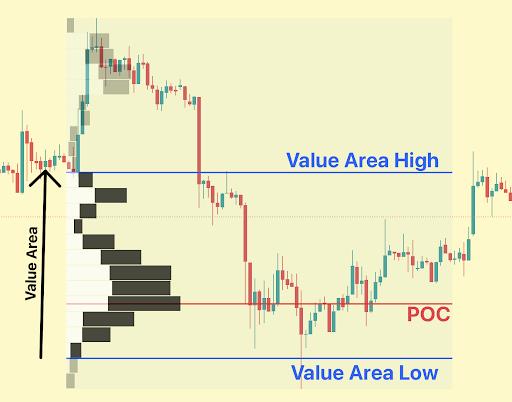
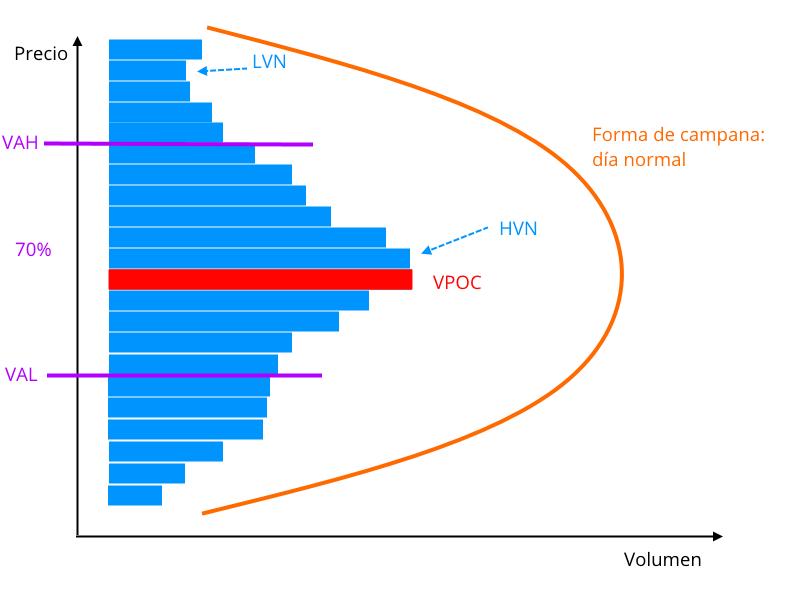
1. Point of Control (POC)
The most traded price—represents fair value.
2. Value Area High (VAH)
Upper boundary—often acts as resistance.
3. Value Area Low (VAL)
Lower boundary—often acts as support.
4. Low Volume Nodes (LVN)
Areas where price moves quickly—often breakout zones.
🚀 Simple Auction Market Theory Trading Strategy
Step 1: Identify the Market Type
Is the market balanced or trending?
👉 This step alone can prevent many bad trades.
Step 2: Mark Key Levels
Draw:
- VAH / VAL
- POC
- Previous highs and lows
Step 3: Wait for Price Reaction
- At VAL → look for buyers
- At VAH → look for sellers
Patience is key.
Step 4: Confirm the Setup
Before entering, use confirmation tools:
- Price action
- VWAP
- Order flow
👉 You can improve accuracy by combining this with our VWAP trading strategy for beginners.
👉 For deeper precision, explore our order flow trading strategy.
Step 5: Enter the Trade
- Inside value → trade reversals
- Outside value → trade continuation
Step 6: Manage Risk
- Always use stop loss
- Target next key level
👉 Learn more about proper trading risk management to stay consistent long term.
📊 Best Market Conditions for AMT Trading
AMT works best during high-volume sessions.
👉 Read our guide on the best time to trade futures to understand when the market is most active.
Futures traders often rely on data from CME Group to analyze volume and session activity.
🧠 Pro Insight (Important)
Here’s a key insight:
👉 The market spends most of its time in balance
👉 Trends happen less often—but move fast
This means:
- Inside value → trade reversals
- Outside value → trade momentum
❌ Common Mistakes to Avoid
Avoid these common errors:
- Not identifying market type
- Trading against strong trends
- Ignoring value areas
- Entering without confirmation
Auction market theory trading gives you a powerful framework to understand the market.
It helps you know:
- Where price is
- Where it’s likely going
- When to trade—and when to wait
When you combine AMT with tools like VWAP and order flow, you begin to think and trade like professionals.
Even large institutions like Goldman Sachs and JPMorgan Chase use structured execution models based on market behavior—similar to concepts found in AMT.