 By Anzo Trader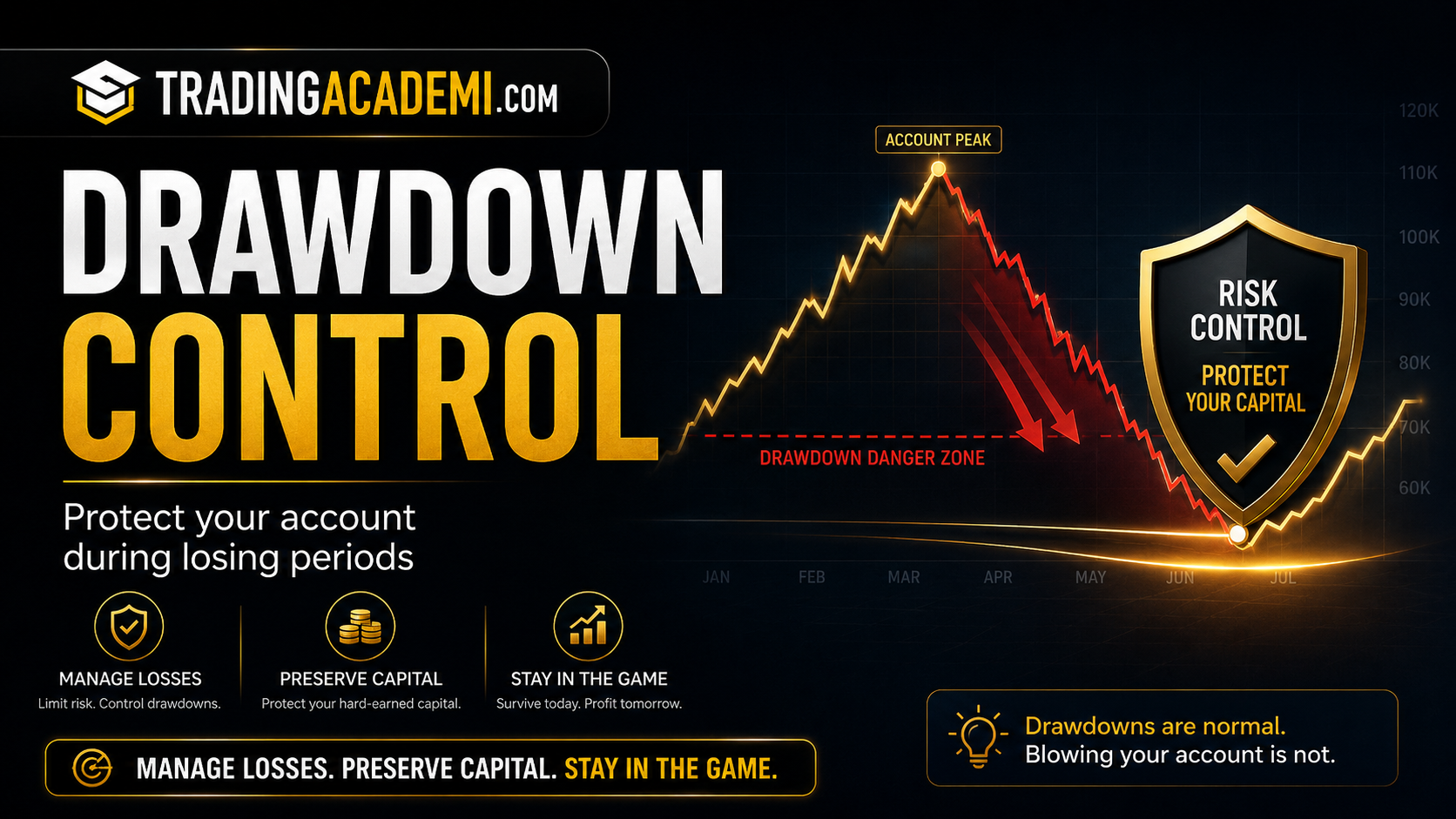
Drawdown is one of the most important risk management concepts every trader should understand. Many beginner traders focus only on profits. They think about winning trades, big returns, strong moves, and how fast they can grow an account. But experienced traders know that growth is only one side of trading.
The other side is protection.
A trader cannot grow consistently if large losses keep damaging the account. Even a profitable strategy can become difficult to trade if the trader does not control drawdown.
Drawdown shows how much your account has dropped from a previous high. It helps you understand how deep your losing periods are and how much recovery is needed to get back to break even.
This matters because losing money is not only a financial problem. It also affects psychology. A deep drawdown can create fear, frustration, revenge trading, overtrading, and loss of confidence.
Drawdown control helps traders survive losing streaks, protect capital, and stay disciplined when market conditions become difficult. Before reading this guide, it can help to understand the basics of risk management in trading, position sizing, stop loss orders, and risk-to-reward ratio, because all of these concepts work together.
What Is Drawdown in Trading?
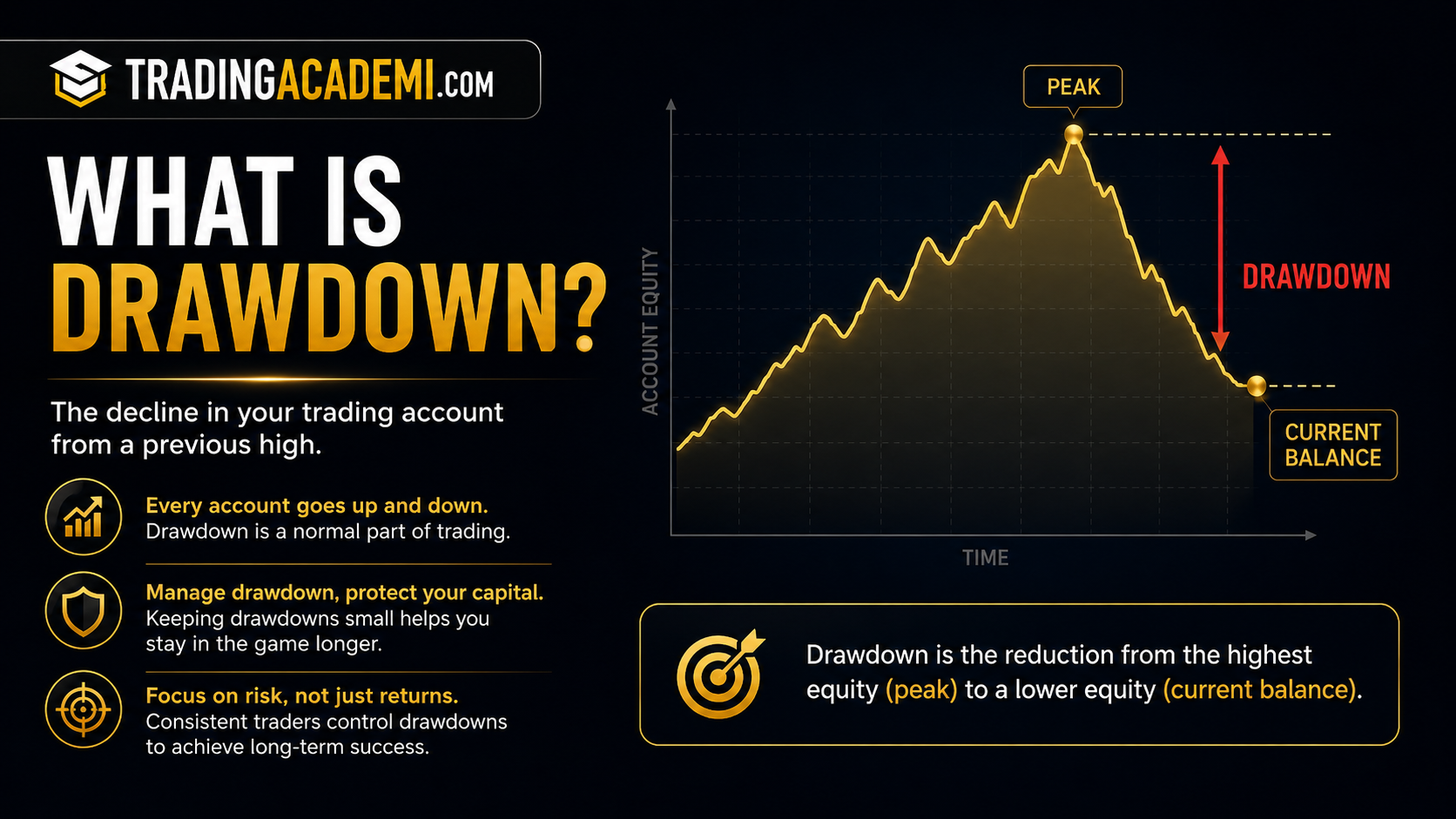
Drawdown is the decline in your trading account from a previous high point. In simple terms, it measures how much your account is down after reaching a peak.
For example, imagine your trading account grows from $10,000 to $12,000. Then, after several losing trades, the account drops to $10,800. Your account peak was $12,000, and your current account value is $10,800. The difference is $1,200.
That $1,200 decline is the drawdown.
In percentage terms, the calculation would be:
$1,200 ÷ $12,000 = 10%So the drawdown is 10%.
Drawdown is not only about one losing trade. It usually measures a period of account decline after a previous high. Every trader experiences drawdown. The goal is not to avoid drawdown completely, because that is unrealistic. The real goal is to keep drawdown controlled and manageable.
Why Drawdown Matters
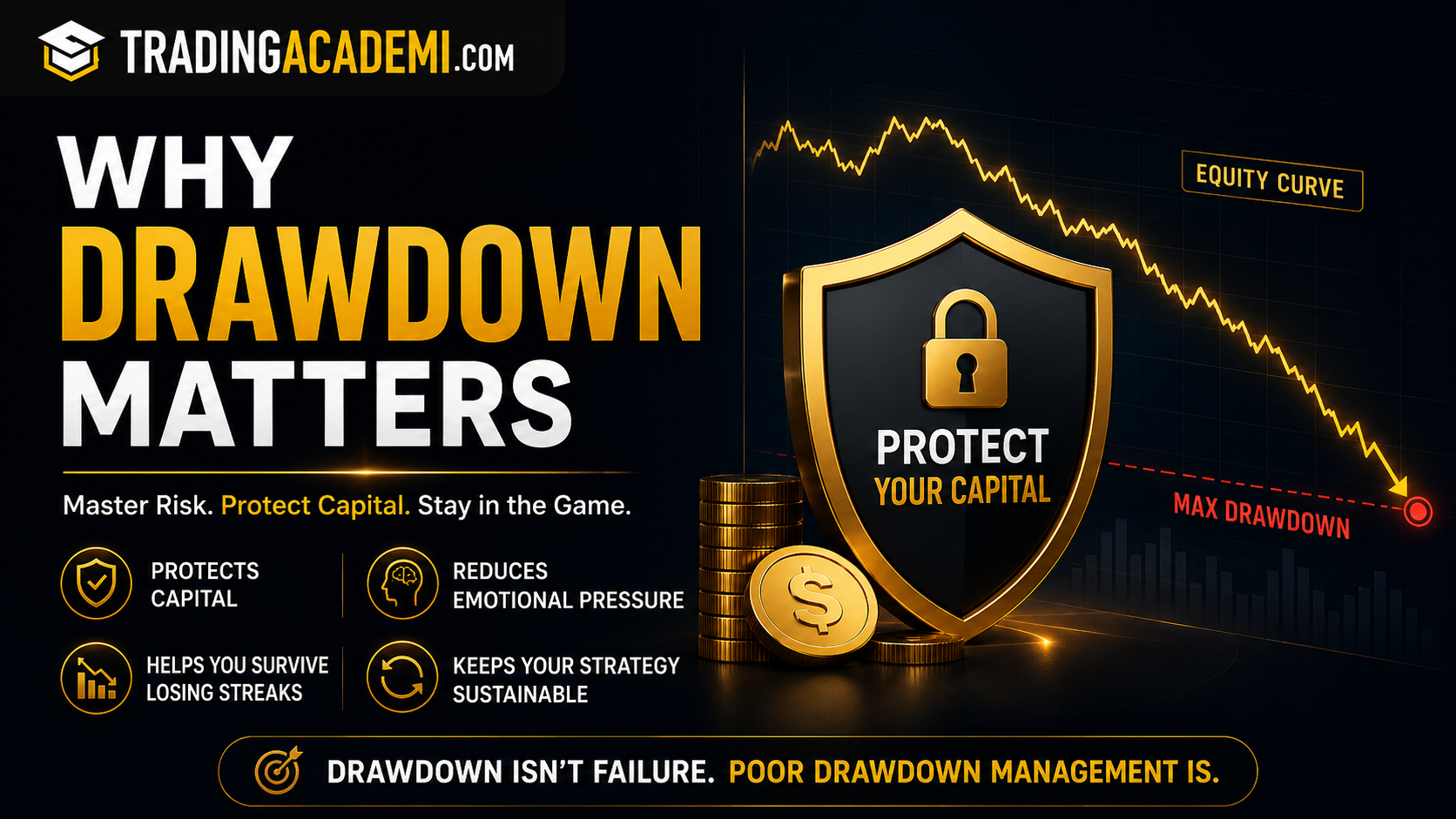
Drawdown matters because it shows the real pressure your trading account is under.
A strategy may look profitable over time, but if it creates very deep drawdowns, it may be difficult to trade in real life. For example, a strategy that makes 40% per year but has a 60% drawdown may be too stressful and risky for many traders.
On the other hand, a strategy that grows more slowly but keeps drawdowns smaller may be easier to follow consistently.
Drawdown also matters because recovery becomes harder as losses get bigger. A small drawdown is easier to recover from. A large drawdown requires much stronger performance just to return to the previous account high.
This is why drawdown control is a key part of trading risk management.
Drawdown vs Loss
A loss and a drawdown are related, but they are not the same thing.
A loss usually refers to one losing trade. Drawdown refers to the decline in your account from a previous high.
For example, if you lose $100 on one trade, that is a loss. But if your account drops from $10,000 to $9,500 after several trades, that is a drawdown.
A trader can have small individual losses but still experience drawdown if several losses happen in a row. This is why it is not enough to look at single trades only. Traders should also look at the overall account curve.
Example of Drawdown
Let’s use a simple example.
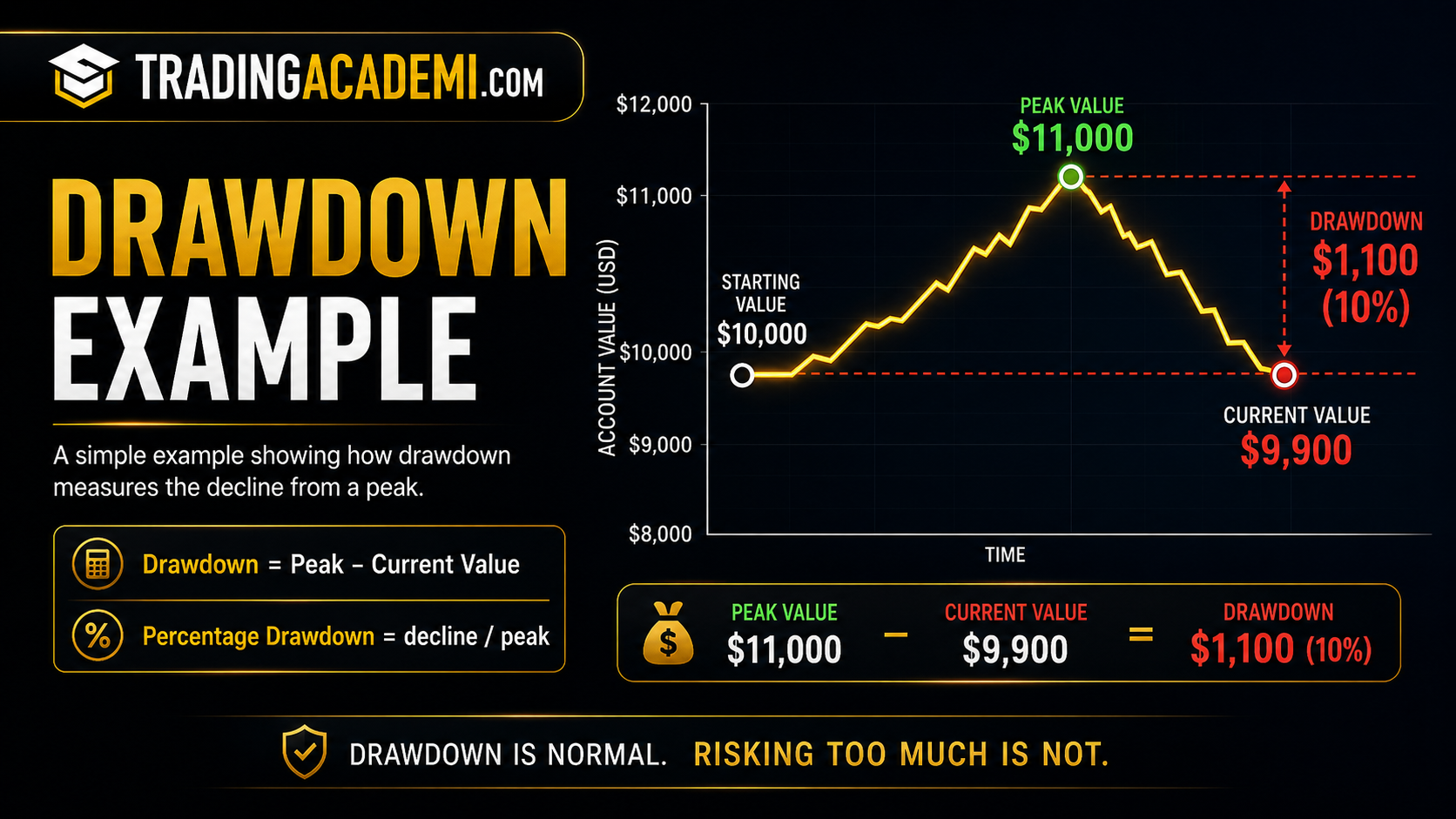
A trader starts with $10,000. After several good trades, the account grows to $11,000. Then the trader experiences a losing streak and the account falls to $9,900.
The account peak was $11,000, and the account low after the losing streak is $9,900. The drawdown is:
$11,000 - $9,900 = $1,100Now calculate percentage drawdown:
$1,100 ÷ $11,000 = 10%So the trader experienced a 10% drawdown.
Even though the account started at $10,000 and is now only down $100 from the starting point, the drawdown from the peak is still 10%. This is why drawdown is measured from the highest account value, not only from the starting balance.
Maximum Drawdown
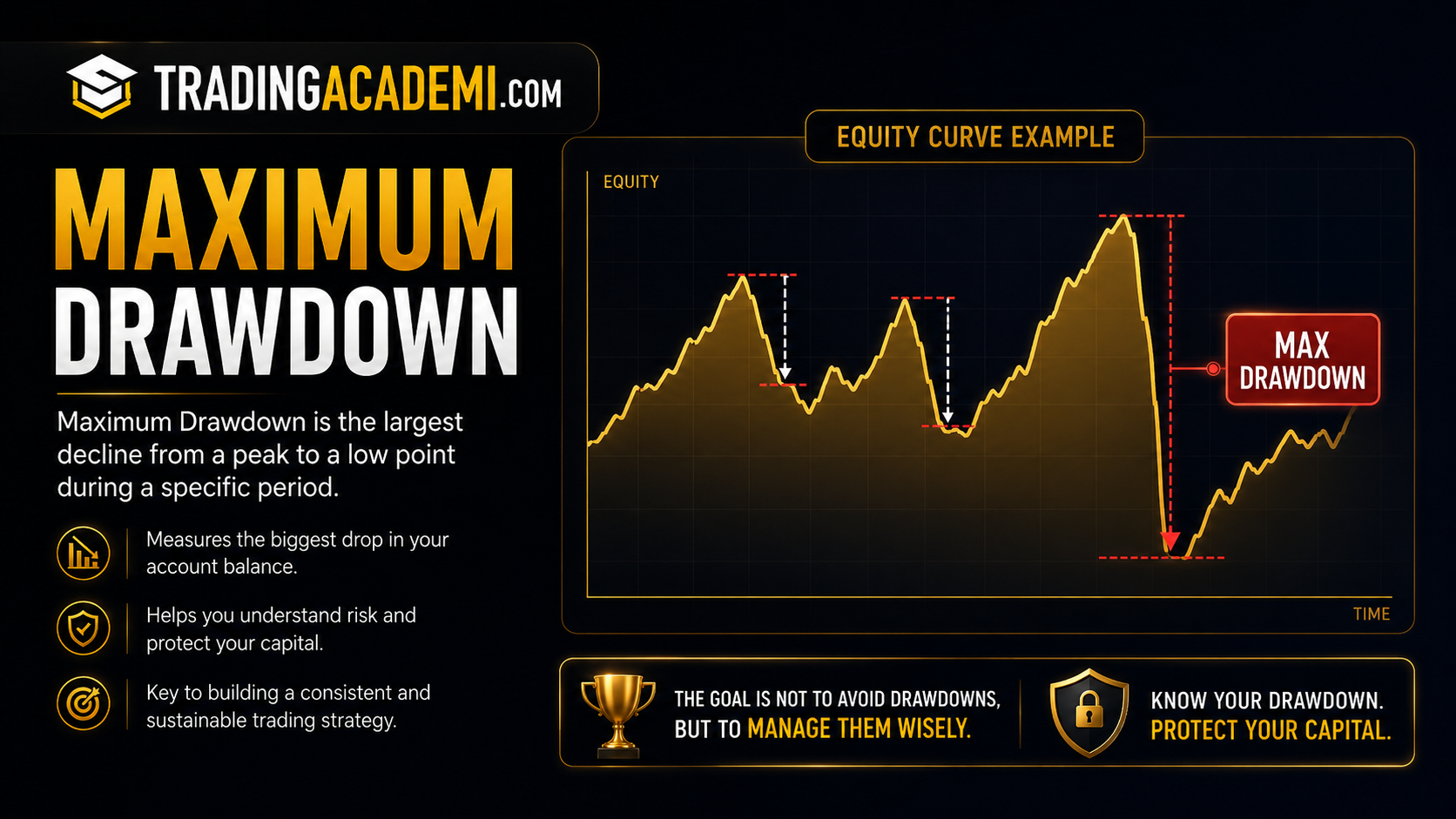
Maximum drawdown is the largest decline from a peak to a low point during a specific period. It shows the worst account drop during that period.
For example, if your account had several drawdowns such as 5%, 8%, 12%, and 6%, your maximum drawdown is 12%.
Maximum drawdown is useful because it shows the deepest stress your account experienced. Traders use it to evaluate strategies, systems, and personal performance.
A strategy with high profits but extreme drawdown may be too risky for a beginner, because the psychological pressure may become difficult to handle.
Why Large Drawdowns Are Dangerous
Large drawdowns are dangerous for two main reasons. First, they are harder to recover from mathematically. Second, they create emotional pressure.
When an account drops deeply, the trader may feel desperate to recover. This can lead to bad decisions such as increasing position size, revenge trading, ignoring stop losses, or taking low-quality setups.
Large drawdowns can damage both your account and your mindset. This is why disciplined traders focus on keeping losses controlled before thinking about big profits.
Drawdown Recovery Math
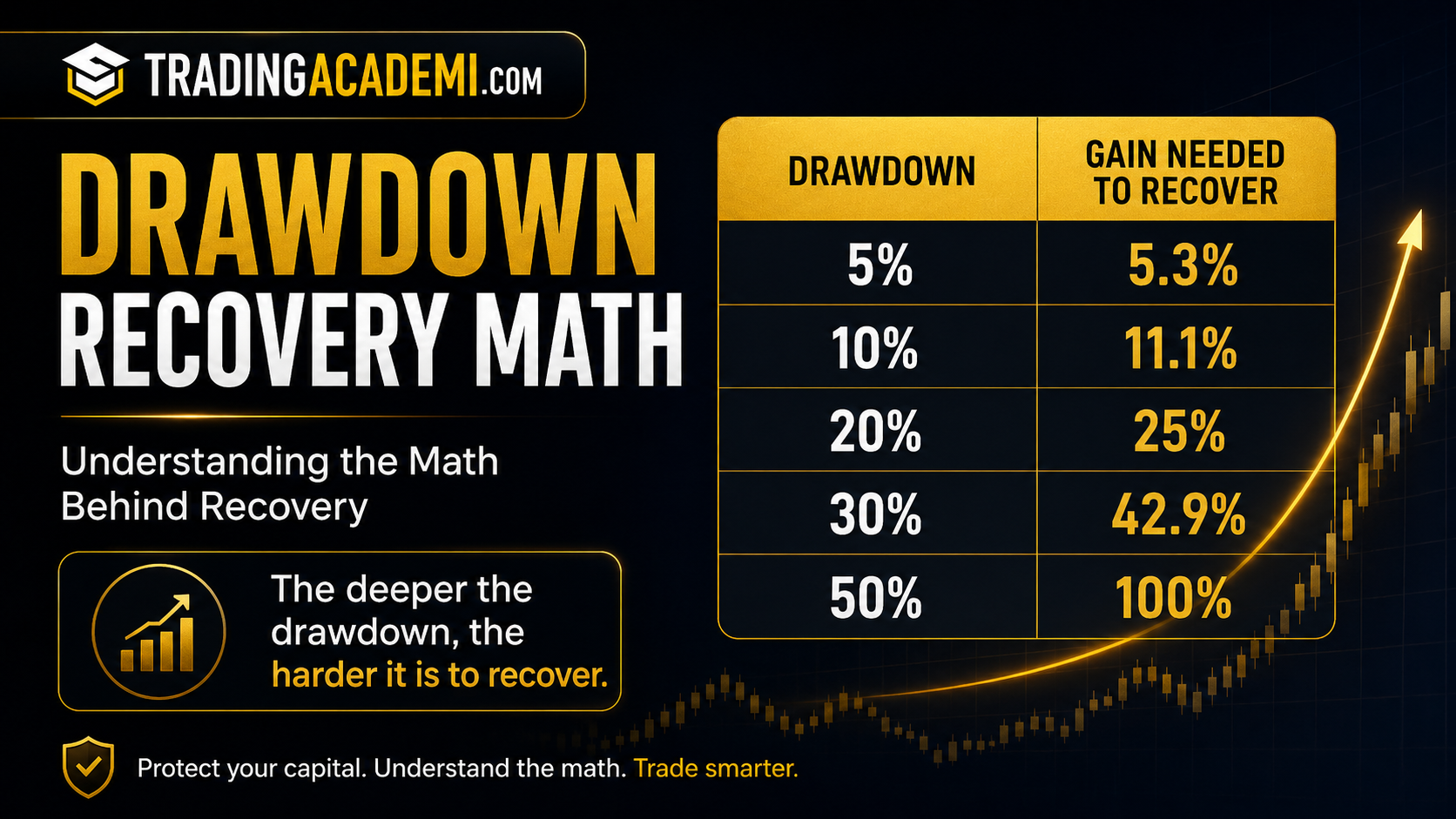
One of the most important things beginners should understand is that recovering from a drawdown requires a larger percentage gain than the percentage lost.
For example, if you lose 10%, you need about 11.1% gain to recover. If you lose 20%, you need 25% gain to recover. If you lose 50%, you need 100% gain to recover.
| Drawdown | Gain Needed to Recover |
|---|---|
| 5% | 5.3% |
| 10% | 11.1% |
| 20% | 25% |
| 30% | 42.9% |
| 50% | 100% |
This is why controlling drawdown is so important. The deeper the account falls, the harder it becomes to return to the previous high.
A trader who avoids large drawdowns does not need unrealistic gains to recover.
Drawdown and Risk Per Trade
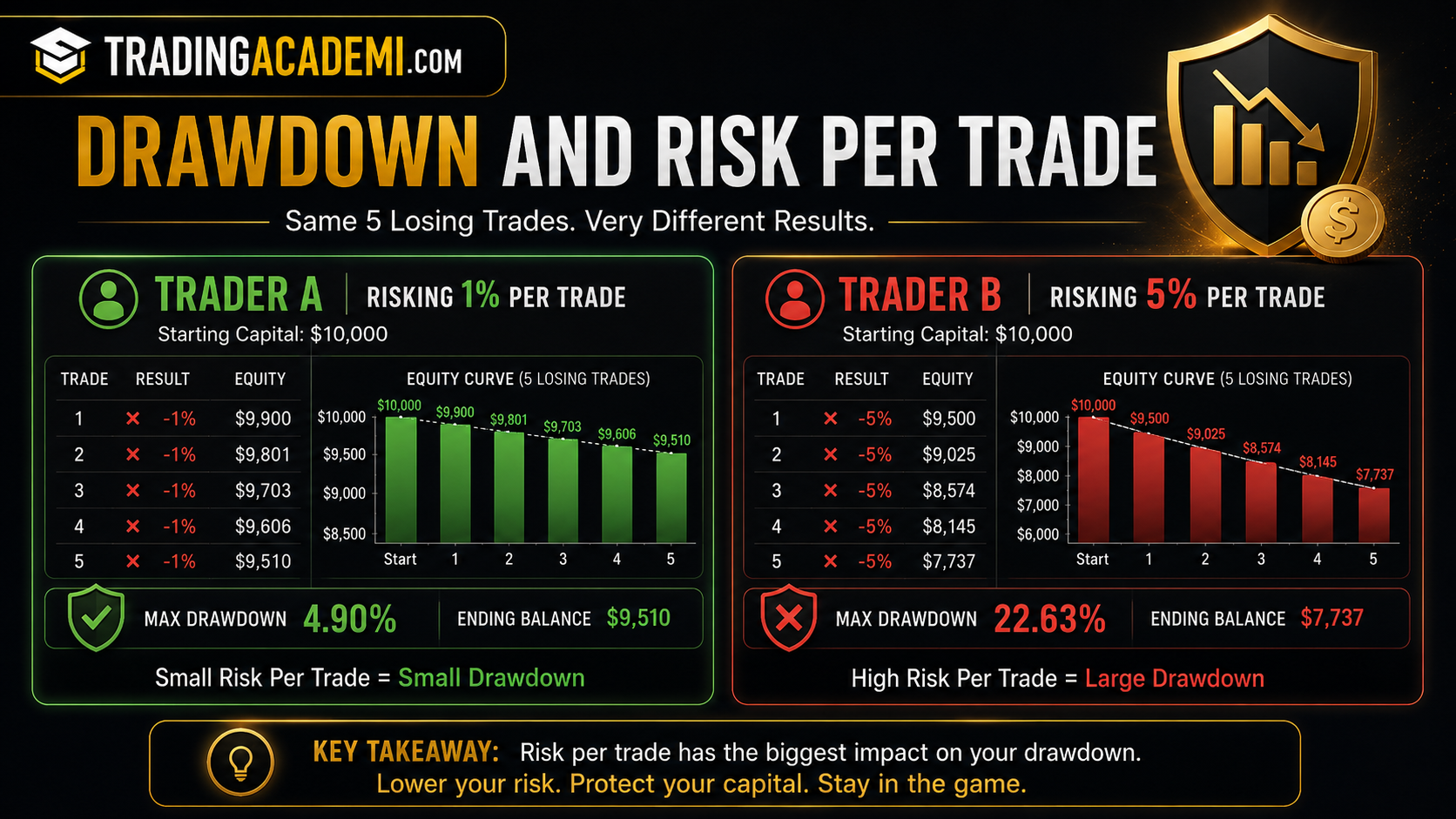
Risk per trade has a major effect on drawdown. If you risk too much on each trade, drawdowns can grow quickly.
Imagine two traders both lose five trades in a row. Trader A risks 1% per trade, while Trader B risks 5% per trade. Trader A may be down around 5%, which is uncomfortable but manageable. Trader B may be down around 25%, which can create serious financial and emotional pressure.
The same losing streak creates very different damage because the risk per trade is different.
This is why position sizing is one of the most important tools for drawdown control. Small risk per trade helps traders survive normal losing streaks.
Losing Streaks Are Normal
Every trading strategy has losing streaks. Even a profitable strategy can lose several trades in a row. This does not always mean the strategy is broken.
Trading is based on probabilities, not certainty. For example, a strategy with a 60% win rate can still have several losses in a row. That is normal.
The problem is not the existence of losing streaks. The problem is being unprepared for them.
A trader who risks too much may not survive a normal losing streak. A trader who controls risk can handle losing streaks without destroying the account.
This is why drawdown control is not optional. It is part of trading survival.
Drawdown and Trading Psychology
Drawdown affects psychology strongly. When a trader is in drawdown, emotions become more intense.
They may feel fear because the account is shrinking. They may feel frustration because recent trades are not working. They may feel pressure to recover quickly. They may also lose confidence in their strategy.
This emotional pressure can create mistakes. Some traders start forcing trades. Others stop following their plan. Some increase trade size because they want to recover faster. Others become afraid and stop taking valid setups.
This is why drawdown control is also psychological control.
If your drawdown is small and planned, it is easier to stay calm. If your drawdown is large and uncontrolled, discipline becomes much harder.
Daily Loss Limits
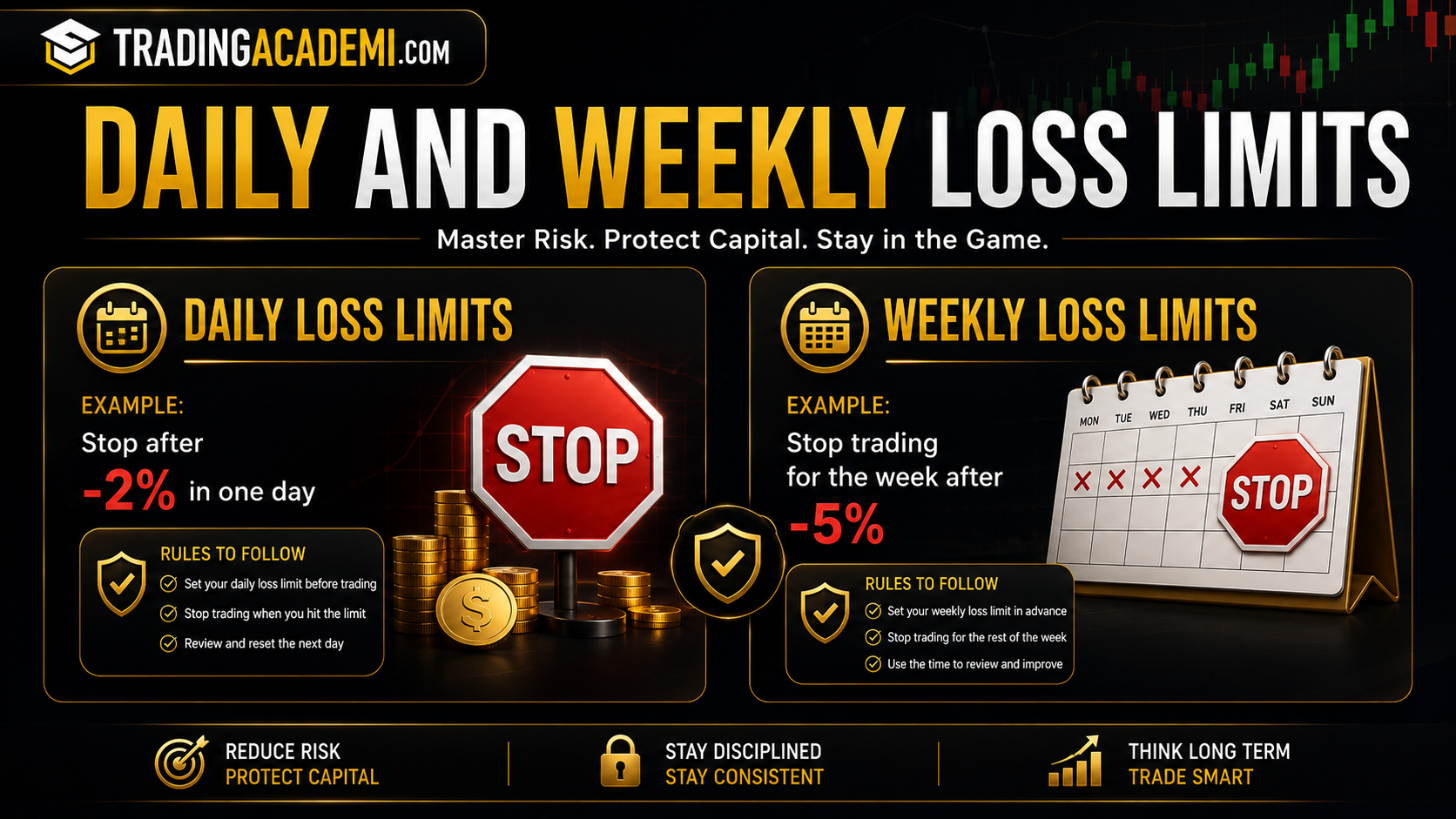
A daily loss limit is one of the simplest drawdown control tools. It defines the maximum amount you are allowed to lose in one trading day.
For example, a trader may decide to stop trading after losing 2% in one day, after three losing trades in a row, or after breaking their rules once.
Daily loss limits prevent one bad day from becoming a disaster. Many traders do not damage their accounts because of one normal losing trade. They damage their accounts because they keep trading emotionally after losses.
A daily loss limit creates a stop sign. When the limit is reached, the trader stops and protects the account.
Weekly Loss Limits
A weekly loss limit works the same way but over a longer period.
For example, a trader may decide that if they lose 5% in one week, they will stop trading for the rest of the week.
This helps traders avoid digging deeper during difficult market conditions. Some weeks are not good for your strategy. Some weeks are choppy, emotional, news-driven, or low quality.
A weekly loss limit gives you permission to step away. Trading less during bad conditions can be a form of risk management.
Maximum Drawdown Rule
A maximum drawdown rule defines the point where you reduce risk or stop trading temporarily.
For example, a trader may decide to reduce risk by half if the account reaches 10% drawdown. If the account reaches 15% drawdown, they may stop live trading and review the strategy. If the account reaches 20% drawdown, they may return to demo trading or paper trading until the problem is clear.
This kind of rule protects traders from continuing the same behavior while the account keeps declining.
A drawdown rule should be decided before the drawdown happens. If you create the rule only when you are already emotional, you may not follow it.
Reducing Position Size During Drawdown
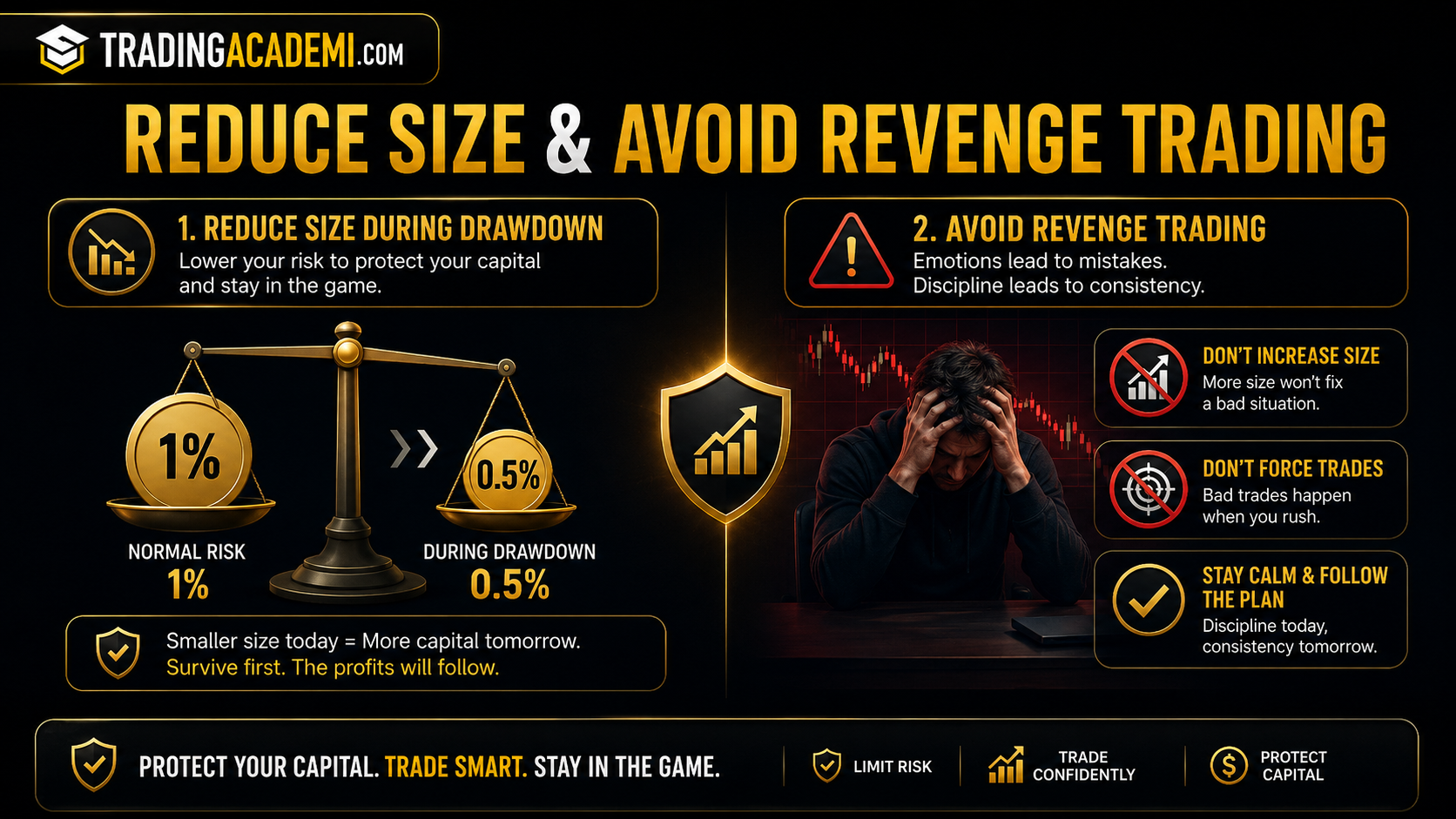
One useful technique is reducing position size during drawdown.
If your account is performing well, you may trade your normal risk. If your account is in drawdown, you may reduce risk until performance improves.
For example:
Normal risk: 1% per trade
During drawdown: 0.5% per trade
This helps slow down losses and gives the trader time to regain confidence.
Reducing size is not a sign of weakness. It is a professional risk control decision. When performance improves, the trader can gradually return to normal size.
Avoiding Revenge Trading During Drawdown
Revenge trading happens when a trader tries to win back losses quickly. This is one of the most dangerous behaviors during drawdown.
A trader may think they need one big trade to recover, or that increasing size will make the money back faster. They may feel like the next setup must work, or they may refuse to end the day red.
These thoughts are emotional, not strategic.
Revenge trading usually increases drawdown. The correct response to drawdown is not more aggression. The correct response is more discipline.
Step back, reduce size, review trades, and follow your rules.
Using a Trading Journal to Control Drawdown
A trading journal can help identify why drawdown is happening. Sometimes drawdown is caused by normal strategy behavior. Other times, it is caused by trader mistakes.
A journal can reveal patterns such as trading outside the plan, entering too late, moving stop losses, risking too much, overtrading, trading during bad market conditions, taking low-quality setups, or closing winners too early.
Without a journal, a trader may not know what is really causing the drawdown. With a journal, the trader can review data and make better decisions.
A trading journal is especially useful when combined with a clear trading plan.
Drawdown and Market Conditions
Sometimes drawdown happens because market conditions change.
A strategy that works well in trending markets may struggle in choppy markets. A breakout strategy may fail when the market is range-bound. A mean-reversion strategy may struggle during strong trends.
This does not always mean the strategy is bad. It may mean the strategy is being used in the wrong environment.
Drawdown can be a signal to review market conditions. Ask whether the market is trending or ranging, whether volatility is high or low, whether news is affecting price action, and whether your strategy is suitable for the current environment.
Understanding market conditions can help reduce unnecessary drawdown.
Common Drawdown Control Mistakes
One common mistake is ignoring small losses until they become large. Many traders do not react early enough. They ignore small drawdowns and keep trading the same way until the account damage becomes serious.
Another dangerous mistake is increasing size during drawdown. Increasing size while losing can turn a normal drawdown into a major account problem.
Removing stop losses is also a serious issue. Some traders remove stops because they do not want to accept the loss, but this breaks the risk plan and can create large unexpected losses.
Overtrading is another common mistake. During drawdown, some traders take more trades to recover faster, but this usually leads to lower-quality decisions.
Some traders change strategy too quickly. A few losses do not always mean the strategy is bad, and changing systems after every losing streak can prevent consistency.
Finally, refusing to take a break can make the situation worse. Sometimes the best decision is to stop trading for a day, a week, or longer. A break can protect both capital and mindset.
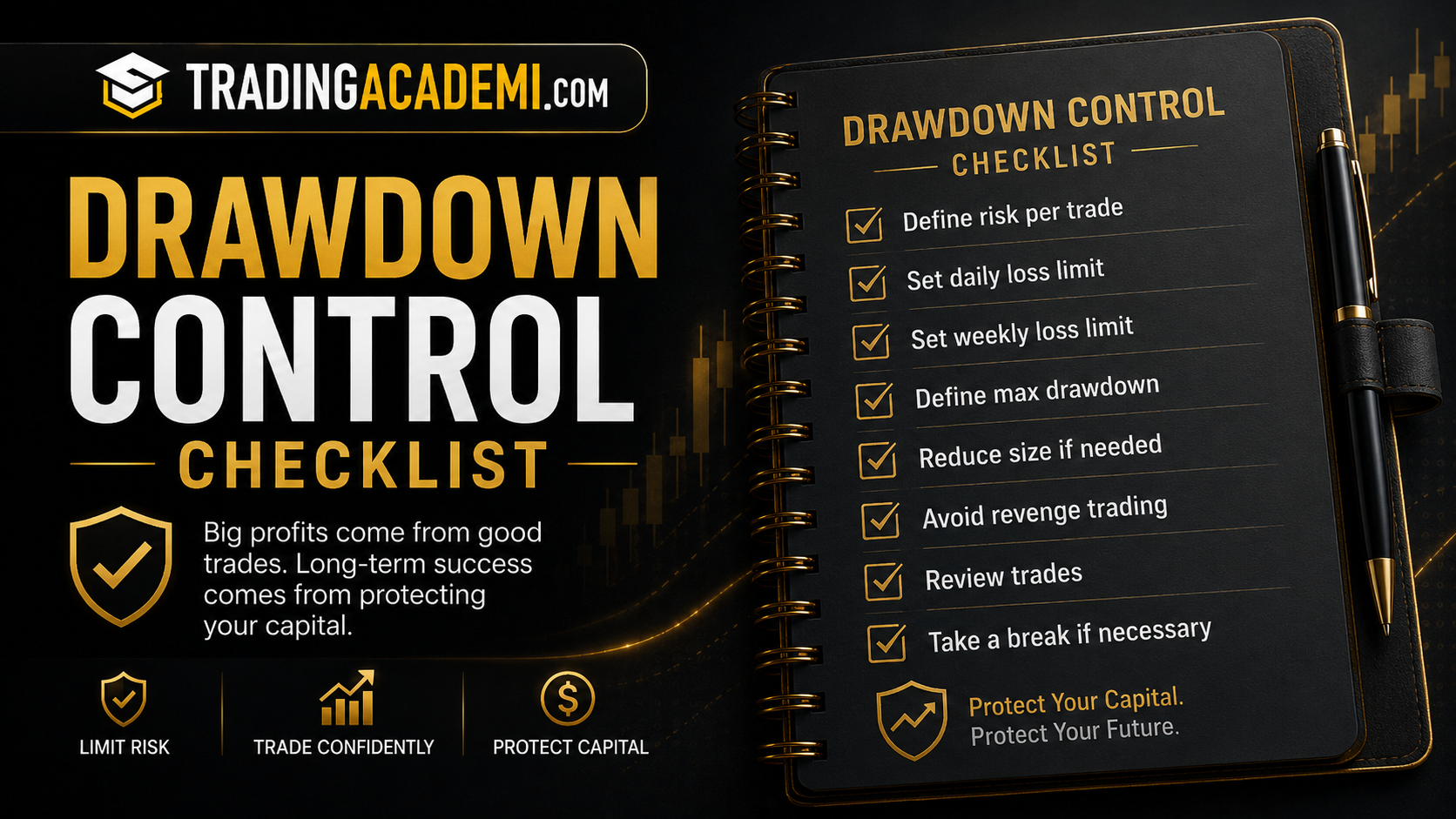
Drawdown Control Checklist
Before and during trading, ask yourself what your maximum risk per trade is, what your daily loss limit is, and what your weekly loss limit is. You should also know your maximum acceptable drawdown and whether you will reduce size during drawdown.
Ask whether you are following your stop losses, whether you are revenge trading, and whether you are taking only high-quality setups. You should also check whether the market condition is suitable for your strategy and whether you have reviewed your losing trades.
If you cannot answer these questions clearly, your drawdown plan may not be strong enough.
Example Drawdown Control Plan
Here is a simple example of a drawdown control plan for a beginner trader:
Risk per trade: 1%
Daily loss limit: 3%
Weekly loss limit: 6%
Reduce risk after: 5% drawdown
Stop trading and review after: 10% drawdown
Maximum acceptable drawdown: 15%
Journal every trade
No increasing size after losses
No trading after breaking rules
This type of plan gives structure. The exact numbers can change depending on the trader, strategy, experience level, and market.
The important point is having a plan before emotions appear.
Final Thoughts
Drawdown is a normal part of trading, but uncontrolled drawdown is dangerous.
Every trader will experience losing trades and losing periods. The goal is not to avoid drawdown completely. The goal is to keep it small enough so you can recover, learn, and continue trading.
Drawdown control protects more than your account balance. It protects your discipline, confidence, and decision-making.
A trader who manages drawdown properly can survive difficult periods. A trader who ignores drawdown may make emotional decisions that cause even more damage.
Before chasing profits, build a plan to control losses. Small losses are manageable, but large drawdowns are hard to recover from. Risk per trade matters, daily and weekly limits protect discipline, reducing size during drawdown is smart, revenge trading makes drawdown worse, and a trading journal helps identify the real problem.
Trading success is not only about how much you can make. It is also about how well you can protect what you already have.
Educational Disclaimer
This article is for educational purposes only and should not be considered financial advice. Trading and investing involve risk, including the possible loss of capital. Drawdown control tools do not guarantee profits or prevent losses. Always do your own research or consult a qualified financial professional before making financial decisions.