 By Anzo Trader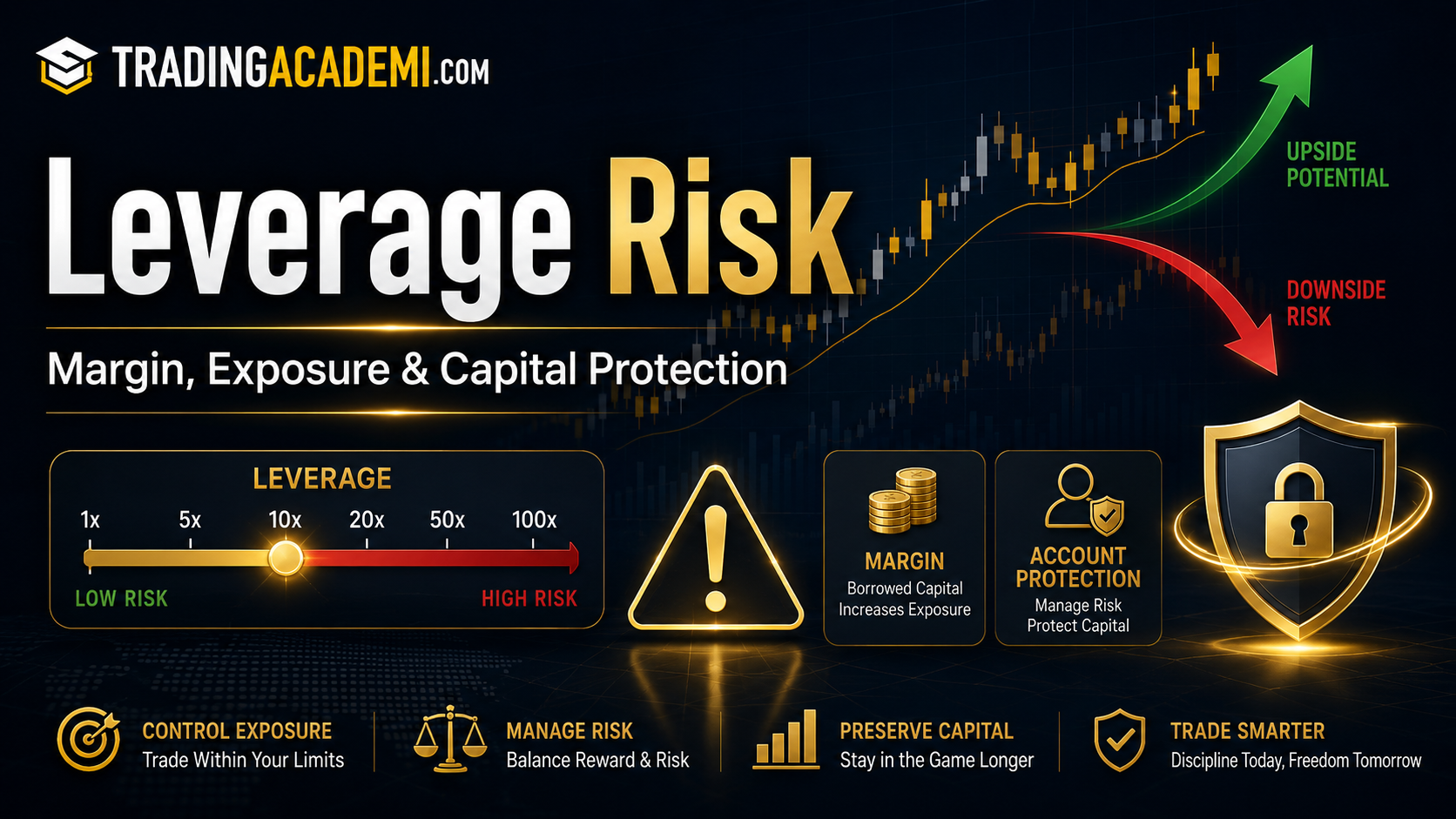
Leverage is one of the most powerful tools in trading, but it is also one of the most dangerous when it is misunderstood. Many beginners see leverage as a shortcut to bigger profits. They hear that leverage can allow them to control a larger position with a smaller amount of capital, and they immediately focus on the upside.
But leverage does not only increase potential profit. It also increases potential loss.
This is the part many new traders ignore. Leverage can make a small market move create a large account change. If the trade moves in your favor, the gain may look attractive. But if the trade moves against you, the loss can grow quickly. In some markets, leverage can lead to margin calls, forced liquidation, or serious account damage.
That is why leverage must be understood before it is used. A trader who uses leverage without risk management is not trading with confidence. They are taking unnecessary exposure.
Before reading this article, it can help to understand risk management in trading, position sizing, stop loss orders, risk-to-reward ratio, and drawdown control, because leverage affects all of them.
What Is Leverage in Trading?
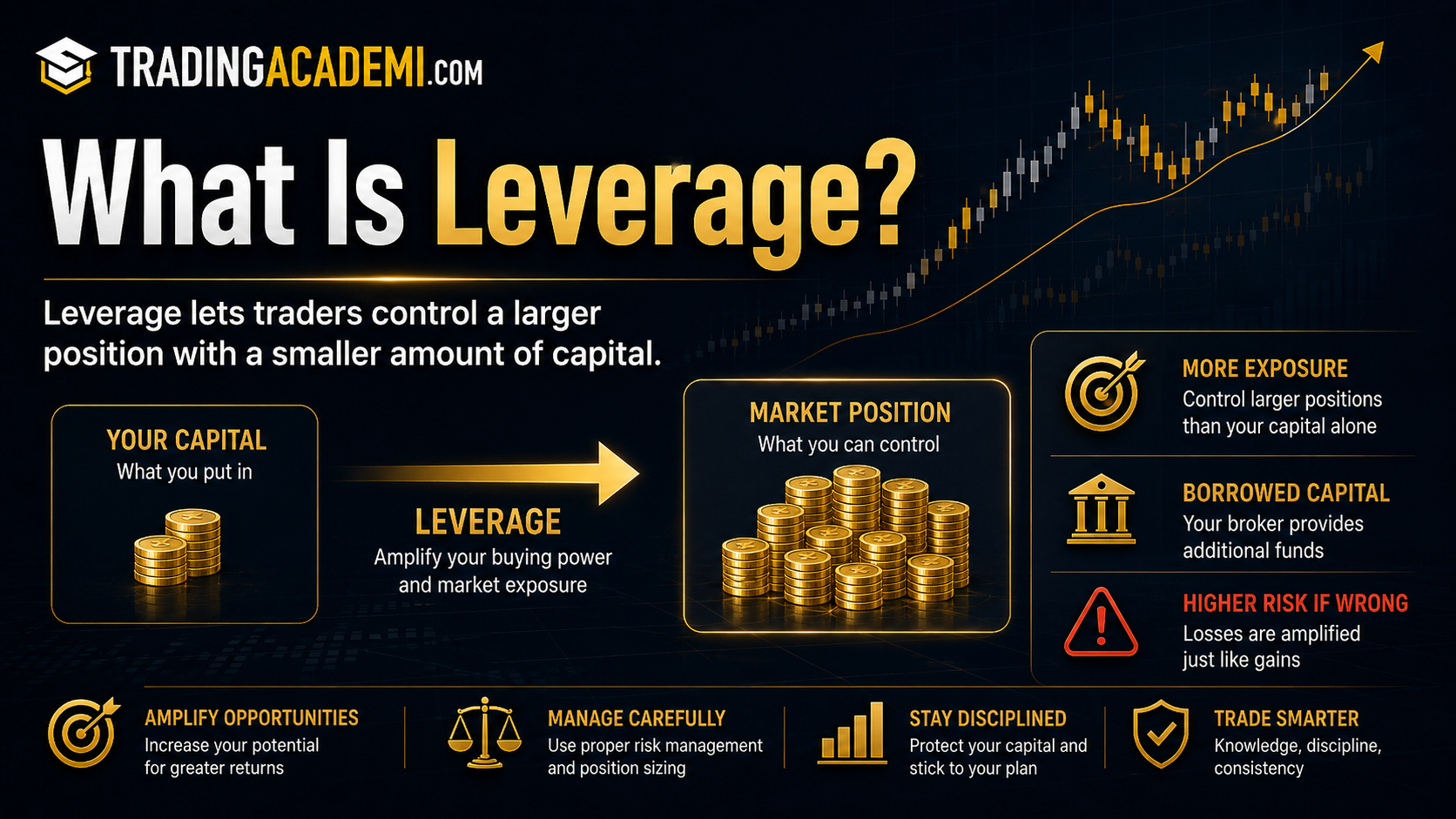
Leverage in trading means using borrowed capital or margin to control a larger position than your account balance alone would normally allow. In simple terms, leverage gives you more market exposure than the money you put down.
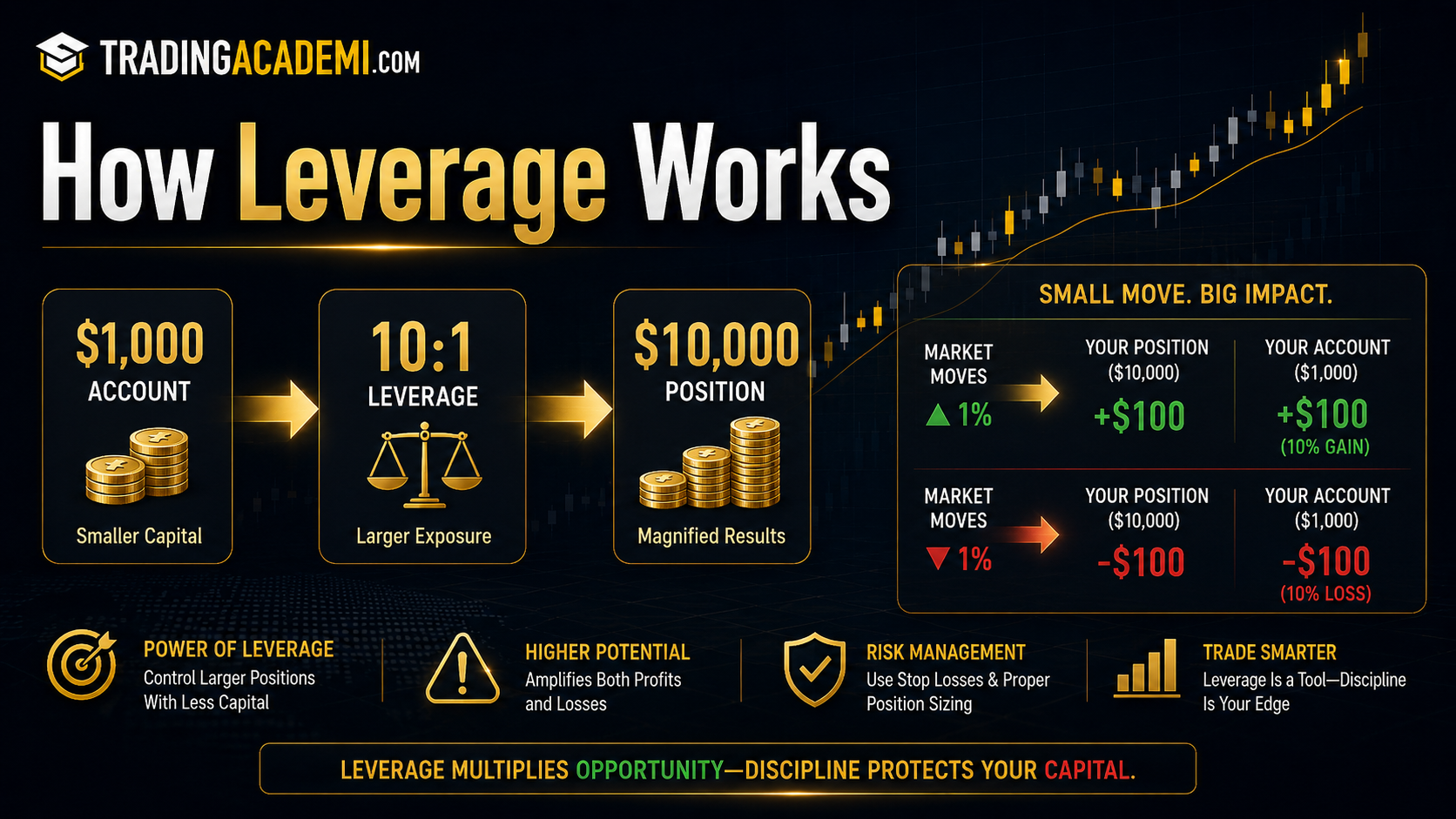
For example, if you have $1,000 and use 10:1 leverage, you may be able to control a $10,000 position. This does not mean you have $10,000 in your account. It means you are controlling a position worth $10,000 using a smaller amount of capital.
That can make gains larger, but it can also make losses larger.
Leverage is commonly used in markets such as forex, futures, CFDs, options, crypto derivatives, and margin stock trading. It can be useful for experienced traders who understand risk, but for beginners, it can become dangerous very quickly.
What Is Leverage Risk?
Leverage risk is the danger that a leveraged position can create losses that are much larger than expected. The risk comes from the fact that your market exposure is bigger than your account size.
If you control a large position with a small account, even a small price movement can have a large effect on your equity. A 1% move in the market may look small on the chart, but if you are using high leverage, that small move can represent a much larger percentage change in your trading account.
This is why leverage risk is not only about price direction. It is also about position size, margin, volatility, liquidity, and discipline.
A trader can be correct about the general market direction and still lose money if the leveraged position is too large, the stop loss is too tight, or the trade does not have enough room to move.
How Leverage Works
Let’s use a simple example.
Imagine you have $1,000 in your trading account. Without leverage, if you buy $1,000 worth of an asset and the asset moves 5%, your gain or loss is about $50.
But if you use 10:1 leverage, you may control a $10,000 position. Now, if that position moves 5%, the gain or loss is about $500.
That is half of your account.
The market only moved 5%, but your account changed by 50%. This is the basic danger of leverage. It magnifies results.
Many traders focus only on the bigger gain, but risk management requires thinking first about the possible loss.
Leverage Example: Small Move, Big Impact
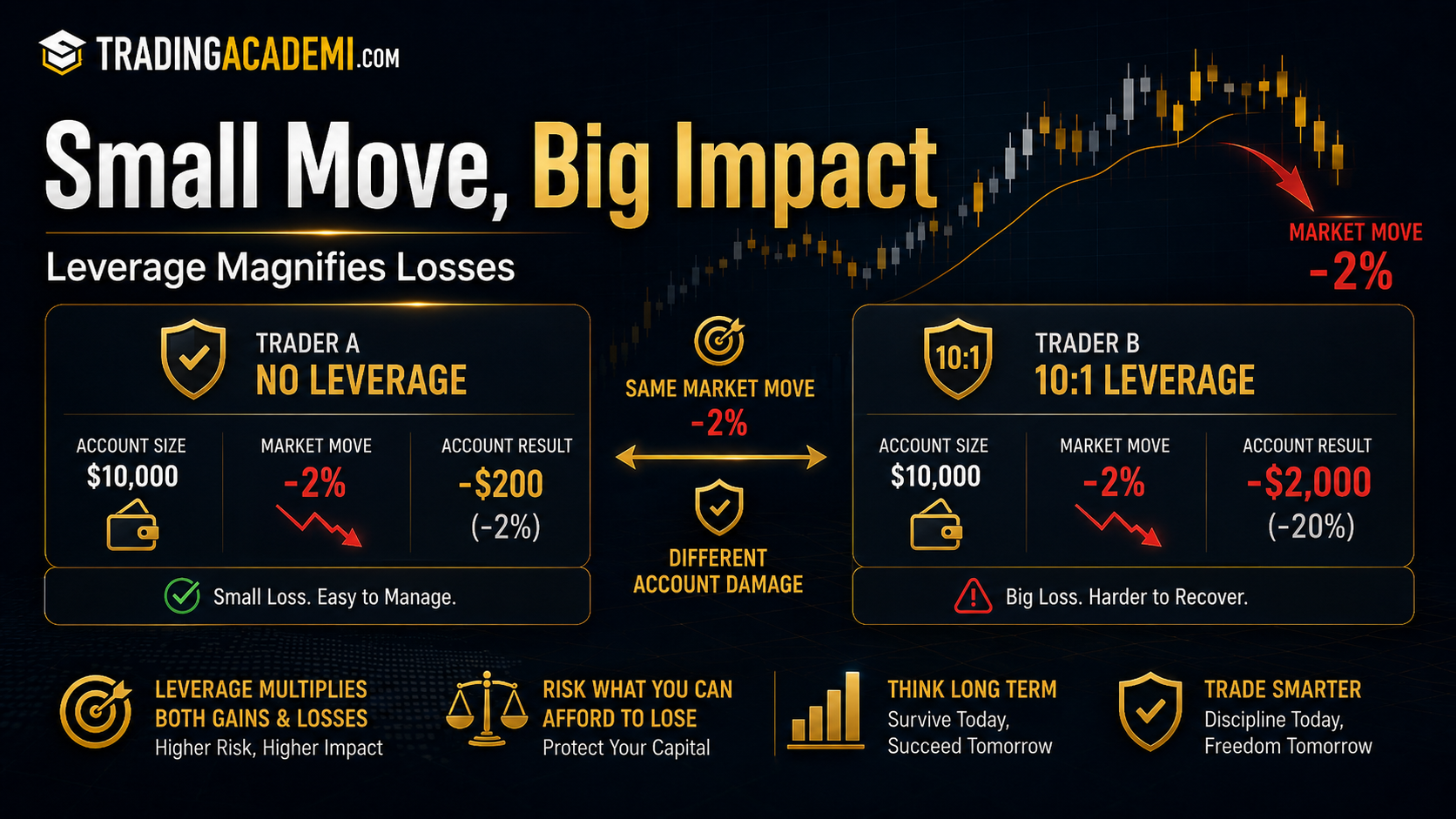
Imagine two traders both have a $2,000 account. Trader A uses no leverage and controls a $2,000 position. Trader B uses 10:1 leverage and controls a $20,000 position.
Now imagine the market moves against both traders by 2%.
Trader A loses:
2% of $2,000 = $40Trader B loses:
2% of $20,000 = $400The market move is the same, but the account damage is not the same. Trader A loses 2% of the account, while Trader B loses 20% of the account.
This is why leverage can quickly increase drawdown. A small market movement can create a large account loss when the position is too large.
Margin and Leverage
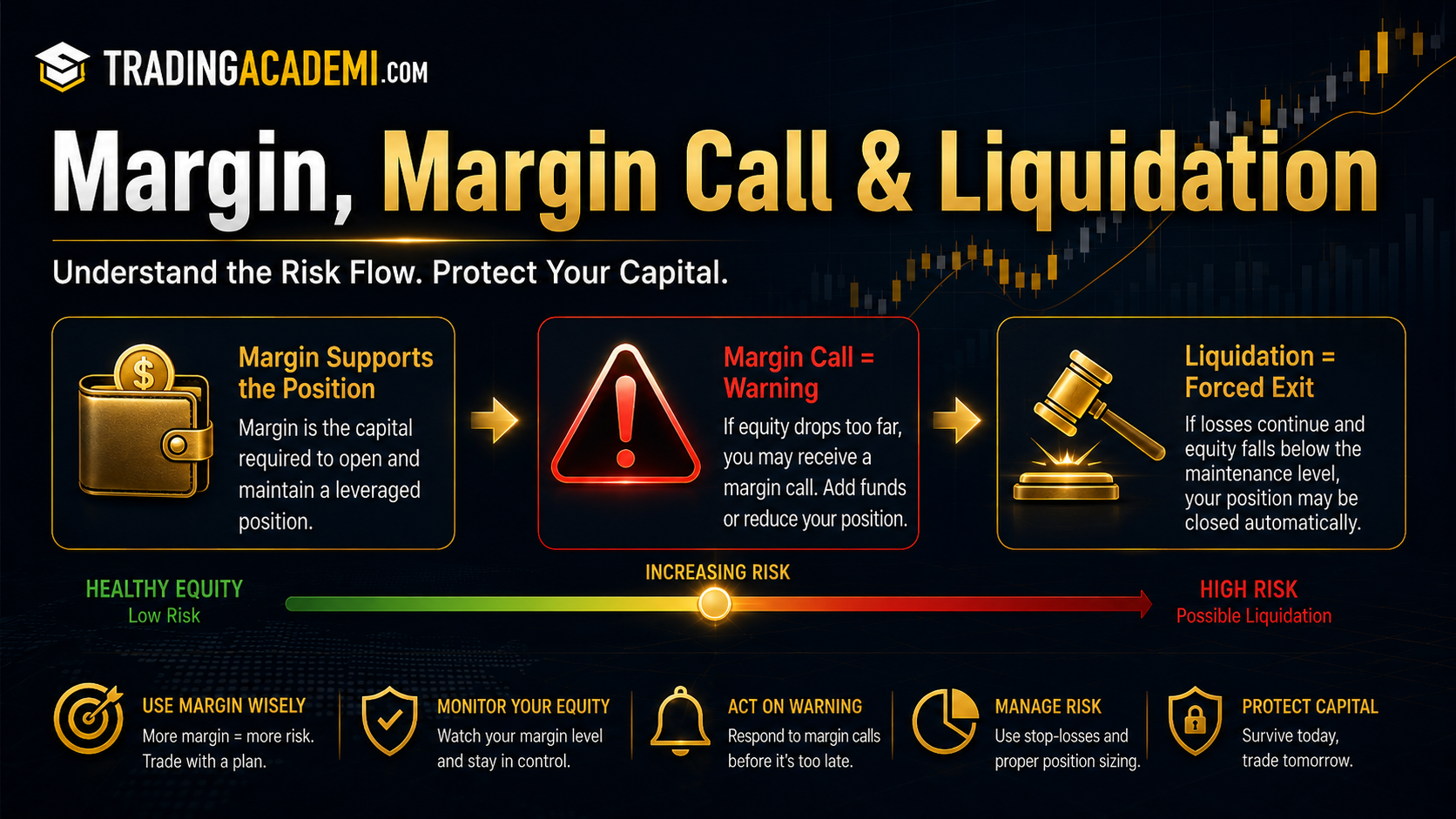
Margin is the amount of money required to open and maintain a leveraged position. Leverage and margin are connected.
If a broker requires 10% margin, it means you may control a position worth about 10 times that margin amount. That is roughly 10:1 leverage.
For example, if a position is worth $10,000 and the required margin is $1,000, the leverage is 10:1.
Margin is not a fee. It is the amount set aside to support the position. But if the trade moves against you and your account equity drops too much, you may face a margin call or forced liquidation.
That means the broker may close your position to protect against further loss. For a beginner, this can be shocking because the trade may close automatically before they expected.
What Is a Margin Call?
A margin call happens when your account equity falls below the required margin level. In simple terms, it means your account no longer has enough funds to support the leveraged position.
Depending on the broker or platform, you may be asked to deposit more money, reduce your position, or the position may be closed automatically.
A margin call is a warning sign that the trade is overexposed. Many beginners reach this point because they use too much leverage, trade too large, or ignore stop losses.
A margin call should not be seen as a normal part of trading. It usually means risk was not controlled properly.
What Is Liquidation?
Liquidation is when a broker or exchange automatically closes a leveraged position because the account can no longer support the trade. This is common in highly leveraged crypto derivatives, futures, and margin trading.
When liquidation happens, the trader loses control of the exit. Instead of closing based on a planned stop loss, the position is closed because the account reached a dangerous risk level.
This is why traders should not rely on liquidation as a stop loss. A stop loss is planned. Liquidation is forced.
There is a big difference.
You can learn more about planned exits in Stop Loss Orders Explained.
Why Beginners Misuse Leverage
Beginners often misuse leverage because they focus on potential profit instead of potential loss. They may think that more leverage means faster account growth, or that a strong setup justifies increasing size.
Some traders also believe they can recover quickly if they lose, or that the market only needs to move slightly in their favor to make a good profit. These thoughts are dangerous because they ignore the downside.
Leverage makes emotional trading more dangerous. A small mistake can become expensive. A normal pullback can become a large drawdown. A losing streak can damage the account quickly.
Beginners should not ask, “How much leverage can I use?” A better question is: how much exposure can my account safely handle if I am wrong?
Leverage and Position Sizing
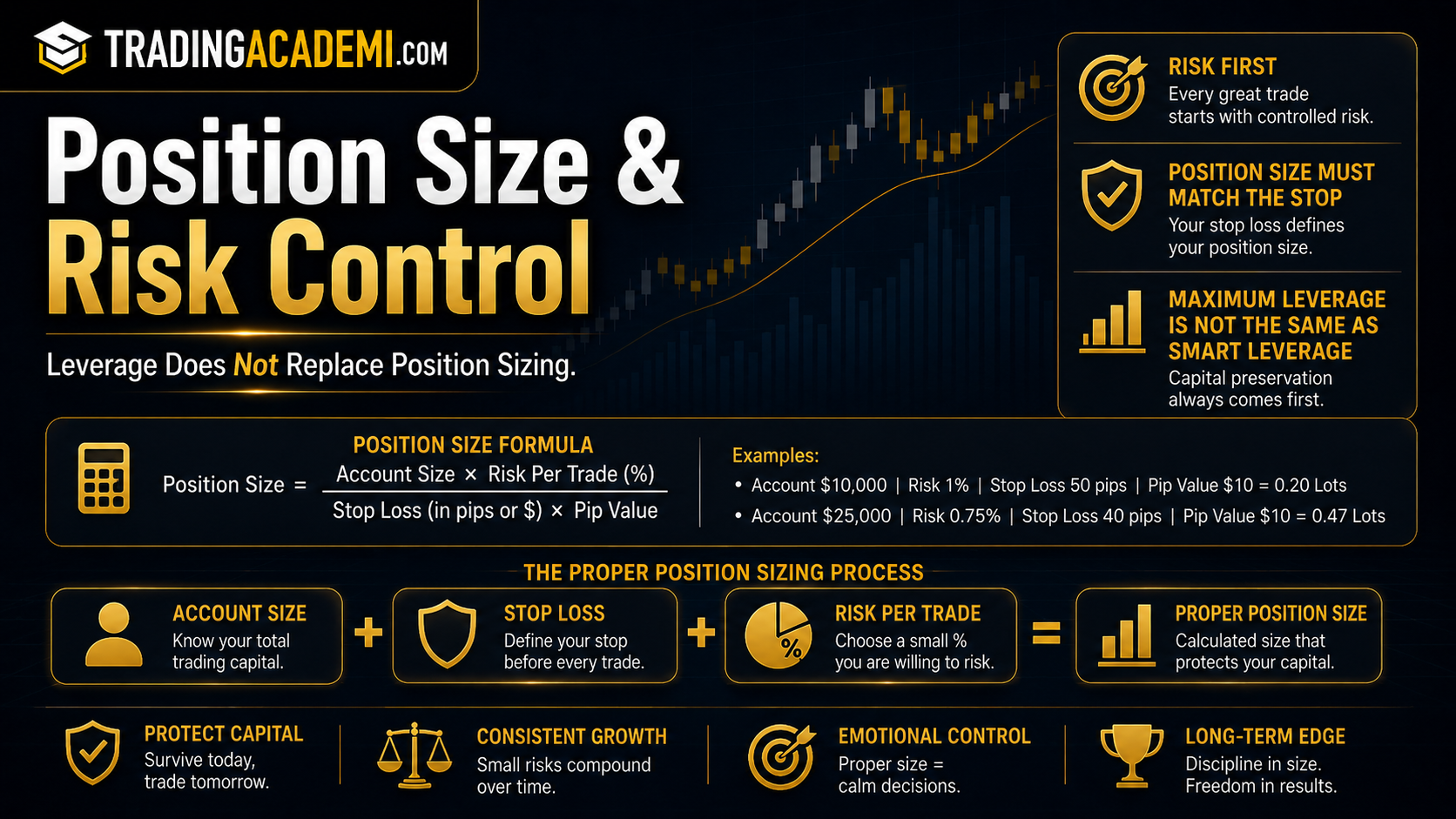
Leverage does not replace position sizing. This is a very important point.
Some traders think that because their platform allows high leverage, they can take bigger trades. But position size should be based on risk, not on the maximum leverage available.
Your position size should depend on account size, risk per trade, stop loss distance, market volatility, contract value or lot size, and total open exposure.
For example, if your planned risk is $100, your position size should be calculated so that your stop loss equals about $100 risk. If leverage allows you to open a much larger position, that does not mean you should.
The correct process is explained in our position sizing guide.
Leverage and Stop Loss Placement
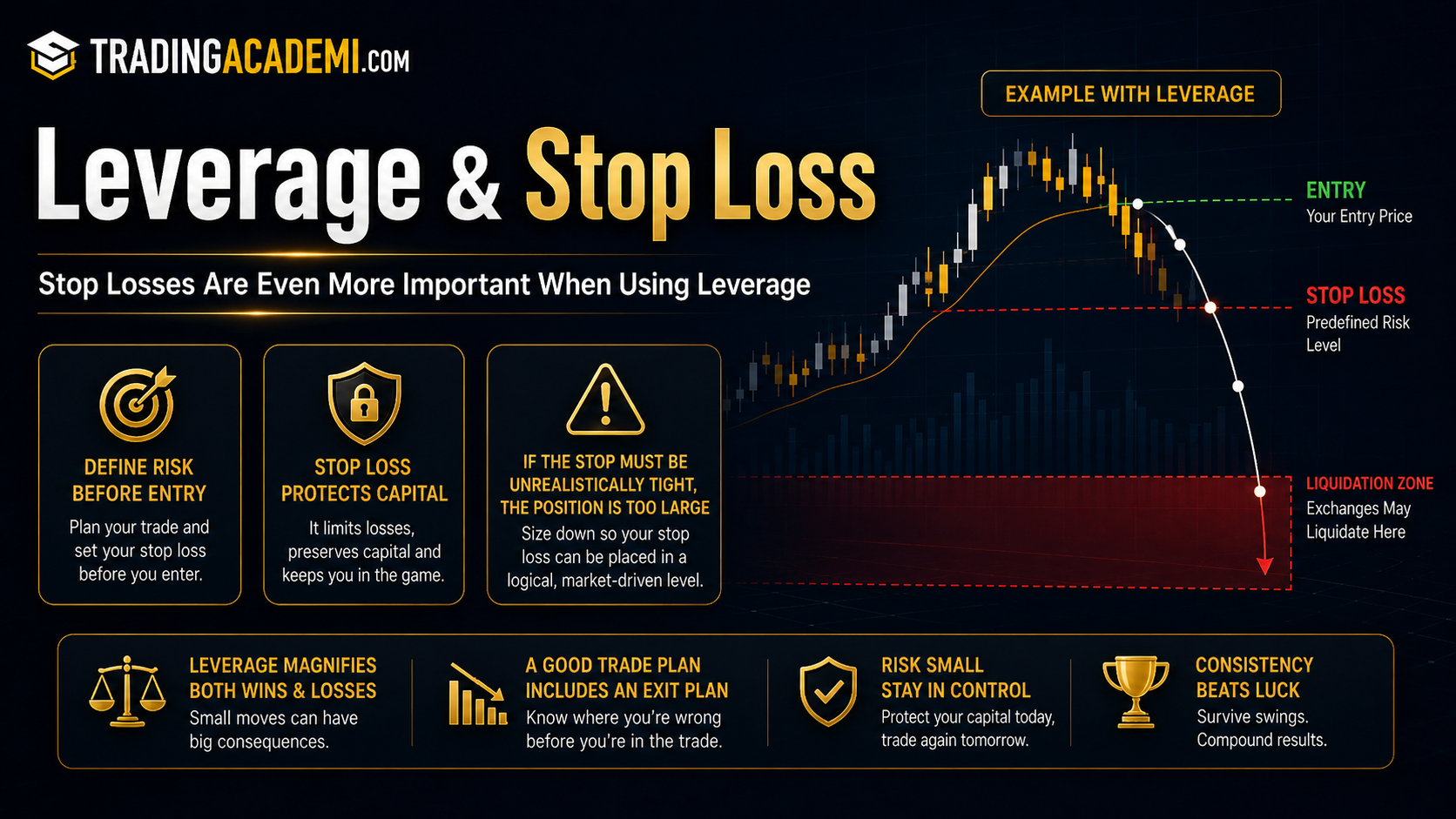
Stop losses become even more important when leverage is involved. A leveraged trade can move against you quickly, so you need to know where your trade idea becomes invalid before entering.
However, leverage can create a common mistake. A trader may open a large leveraged position and then place the stop loss very close because they cannot afford a wider stop. This can lead to frequent stop-outs because normal market movement hits the stop.
The problem is not always the stop loss. The problem is often the position size.
If your stop loss needs to be unrealistically tight to make the trade affordable, your position is probably too large. A logical stop loss should come first, and position size should adapt to the stop.
Leverage and Volatility
Volatility means how much price moves. High volatility and high leverage are a dangerous combination.
When markets move quickly, leveraged positions can lose money fast. Slippage can also happen, meaning your stop loss may execute at a worse price than expected.
This is especially important during economic news, earnings reports, central bank announcements, crypto market spikes, low-liquidity periods, market openings, and major geopolitical events.
A small move can become a large account loss when leverage is high. During volatile periods, many traders reduce position size or avoid leverage completely.
Leverage in Forex Trading
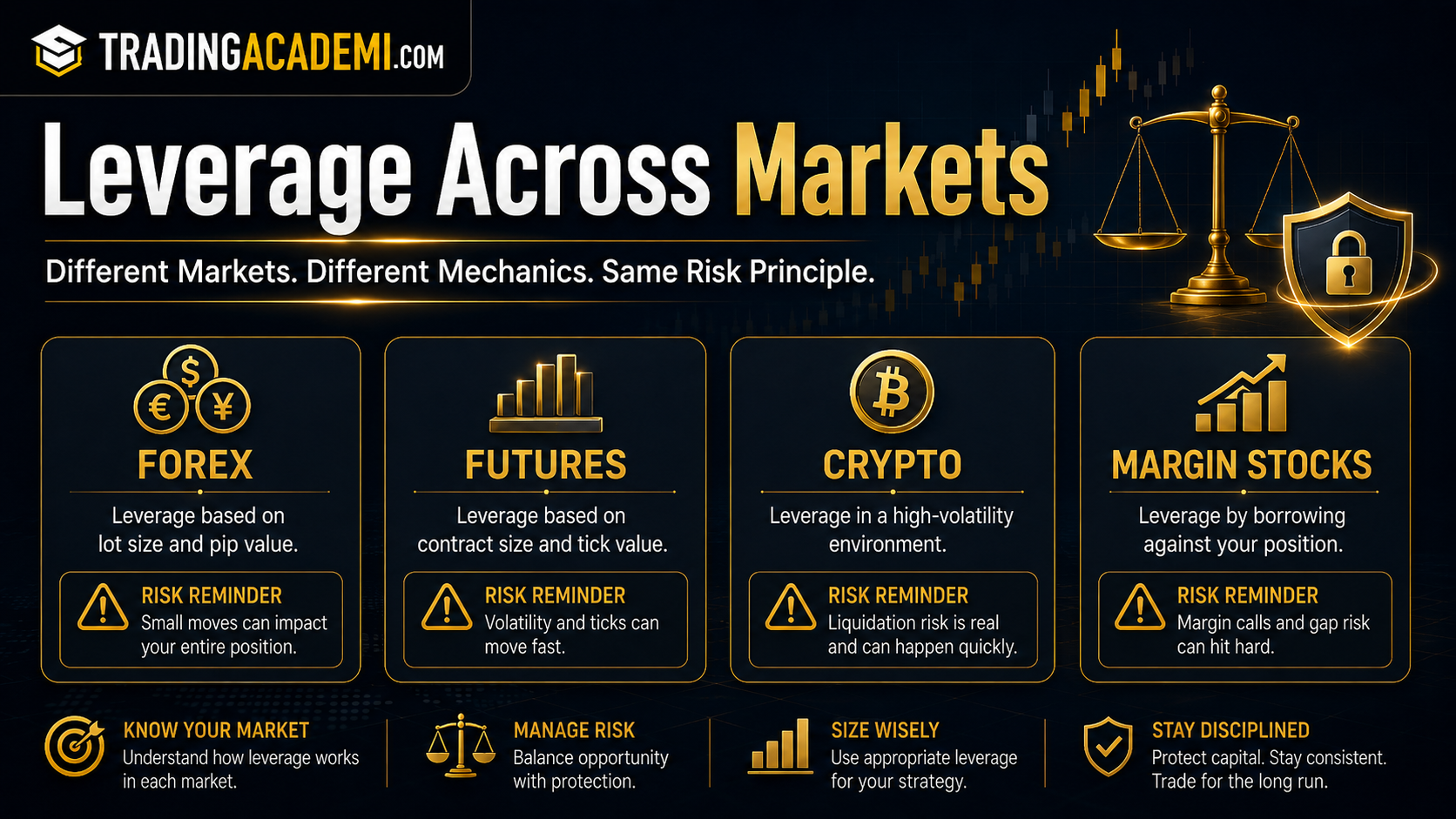
Forex trading often offers high leverage compared to many other markets. This is one reason forex attracts beginners.
However, high leverage does not mean low risk. Currency pairs can move quickly during economic releases, central bank decisions, and geopolitical events. Spreads may widen, and stop losses may experience slippage.
In forex, traders should understand pip value, lot size, margin requirement, stop loss distance, currency pair volatility, and risk per trade.
Using high leverage without understanding these basics can lead to fast losses. If you are new to currencies, you can start with our forex market guide.
Leverage in Futures Trading
Futures are naturally leveraged instruments. A futures contract controls a large notional value compared to the margin required, which makes futures powerful but risky.
For example, one futures contract may move by a fixed dollar value per tick. If the tick value is large and the trader uses too many contracts, losses can grow quickly.
Futures traders must understand contract size, tick value, point value, initial margin, maintenance margin, daily volatility, and stop loss size.
Micro futures can help smaller traders reduce exposure, but they still require discipline. Leverage in futures should always be treated seriously.
Leverage in Crypto Trading
Crypto leverage can be extremely risky because crypto markets are open 24/7 and can move sharply. Many crypto exchanges offer high leverage, but high leverage can lead to liquidation quickly.
Crypto traders should be careful with sudden volatility, exchange liquidity, funding fees, liquidation levels, weekend movement, stop loss slippage, and overnight exposure.
Using high leverage in crypto without a clear risk plan can destroy an account very quickly. For a broader foundation, you can read our cryptocurrency market guide.
Leverage in Stock Margin Trading
Some stock traders use margin to buy more shares than they could with cash alone. This increases buying power, but it also increases risk.
If the stock falls, the trader loses money on a larger position. Margin stock trading can be especially risky during earnings gaps, market crashes, or unexpected news.
A stock can open much lower than the previous close, meaning a stop loss may not protect the trader at the exact level expected.
This is why margin should be used carefully and with proper risk limits. You can also review the basics in our stock market guide.
Leverage and Overexposure
Overexposure happens when a trader has too much risk open at the same time. This can happen even if each trade looks small.
For example, a trader may open several leveraged positions that all depend on the same market direction. If the market moves against them, all positions may lose together.
This is common when traders open multiple forex pairs linked to the same currency, multiple crypto trades during the same market move, or several stocks from the same sector.
Leverage makes overexposure worse. A trader should always look at total risk, not only individual trade risk.
Leverage and Emotional Pressure
Leverage increases emotional pressure. When your position is too large, every price movement feels important. You may become nervous, impatient, or reactive.
You may close winners too early because you fear losing profit. You may move stop losses because you do not want to accept a loss. You may revenge trade after a leveraged loss.
This is why leverage is not only a financial risk. It is also a psychological risk.
If your trade size makes you unable to think clearly, the size is too large. Good trading requires calm execution, and high leverage often destroys calm execution.
How to Reduce Leverage Risk
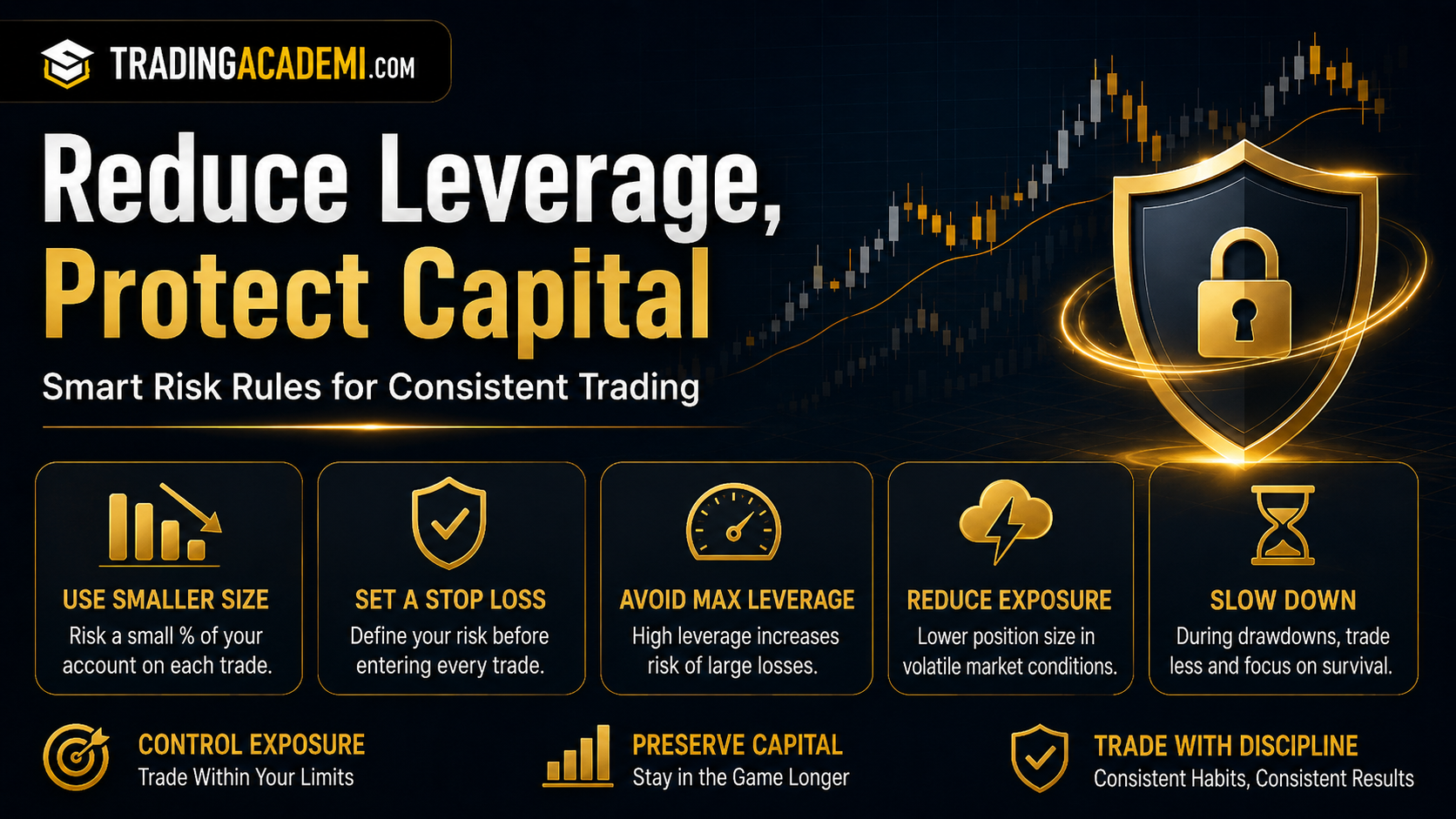
The first way to reduce leverage risk is to use smaller position sizes. You do not need to use the maximum leverage available.
Second, define your stop loss before entering the trade. Third, calculate position size based on your planned risk. Fourth, avoid trading during major news if you do not understand the risk.
It also helps to limit the number of open positions, reduce size during losing streaks or drawdown, avoid adding to losing leveraged trades, and use a trading journal to track whether leverage is affecting your emotions and results.
Leverage risk is controlled through rules, not hope.
Leverage Risk Checklist
Before using leverage, ask yourself whether you understand the product you are trading and what your total position exposure is. You should also know the margin requirement, where your stop loss is, how much you can lose if the stop is hit, and what may happen if price gaps or slips.
Ask yourself whether you are using leverage because of a plan or because of greed. Check if you have other open trades with similar exposure, whether you can emotionally accept the planned loss, whether the trade would still make sense with less leverage, and whether you understand the liquidation or margin call level.
If you cannot answer these questions clearly, the leverage may be too risky.
Common Leverage Mistakes
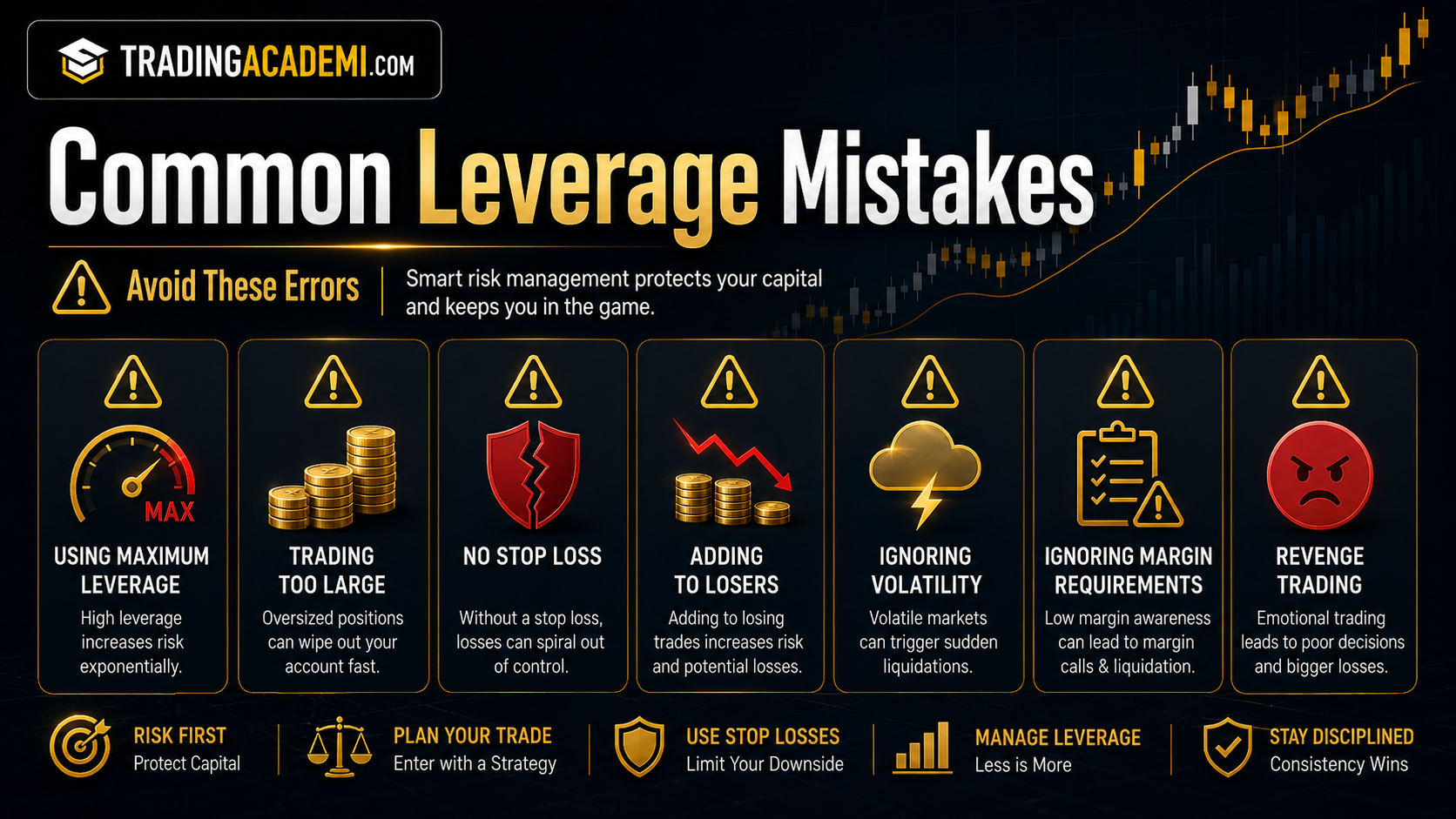
One common mistake is using the maximum leverage available. Just because a broker offers high leverage does not mean you should use it. Maximum leverage is usually not the same as smart leverage.
Another mistake is trading too large. Large positions can turn normal market movement into serious account damage.
Some traders also ignore margin requirements. A trader should understand both initial margin and maintenance margin before opening a leveraged position.
Using leverage without a stop loss can be extremely dangerous. Adding to losing leveraged trades is another major mistake because it increases exposure while the trade is already going wrong.
Traders should also avoid ignoring volatility. High volatility can cause fast moves, slippage, and liquidation. Revenge trading with leverage is especially dangerous because it often makes losses worse.
Example of a Safer Leverage Plan
A beginner-friendly leverage plan may include simple rules such as risking only 1% or less per trade, never using the maximum leverage available, and always defining the stop loss before entry.
The trader should calculate position size before opening the trade, avoid high leverage during news events, stop trading after reaching the daily loss limit, and reduce size during drawdown.
A safer plan also includes not adding to losing trades and tracking every leveraged trade in a journal.
The exact numbers depend on the trader and market, but the principle is the same: use leverage only when risk is planned and controlled.
Final Thoughts
Leverage can be useful, but it must be respected. It is not a shortcut to guaranteed profits. It is a tool that magnifies both gains and losses.
For beginners, the main danger is not only leverage itself. The danger is using leverage without understanding position size, stop loss placement, margin requirements, volatility, and emotional pressure.
A disciplined trader does not use leverage simply because it is available. A disciplined trader uses only the exposure that fits the risk plan.
Before using leverage, remember that leverage increases exposure, exposure increases risk, and risk must be controlled before profit is pursued.
The goal is not to trade as large as possible. The goal is to stay in the game long enough to improve.
Educational Disclaimer
This article is for educational purposes only and should not be considered financial advice. Trading and investing involve risk, including the possible loss of capital. Leveraged trading can magnify losses and may not be suitable for all traders. Always do your own research or consult a qualified financial professional before making financial decisions.