 By Anzo Trader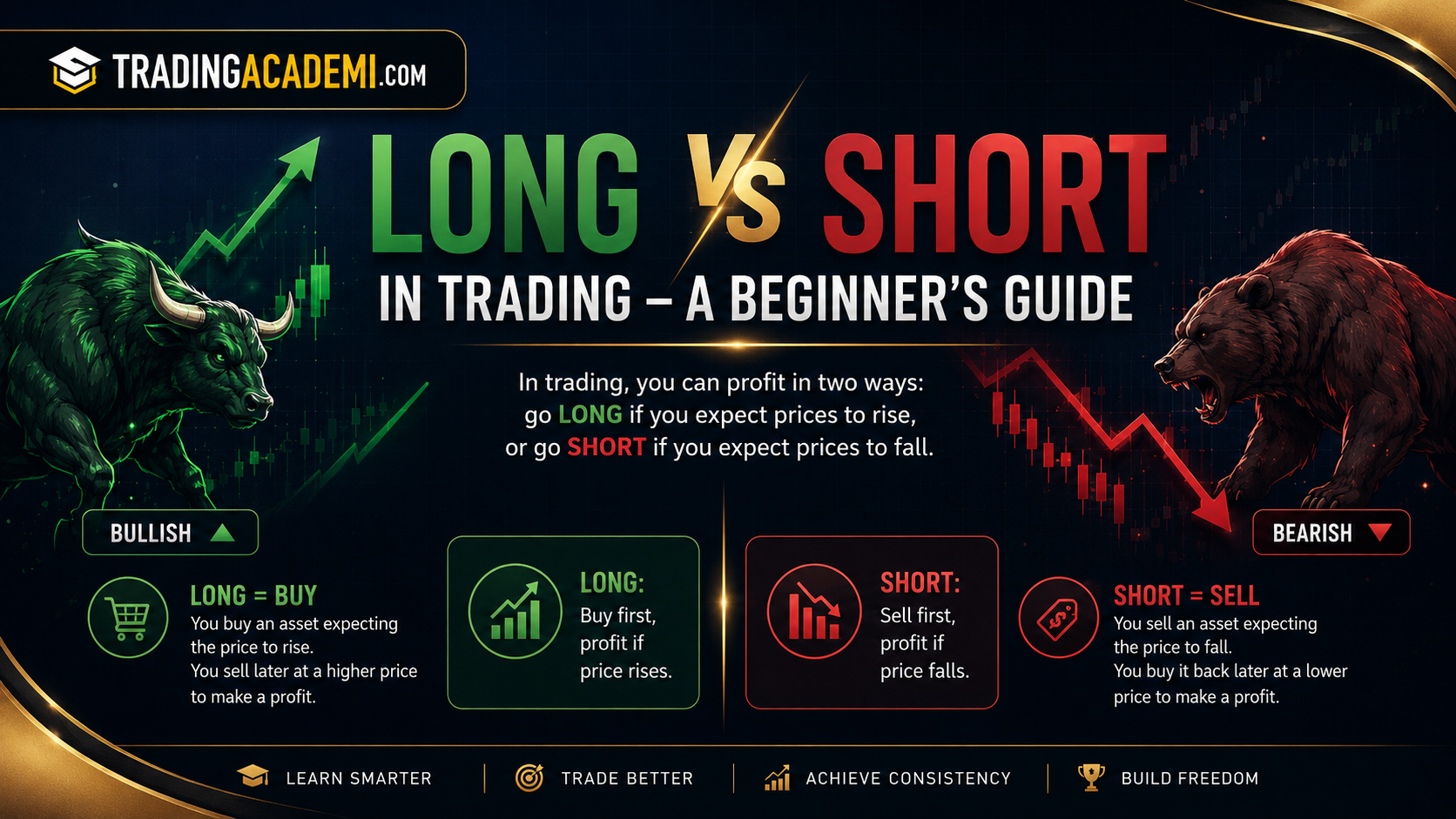
When beginners start learning trading, they usually think that traders only make money when markets go up. That is true in some situations, especially when someone buys an asset and sells it later at a higher price. But in many financial markets, traders can also plan for prices moving lower.
This is where the terms long and short become important.
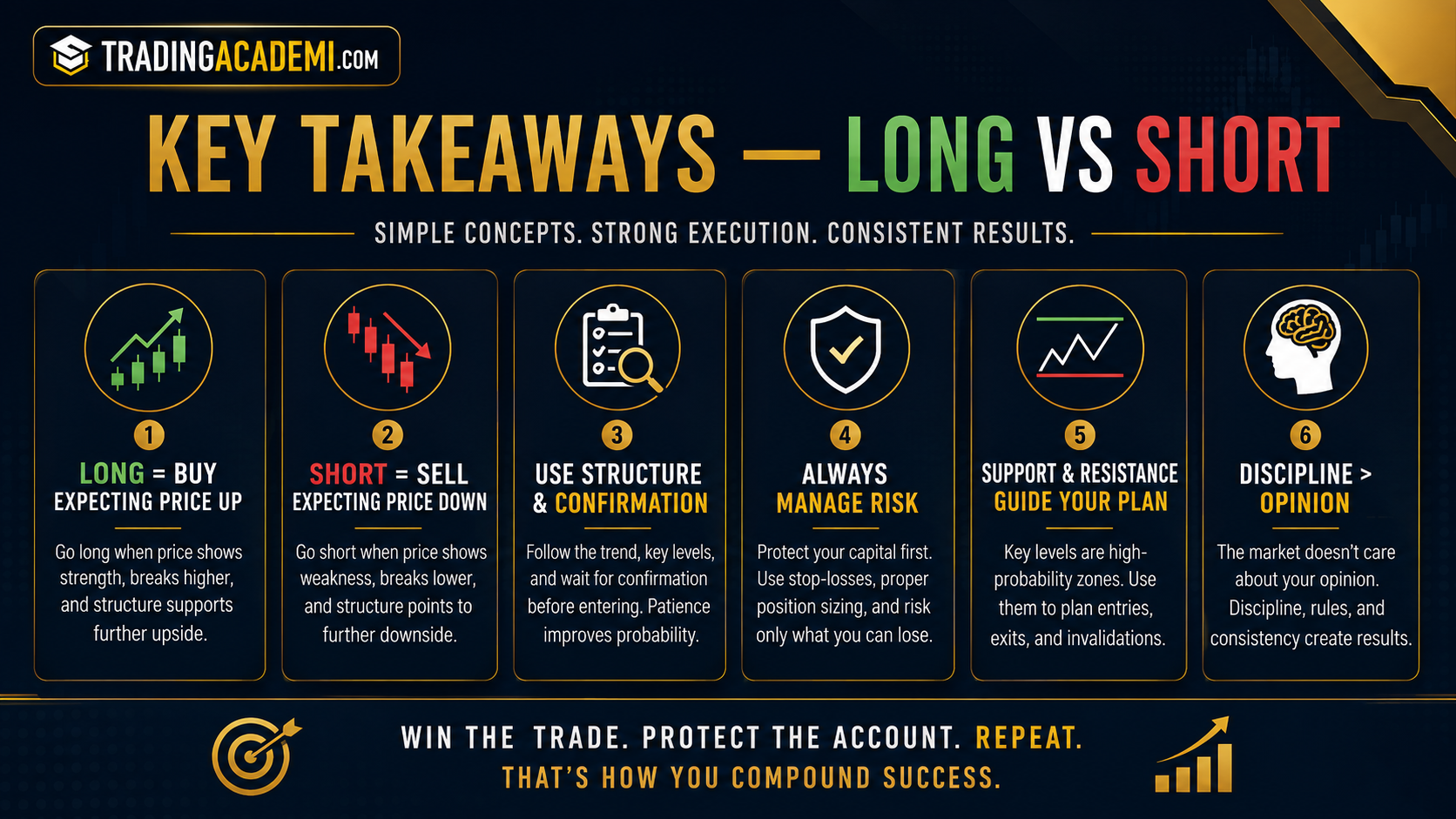
A trader who goes long is trying to benefit from price moving higher. A trader who goes short is trying to benefit from price moving lower. In simple words, long means buying because you expect price to rise, while short means selling because you expect price to fall.
Understanding long and short is essential because trading is not only about direction. It is also about having a plan, knowing where the trade becomes invalid, and managing risk before entering. These terms are part of the foundation of key trading terminology and connect directly with bullish vs bearish meaning in trading and what trading is.
What Does Going Long Mean in Trading?
Going long means buying an asset because you expect its price to increase. The goal is simple: buy at a lower price and sell later at a higher price.
For example, imagine a stock is trading at $50. If a trader believes the stock may rise to $60, they may buy it. If the price rises, the trader may make a profit. If the price falls instead, the trader may lose money.
So, in simple terms, going long means you want price to go up after you enter.
Long trades are common in stocks, forex, futures, crypto, commodities, and many other financial markets. A trader may look for long opportunities when price is moving in an uptrend, making higher highs and higher lows, breaking above resistance, showing strong buying volume, or holding above support.
However, going long does not mean the trade is safe. Price can still move down after entry. That is why long trades need a clear plan, a stop loss, position sizing, and proper risk management.
What Does Going Short Mean in Trading?
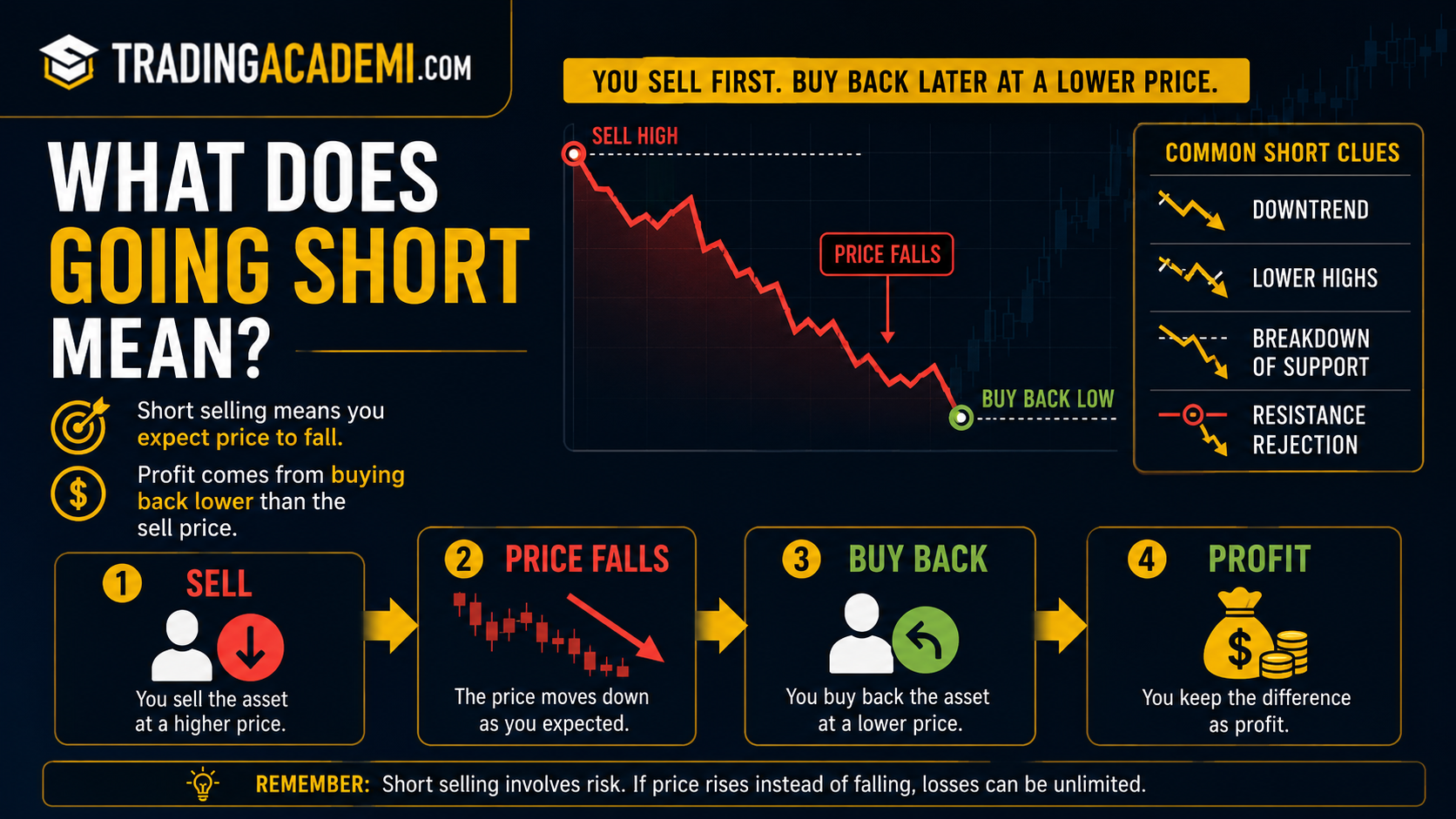
Going short means entering a trade because you expect price to decrease. This can sound confusing for beginners because short selling involves selling first and buying back later.
The idea is still simple. A trader sells at a higher price and hopes to buy back at a lower price.
For example, if an asset is trading at $50 and a trader believes it may fall to $40, the trader may enter a short position. If price falls, the trader may profit from the difference. If price rises instead, the trader may lose money.
So, in simple terms, going short means you want price to go down after you enter.
Short trades are often used when traders see bearish market conditions, weak structure, breakdowns below support, strong selling pressure, or price failing near resistance. A short trader may look for lower highs, lower lows, negative market sentiment, and strong selling volume before taking action.
Short trading can carry serious risk, especially if price rises sharply. This is why short trades require discipline, stop loss planning, and controlled position sizing.
Long vs Short: Simple Difference
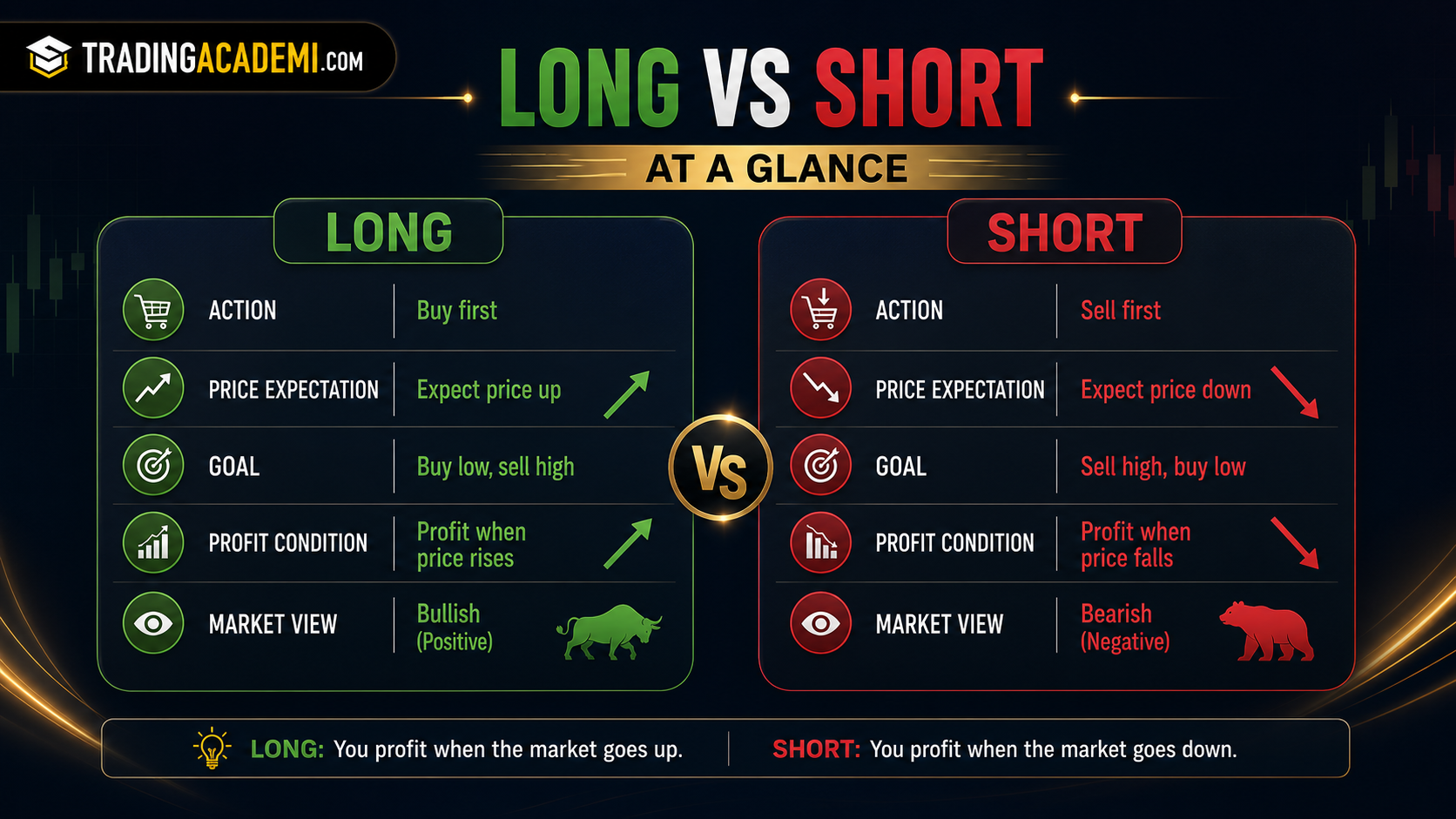
The main difference between long and short is the direction the trader wants price to move.
| Trade Type | Main Action | Price Expectation | Goal |
|---|---|---|---|
| Long | Buy first | Price goes up | Buy low, sell high |
| Short | Sell first | Price goes down | Sell high, buy back lower |
A long trader wants the market to rise. A short trader wants the market to fall.
This is why long trades are usually connected with a bullish view, while short trades are usually connected with a bearish view. To understand the market direction behind this, you can read Bullish vs Bearish Meaning in Trading.
Long Trading Example
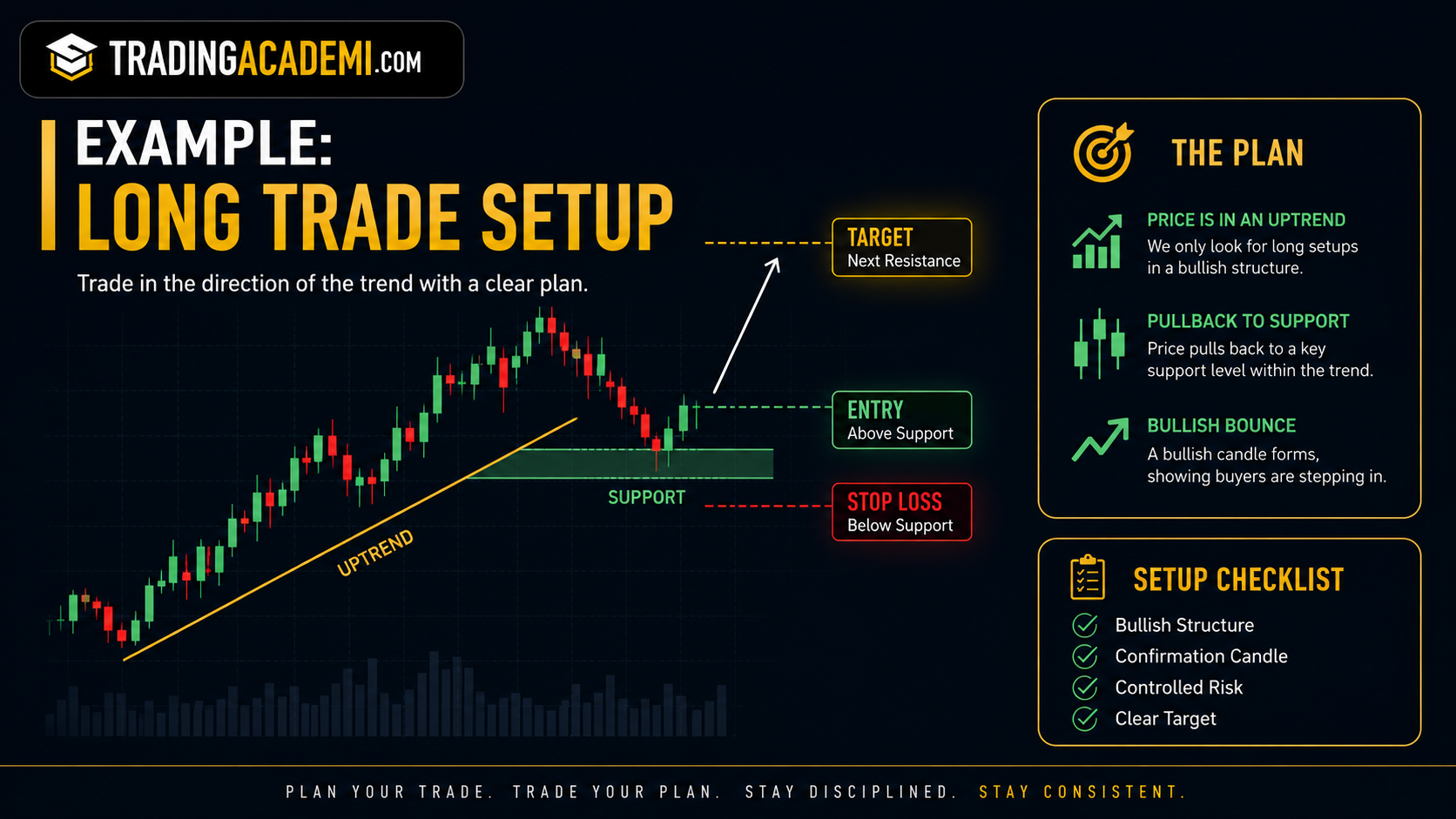
Imagine a trader is watching a stock that has been moving upward for several weeks. Price is making higher highs and higher lows, then pulls back to a support area and starts to bounce.
The trader may think: “The trend is bullish, price is holding support, and buyers are still active. I will look for a long setup.”
A simple long trade plan could be based on entering after price confirms strength near support. The stop loss may go below the support area, and the target may be near the next resistance level. The trader may also decide to risk only a small percentage of the account.
This is not just buying randomly because price is going up. It is a planned long trade based on structure, confirmation, and risk control.
Short Trading Example
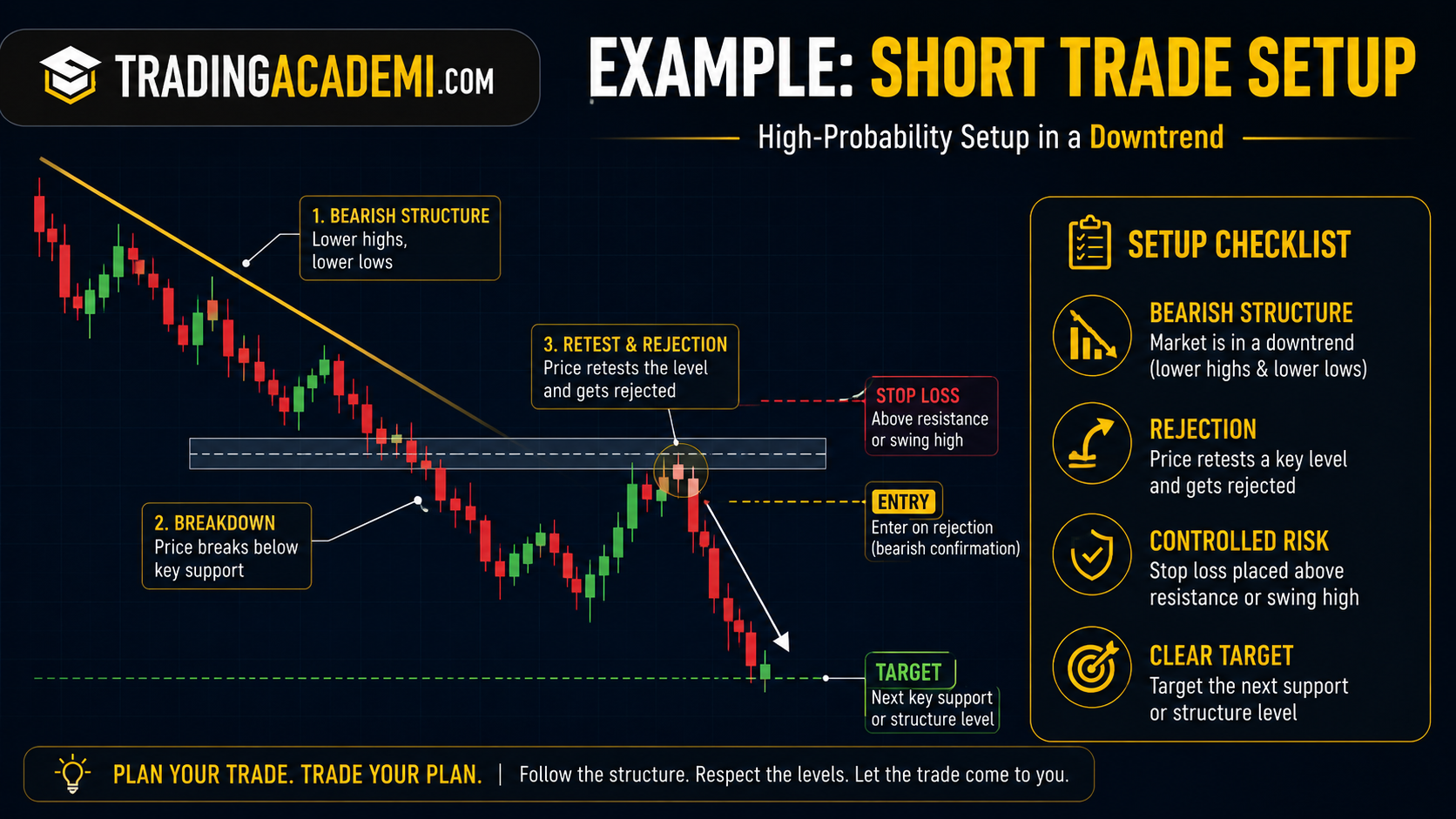
Now imagine another market is moving downward. Price is making lower highs and lower lows. It breaks below support with strong selling volume, then later retests the broken support and fails to move back above it.
The trader may think: “The trend is bearish, support has broken, and sellers are still in control. I will look for a short setup.”
A simple short trade plan could involve entering after price confirms weakness below the broken support. The stop loss may go above the failed retest area or above the recent swing high, while the target may be near the next support level.
Again, this is not emotional selling. It is a planned short trade based on market structure, confirmation, and risk management.
Long and Short in Different Markets
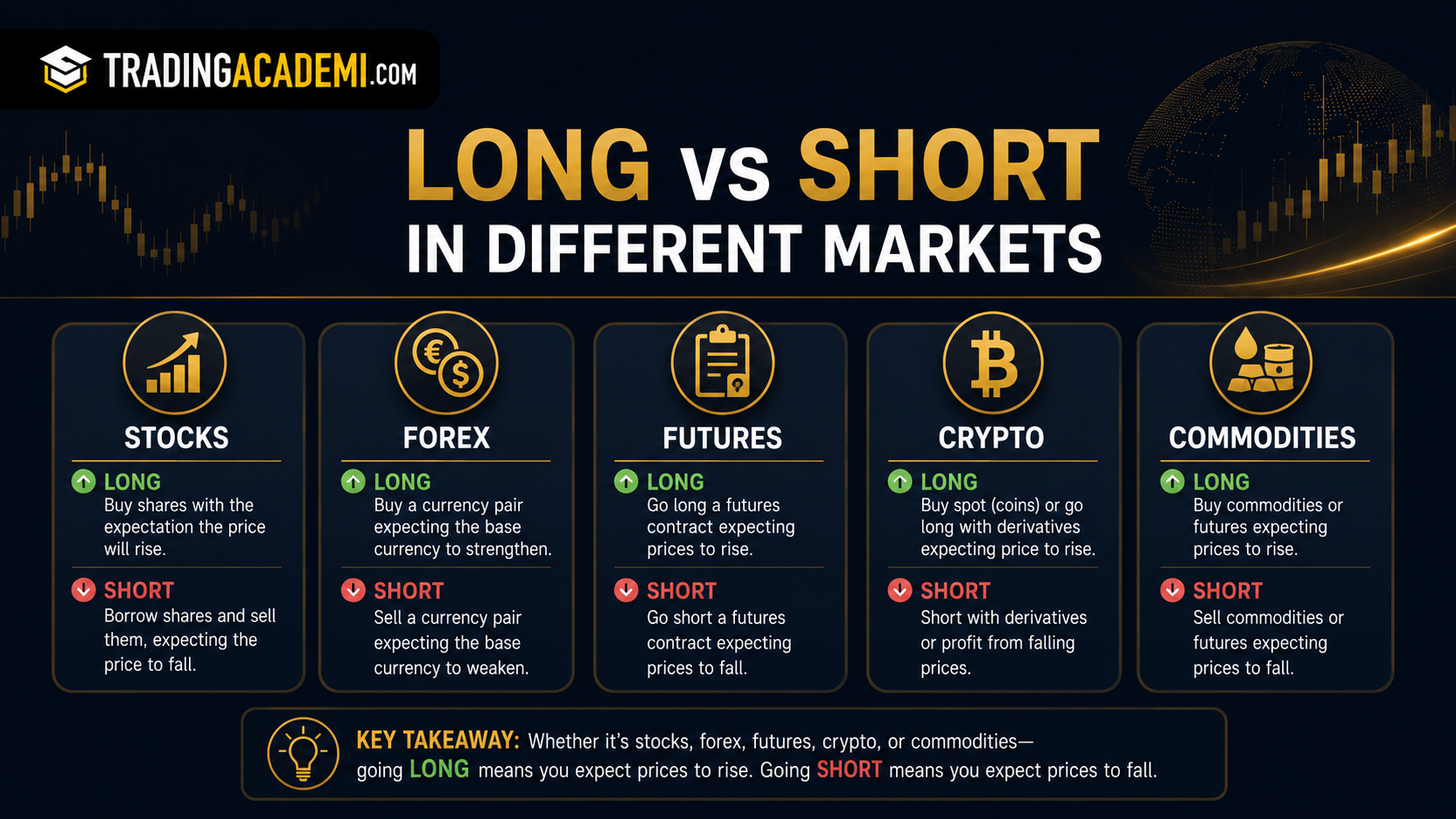
Long and short trades can appear in different markets, but the details may change depending on the instrument.
In the stock market, going long is simple. You buy shares and hope they rise. Going short stocks may require borrowing shares through a broker, and not every account has access to short selling. A long stock trader may buy because they expect company growth, while a short stock trader may sell short because they expect weakness.
In the forex market, every trade involves one currency against another. If you buy EUR/USD, you are going long the euro and short the U.S. dollar at the same time. If you sell EUR/USD, you are short the euro and long the U.S. dollar. This is why forex pairs can feel confusing at first.
In futures trading, traders can usually go long or short depending on market direction. A trader may go long crude oil futures if they expect oil prices to rise, or short index futures if they expect the market to fall. Since futures are leveraged products, risk control is very important.
In crypto, going long usually means buying a cryptocurrency because you expect it to rise. Some crypto exchanges also offer short trading through derivatives, futures, or margin products. These can be very risky, especially because crypto markets can move fast.
Long Bias vs Short Bias
A trader may have a long bias or a short bias. A long bias means the trader is mainly looking for buying opportunities. A short bias means the trader is mainly looking for selling or shorting opportunities.
But a bias is not the same as a trade.
For example, a trader may have a long bias because the daily trend is bullish, but they may still wait for a pullback or breakout before entering. Another trader may have a short bias because price is in a downtrend, but they may wait for a weak bounce into resistance before taking a short position.
A trading bias should be supported by evidence, not emotion. Useful evidence can include trend direction, market structure, support and resistance, volume, momentum, higher timeframe context, and risk-to-reward ratio.
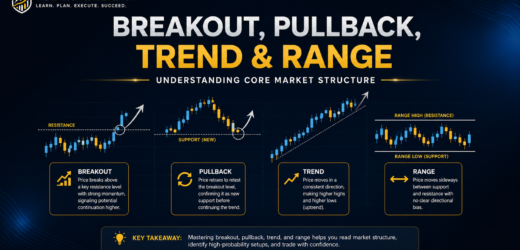
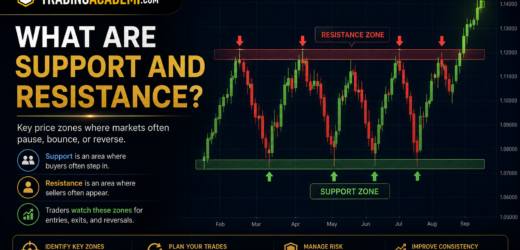
This connects with support and resistance explained and breakout, pullback, trend, and range explained.
Long Does Not Mean Safe
Many beginners think long trades are safer because buying feels more natural. But long trades still carry risk.
A long trade can lose money if price breaks below support, the trend changes, news turns negative, the trader enters too late, the stop loss is ignored, or the position size is too large.
Even when the market looks bullish, a long trade should be planned carefully. A trader should ask where the entry is, where the stop loss goes, where the target is, what the risk-to-reward ratio looks like, how much capital is being risked, and what would prove the trade idea wrong.
Long trading requires discipline, not just optimism.
Short Does Not Mean Easy Money
Short trading can be powerful, but it can also be risky. Markets can bounce quickly, short squeezes can happen, and news can reverse the market suddenly. A trader who shorts without a stop loss can face fast losses if price moves strongly upward.
Short trades can lose money if price breaks above resistance, selling pressure weakens, a strong bounce begins, the trader enters after a large drop, or the market squeezes short sellers.
A trader should not short only because price has already fallen. Sometimes, after a big drop, price may bounce strongly. This is why confirmation matters.
Short trading requires patience, discipline, and strong risk control.
Long and Short With Support and Resistance
Support and resistance are important for both long and short trades.
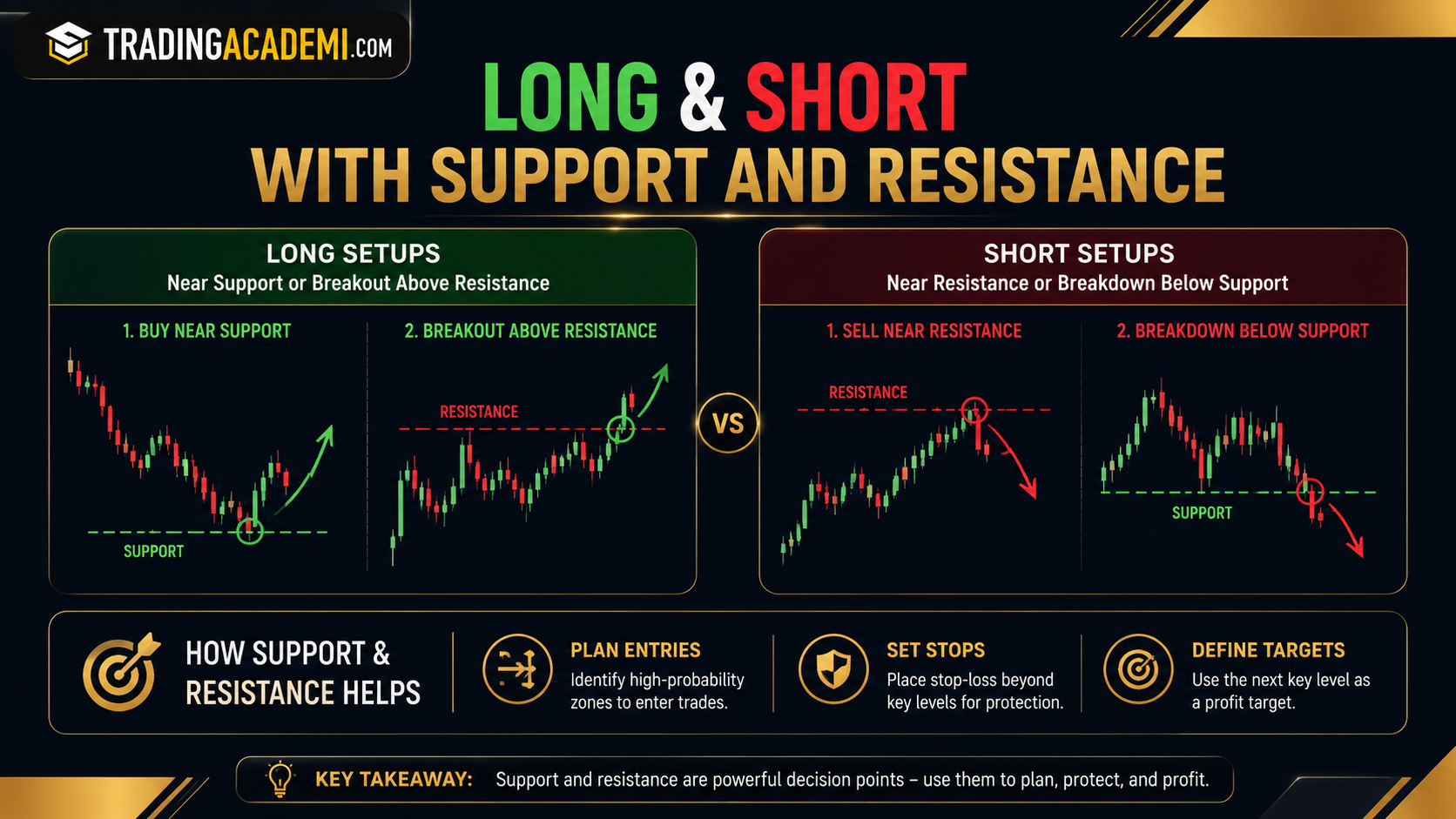
A long trader may look to buy near support or after a breakout above resistance. A short trader may look to sell near resistance or after a breakdown below support.
For example, a long setup may happen when price pulls back to support and bounces. Another long setup may happen when price breaks above resistance and holds. On the other side, a short setup may happen when price rejects resistance and falls, or when price breaks below support and continues lower.
Support and resistance do not guarantee success, but they help traders create structure. They can guide entries, exits, stop losses, and targets.
Long and Short With Stop Losses
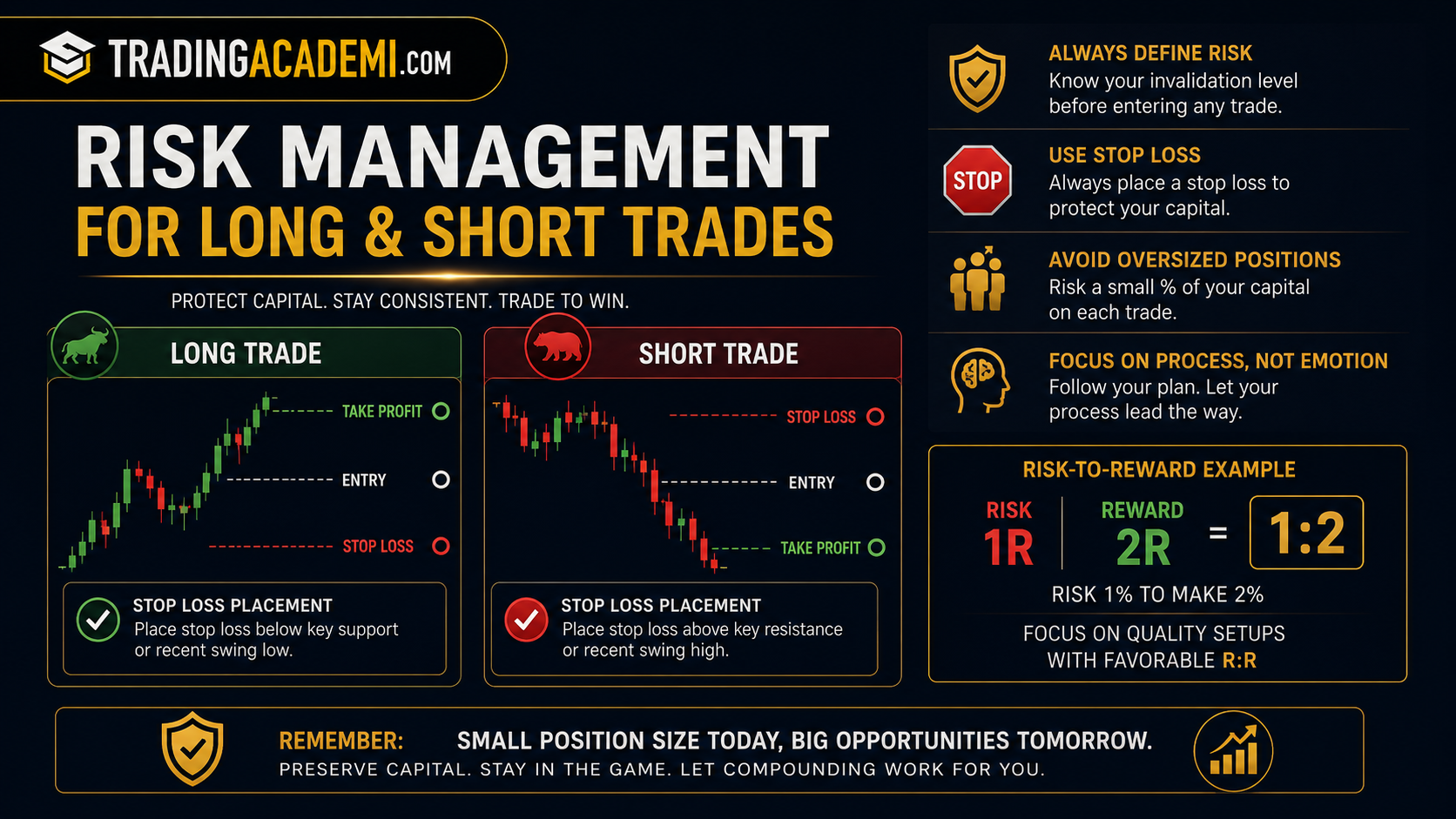
Every long or short trade should include a stop loss plan.
For a long trade, the stop loss is often placed below support, below a recent swing low, or below the level that invalidates the trade idea. For a short trade, the stop loss is often placed above resistance, above a recent swing high, or above the level that invalidates the bearish idea.
A stop loss helps define risk before entering. Without a stop loss, a trader may stay in a losing position too long and make emotional decisions.
You can learn more in Stop Loss Orders Explained.
Long and Short With Risk-to-Reward
Before entering any trade, traders should compare the risk with the potential reward.
For example, if a long trade risks $100 and the target offers $200 potential profit, the risk-to-reward ratio is 1:2. If a short trade risks $100 and the target offers $300 potential profit, the risk-to-reward ratio is 1:3.
Risk-to-reward does not guarantee profit, but it helps traders avoid poor setups. A trade may have the right direction but still be unattractive if the potential reward is too small compared with the risk.
You can learn more in Risk-to-Reward Ratio Explained.
Common Beginner Mistakes With Long and Short Trades
One common mistake is going long after price has already moved too high. Beginners may see a strong move and enter late, only to buy near resistance or after momentum is already weakening.
The opposite mistake happens with short trades. A beginner may short after price has already dropped too much, which can lead to selling near support before a bounce.
Another mistake is ignoring the higher timeframe. A short-term chart may look bearish while the higher timeframe is still bullish, or a short-term chart may look bullish while the higher timeframe is still bearish.
Many beginners also trade without a stop loss, use too much leverage, or confuse bias with entry. A trader may have a long bias but still need a proper entry. A trader may have a short bias but still need confirmation.
The goal is to follow structure, not emotion. Fear, greed, and FOMO can push traders into poor long or short entries.
Beginner Checklist Before Going Long
Before entering a long trade, ask yourself whether the market structure is bullish. Check if price is making higher highs and higher lows, if price is near support or breaking resistance, and if there is confirmation.
You should also define your stop loss, target, risk-to-reward ratio, and position size before entering. If you are entering too late or only because of emotion, it may be better to wait.
A long trade should be part of a plan, not a reaction.
Beginner Checklist Before Going Short
Before entering a short trade, ask yourself whether the market structure is bearish. Check if price is making lower highs and lower lows, if price is near resistance or breaking support, and if there is confirmation.
You should also define your stop loss, target, risk-to-reward ratio, and position size before entering. If you are shorting too late after a large drop, the risk may be poor.
A short trade should also be part of a plan, not an emotional reaction.
Final Thoughts
Long and short are two basic but important trading terms. Going long means buying because you expect price to rise. Going short means selling because you expect price to fall.
A long trade usually matches a bullish view, while a short trade usually matches a bearish view. But a view is not enough.
Traders should use structure, confirmation, risk management, position sizing, stop losses, and a clear trading plan before entering any position. The goal is not to be right on every trade. The goal is to make planned decisions, manage risk, and stay disciplined.
Educational Disclaimer
This article is for educational purposes only and should not be considered financial advice. Trading and investing involve risk, including the possible loss of capital. Going long or short does not guarantee profit. Always do your own research and consider consulting a qualified financial professional before making financial decisions.