
What Is Trading?
A beginner-friendly guide to understanding financial markets, buyers and sellers, price movement, trading opportunities, and why risk management always comes before profit.
Trading Is the Act of Buying and Selling
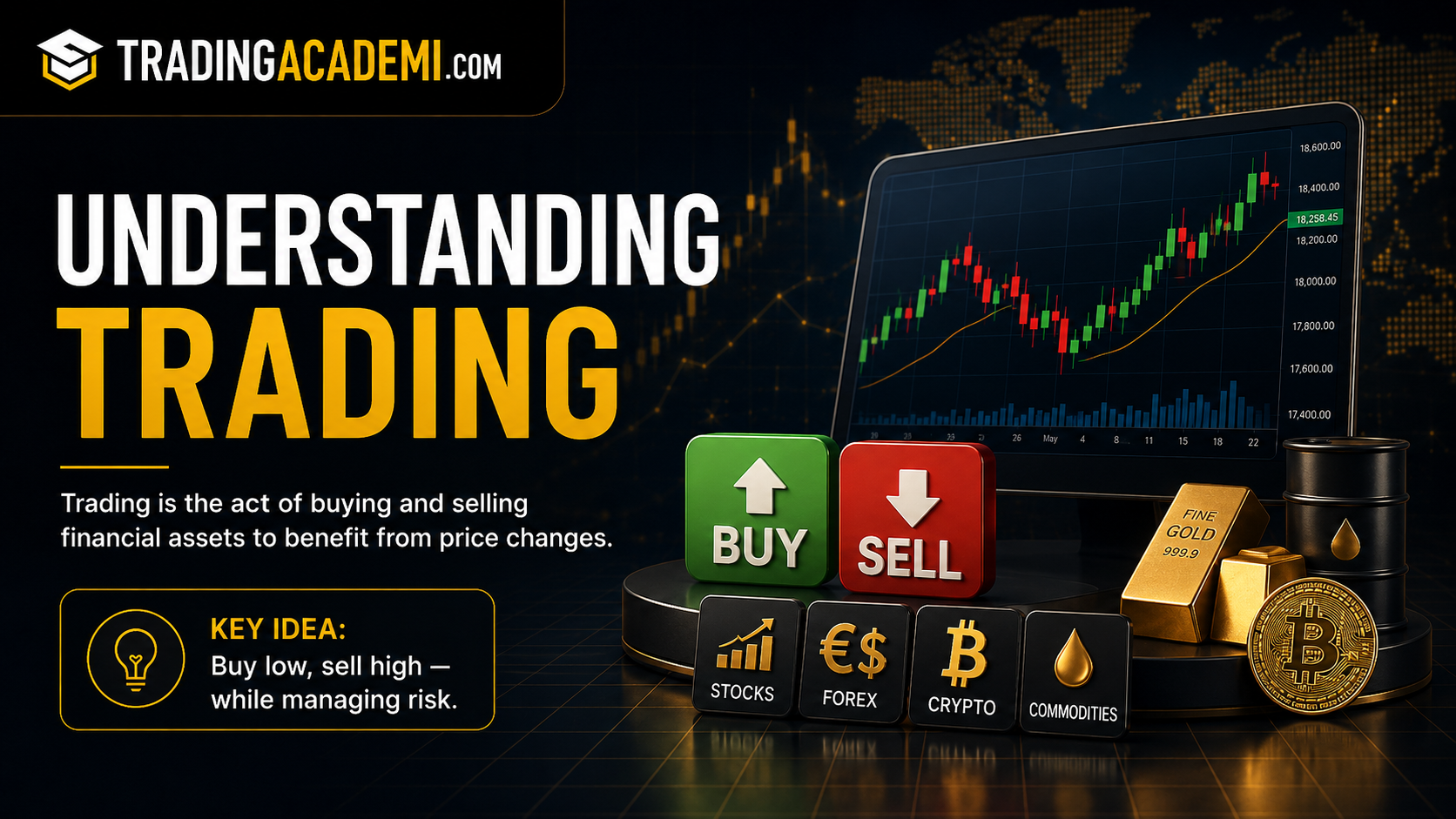
Trading means buying and selling financial assets with the goal of benefiting from price movement. A trader may buy when they expect price to rise or sell when they expect price to fall.
Trading can happen in many markets, including stocks, forex, futures, crypto, commodities, bonds, and derivatives. But no matter the market, the core idea is always the same: traders make decisions based on price, risk, and probability.
What Is Trading?
Trading is the process of buying and selling financial instruments in order to take advantage of price changes. These instruments can include stocks, currencies, futures contracts, cryptocurrencies, commodities, options, and other market products.
Understand Trading
Trading is not only about clicking buy or sell. It is about understanding price movement, planning risk, and making decisions based on a clear process.
For example, if a trader believes the price of a stock may rise, they may buy it and try to sell it later at a higher price. If the price rises, the trader may make a profit. If the price falls, the trader may take a loss.
Trading is not the same as guaranteed profit. Every trade carries risk. This is why beginners should learn the basic trading process before risking real money. Understanding types of markets, risk management, and basic order types can help you build a stronger foundation.
How Does Trading Work?
Trading works through a market where buyers and sellers agree on prices. When someone wants to buy and another person wants to sell at a matching price, a transaction happens.
From Market Choice to Review
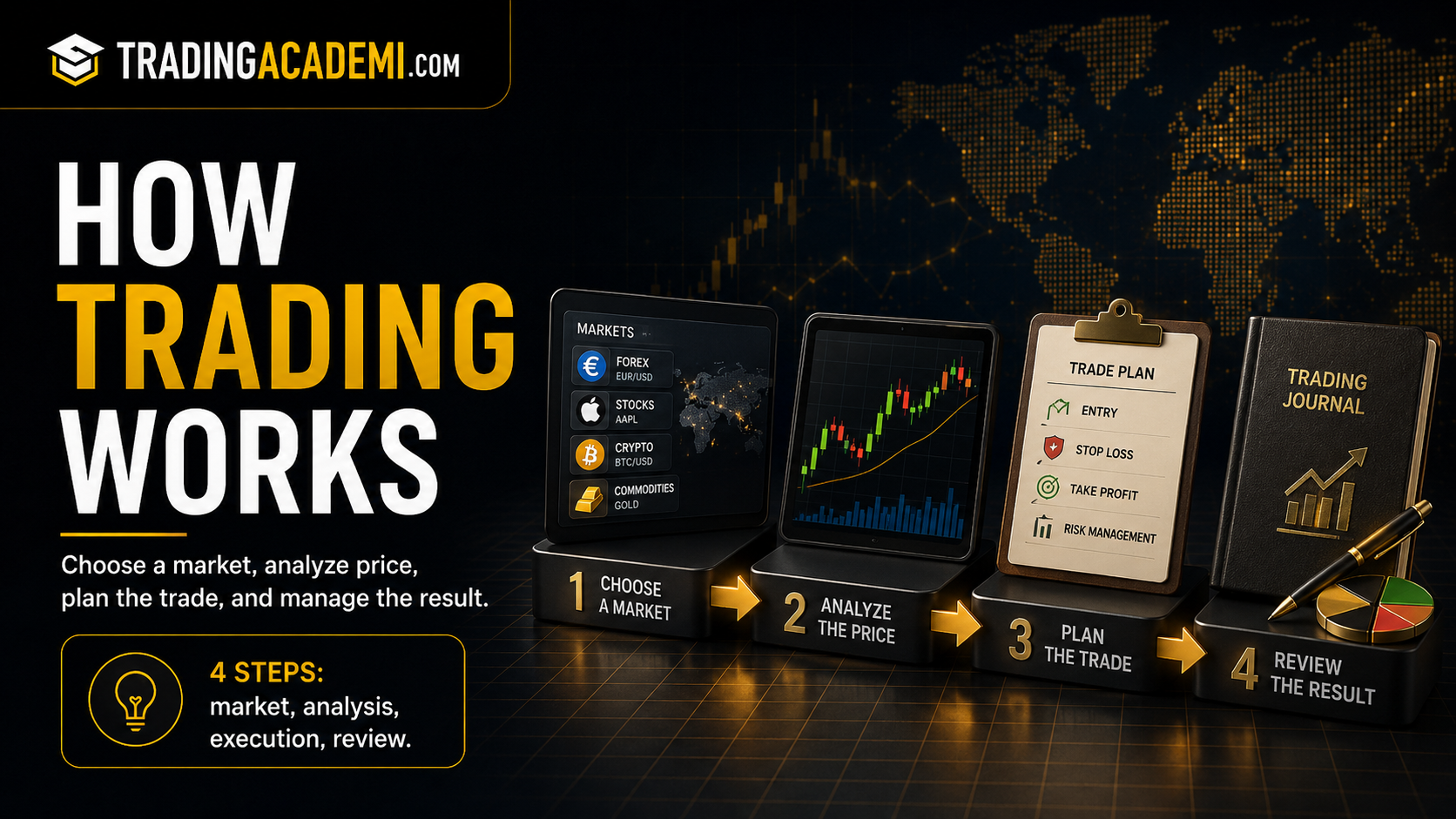
A structured trade usually starts before the entry. You choose a market, analyze the chart, build a plan, define risk, and then review the result after the trade.
Prices move because demand and supply are constantly changing. If more people want to buy than sell, price can rise. If more people want to sell than buy, price can fall.
Choose a Market
Select the market you want to study, such as stocks, forex, futures, or crypto.
Analyze Price
Use charts, news, fundamentals, or technical analysis to understand possible movement.
Plan the Trade
Define entry, stop loss, target, position size, and the amount you are willing to risk.
Review
Review the trade, record lessons, and improve the next decision.
Buyers and Sellers: The Core of Every Market
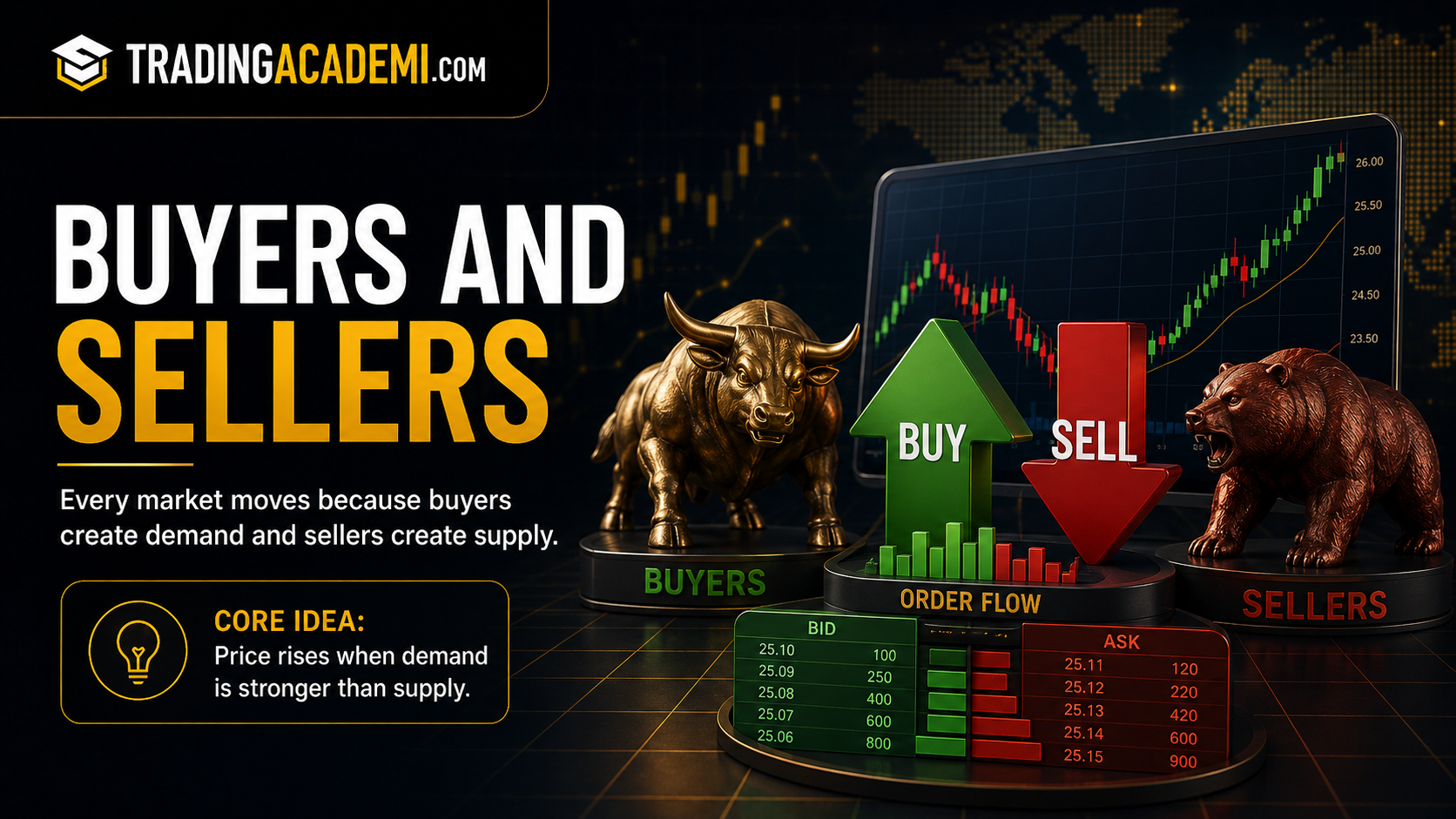
Every financial market is built around buyers and sellers. Buyers create demand, while sellers create supply. The balance between these two sides helps explain why prices move.
Demand vs Supply
When buying pressure is stronger than selling pressure, price may move higher. When selling pressure is stronger, price may move lower.
Buyers
Buyers create demand. When buying pressure is stronger than selling pressure, price may move higher.
Sellers
Sellers create supply. When selling pressure is stronger than buying pressure, price may move lower.
Why Do Prices Move?
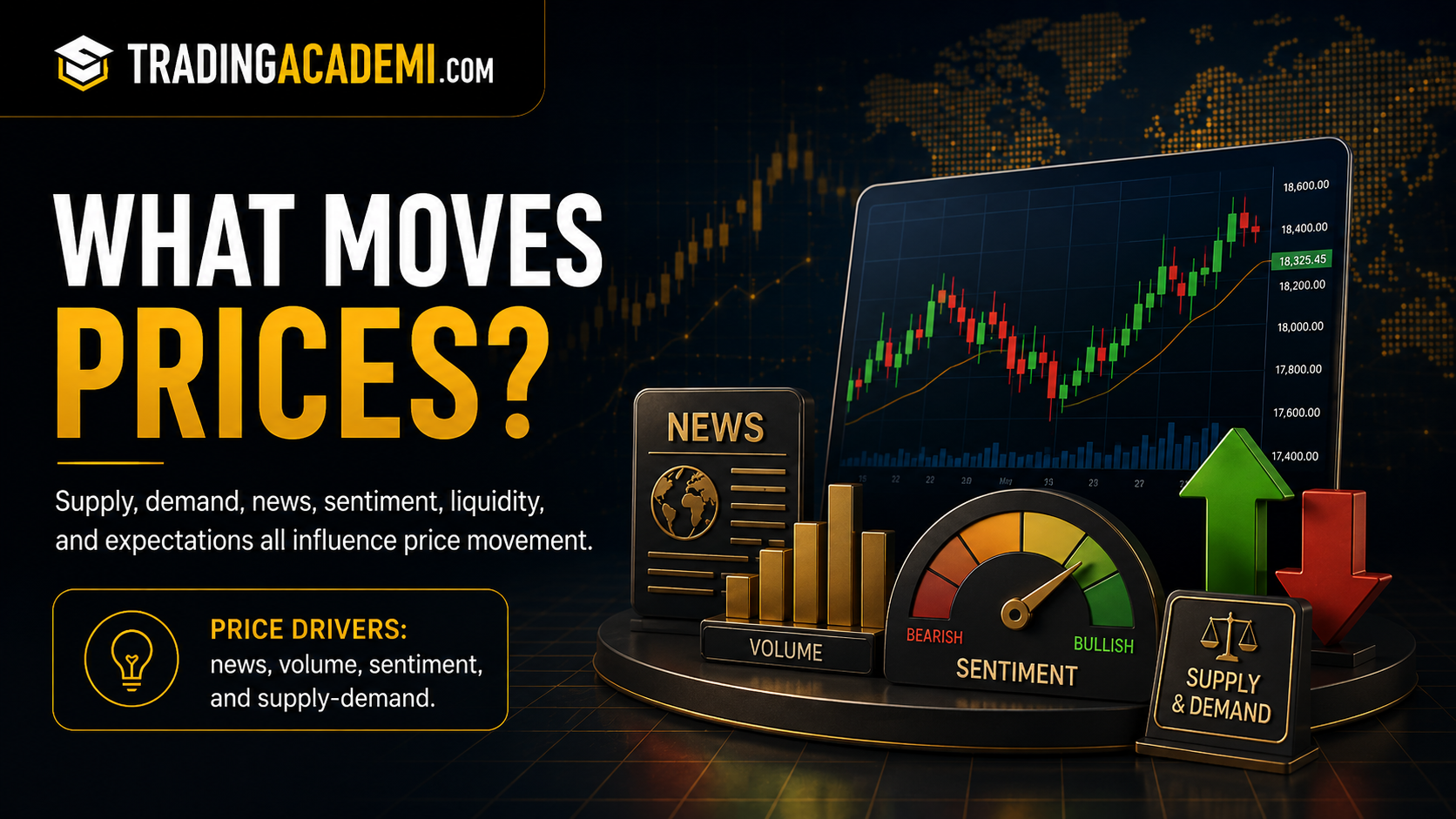
Prices move because market participants constantly react to information, expectations, emotions, and changing conditions. A price chart reflects the decisions of buyers, sellers, investors, institutions, algorithms, and traders.
Main Price Drivers
No single factor moves every market all the time. Price movement can come from news, sentiment, earnings, interest rates, volume, and liquidity.
Trading vs Investing
Trading and investing both involve financial markets, but they are not the same. Trading usually focuses on shorter-term price movement, while investing often focuses on long-term ownership and growth.
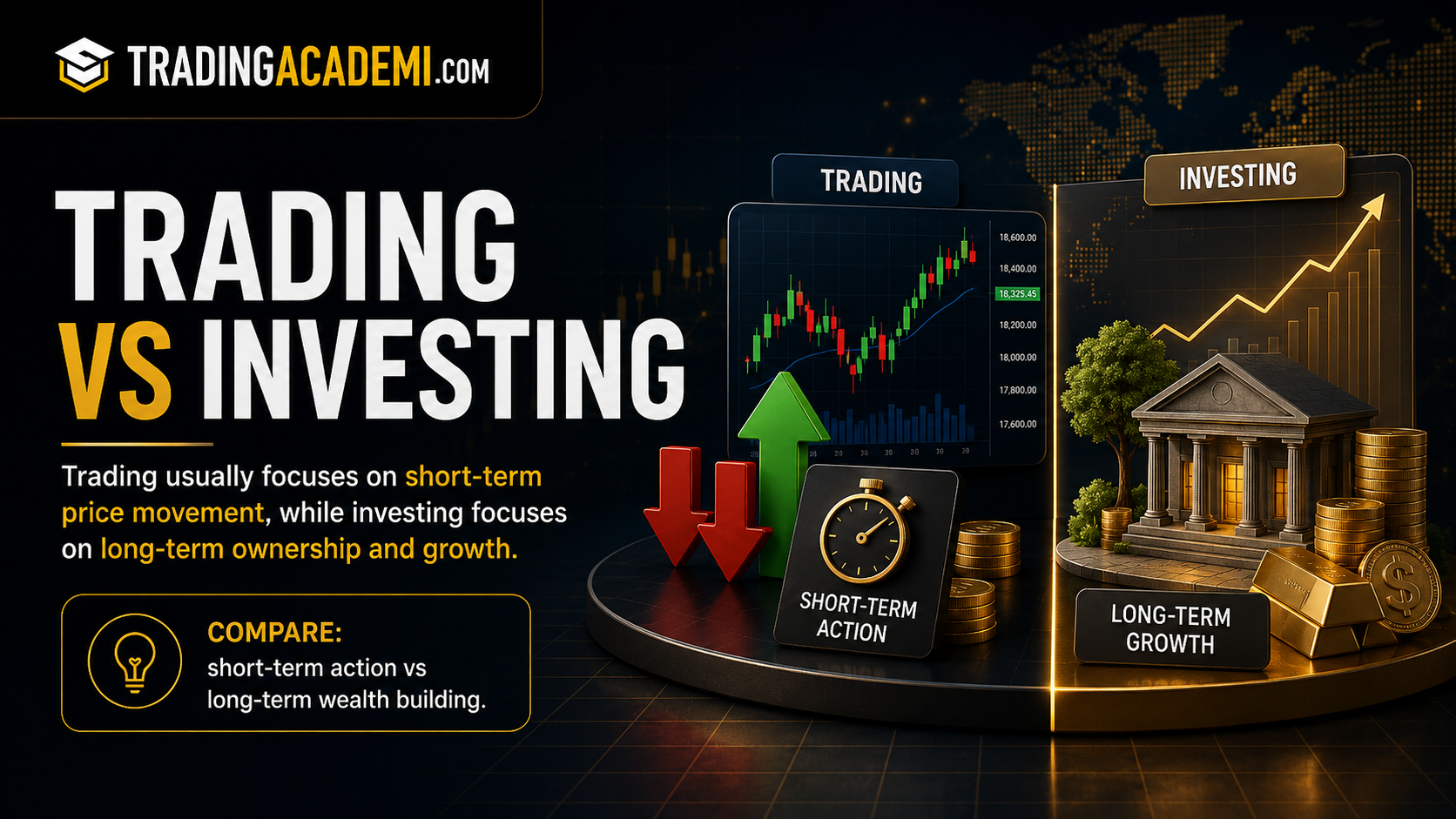
Short-Term Action vs Long-Term Growth
Traders usually care about timing, entries, exits, and risk per trade. Investors usually focus on ownership, fundamentals, and long-term value.
| Topic | Trading | Investing |
|---|---|---|
| Time Horizon | Short-term to medium-term | Long-term |
| Main Goal | Benefit from price movement | Build wealth over time |
| Decision Style | Charts, setups, timing, risk control | Business value, growth, income, fundamentals |
| Risk Focus | Stop losses, position size, trade management | Diversification, long-term value, portfolio risk |
What Can You Trade?
Traders can participate in different financial markets. Each market has its own rules, risks, hours, volatility, and learning curve. Beginners should avoid jumping into every market at once.
Different Markets, Different Risks
Stocks, forex, crypto, commodities, futures, bonds, and derivatives all behave differently. A beginner should learn one market clearly before trying to trade many markets.

The Basic Trading Process
A beginner should not think of trading as simply clicking buy or sell. A real trade should follow a process that helps reduce emotional decisions and gives every trade structure.
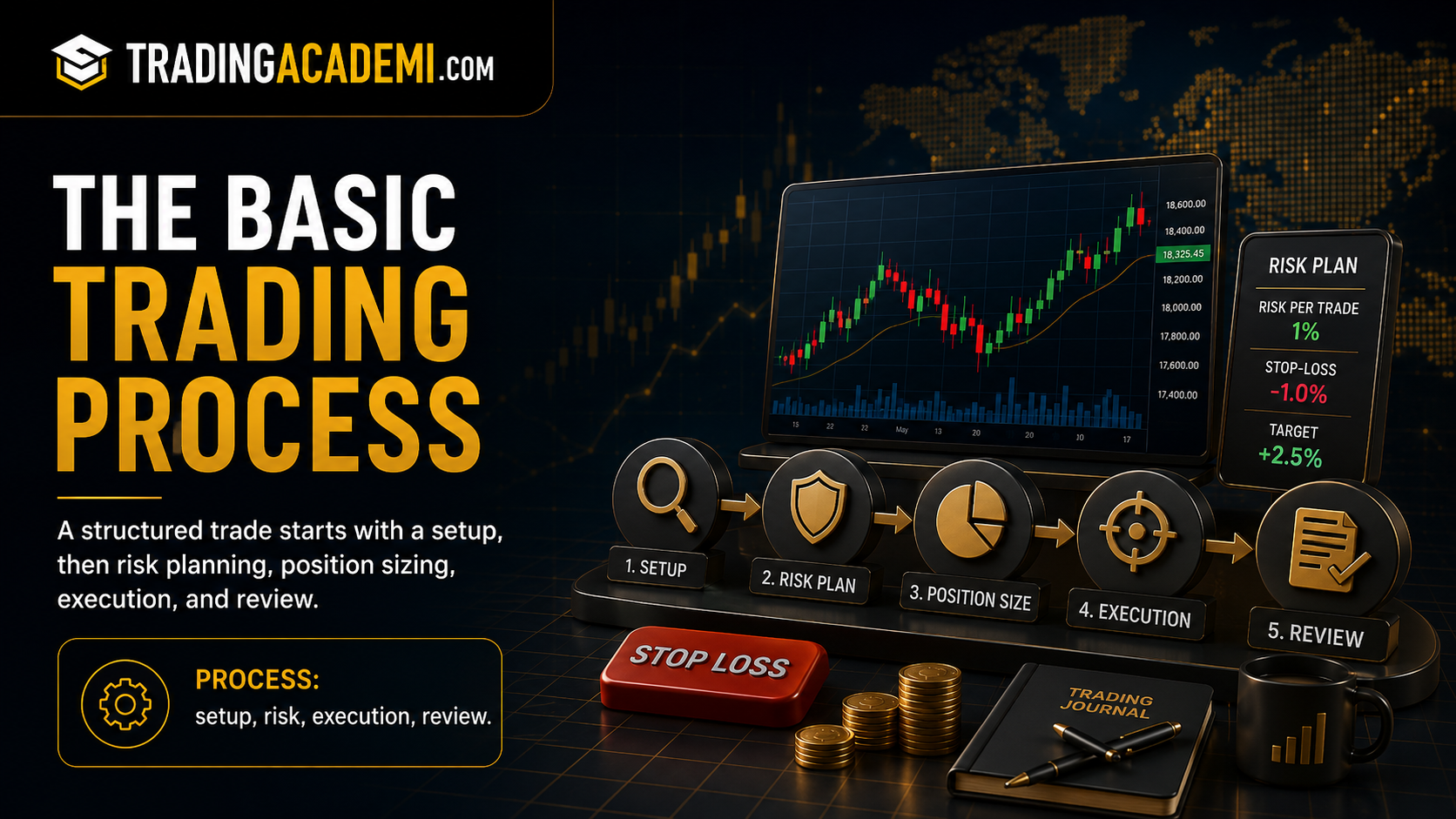
Plan Before You Trade
A structured trade includes a setup, risk plan, position size, execution rule, and review process. This helps reduce emotional decisions.
Find a Setup
Identify a clear opportunity based on your trading strategy and market conditions.
Define Risk
Know your stop loss and how much money you can lose before entering the trade.
Size the Trade
Use proper position sizing so one trade does not damage your account.
Review
Track the result in a trading journal and learn from your decisions.
Why Risk Management Comes First
Many beginners focus first on profit, but experienced traders focus first on risk. A profitable trade is never guaranteed. The only thing you can plan before entering is how much you are willing to lose if the trade is wrong.
Protect Capital First
Risk management keeps you in the game long enough to learn. Without it, even a good strategy can fail because of one oversized loss.
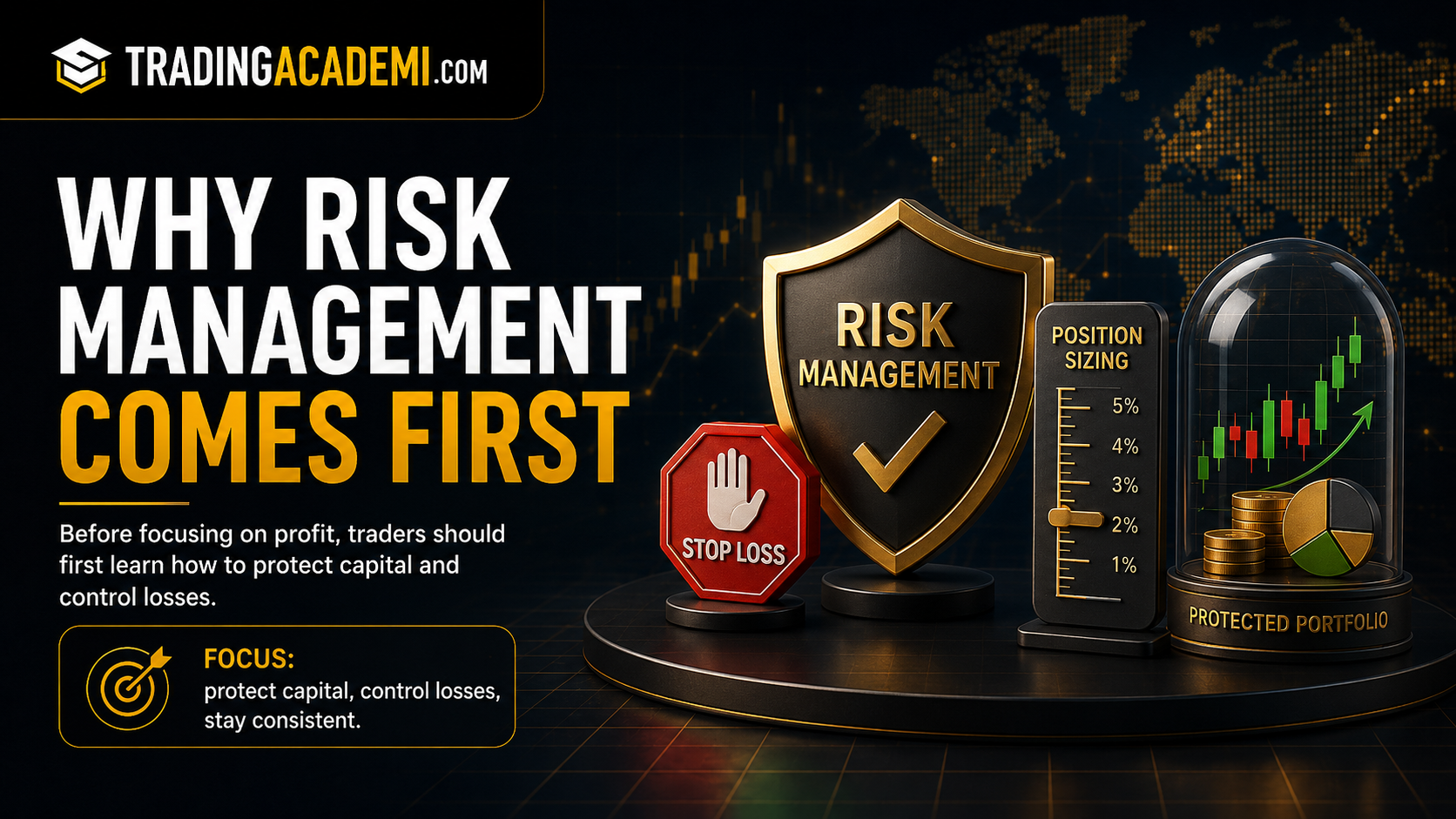
This is why every beginner should study risk management, position sizing, stop loss orders, risk-to-reward ratio, and drawdown control.
Common Beginner Trading Mistakes
Most beginner mistakes come from rushing, overconfidence, poor risk control, or trading without a plan. Learning these mistakes early can help you avoid unnecessary losses.
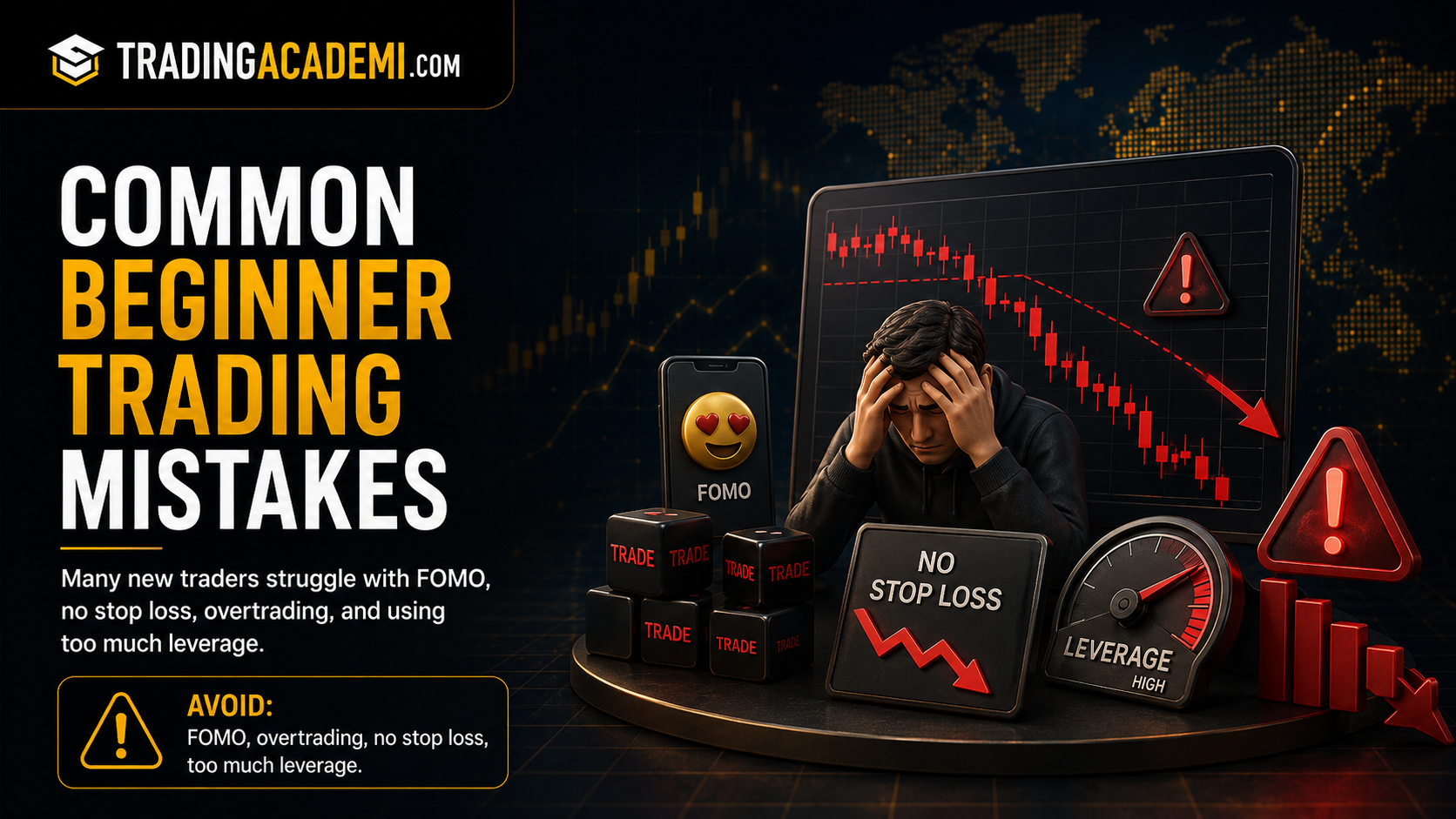
Avoid the Classic Mistakes
Beginner losses often come from behavior, not only market movement. A clear plan can help reduce impulsive trades and emotional decisions.
A clear trading plan, strong emotional discipline, and a consistent trading journal can help beginners reduce repeated mistakes and improve over time.
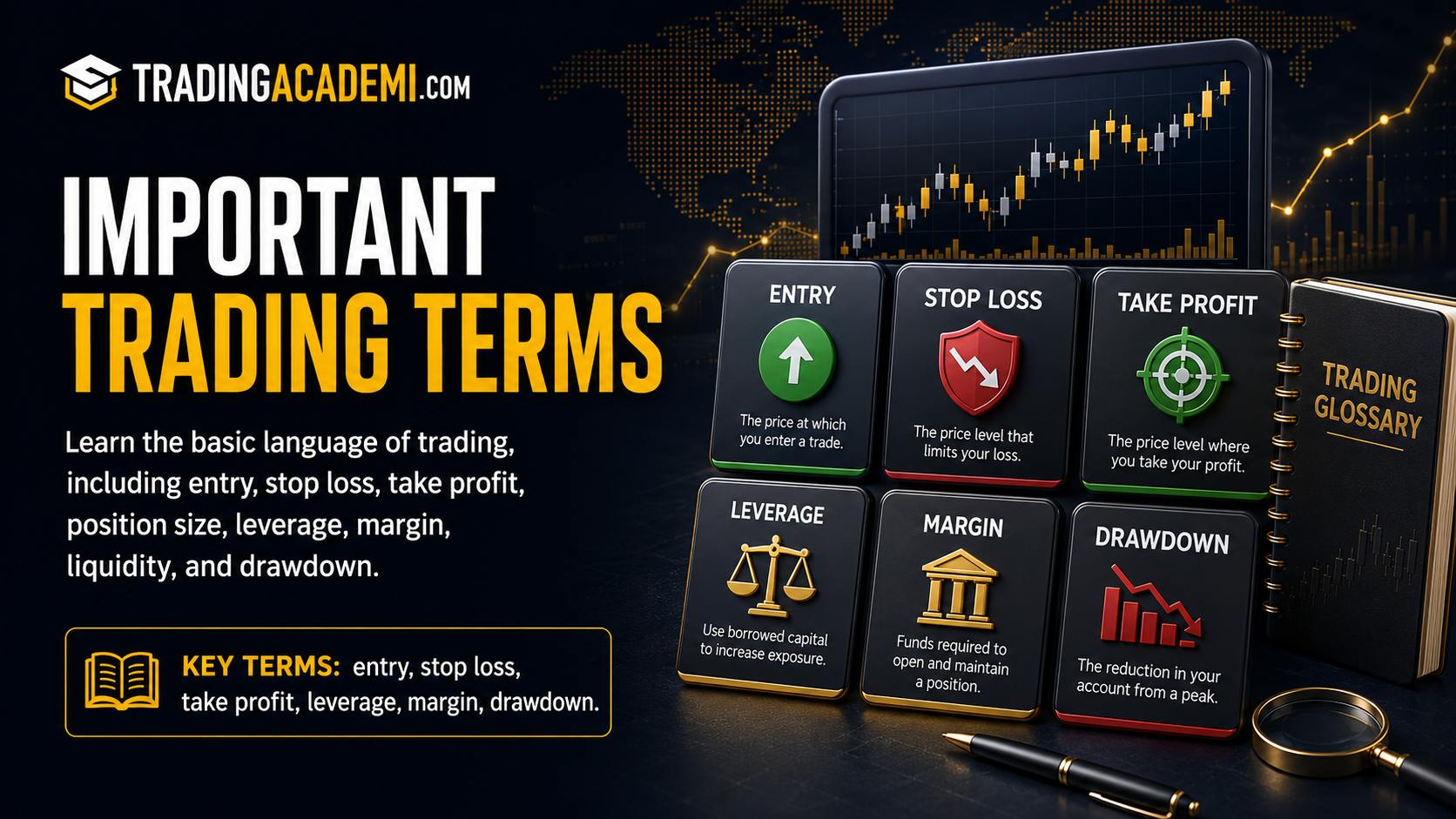
Important Trading Terms Beginners Should Know
Trading has its own language. Understanding common terms helps you read articles, follow lessons, and understand market discussions.
Learn the Language
Before trading real money, beginners should understand basic terms such as entry, stop loss, take profit, position size, leverage, margin, drawdown, and liquidity.
Basic Terms
Risk Terms
Final Thoughts
Trading is the act of buying and selling financial assets based on price movement, expectations, and market opportunity. It can be exciting, but it can also be risky if you trade without knowledge, discipline, and a clear plan.

Learn First, Trade Later
A strong foundation matters. Learn how markets work, understand why prices move, manage your risk, and build discipline before focusing on bigger profits.
Beginners should not rush into trading only because they see charts moving or other people talking about profits. The best first step is not to ask, “How much money can I make?” The better question is, “How can I learn to trade responsibly and protect my capital while improving?”
Educational Disclaimer
This article is for educational purposes only and should not be considered financial advice. Trading and investing involve risk, including the possible loss of capital. Always do your own research or consult a qualified financial professional before making financial decisions.
Start With the Right Foundation
Now that you understand what trading is, continue by learning the different types of financial markets and the risk management rules every beginner should know.
Explore Types of Markets →