 By Anzo Trader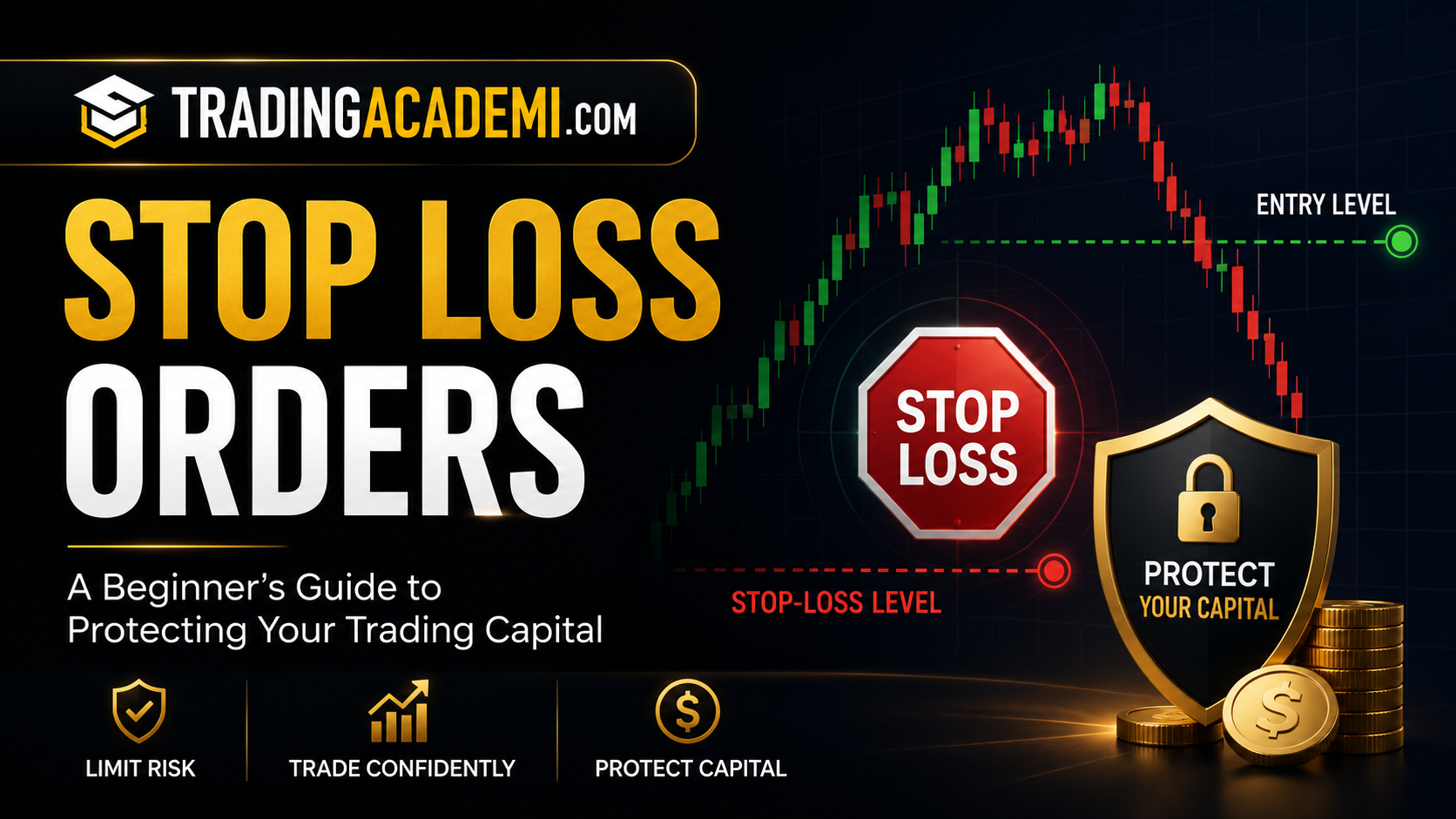
A stop loss order is one of the most important tools a trader can use to manage risk. Many beginners enter trades thinking mainly about the profit target. They look at a chart and imagine how much they could make if the market moves in the right direction. But before thinking about profit, every trader should ask a more important question: where will I exit if this trade is wrong?
That is where the stop loss comes in.
A stop loss helps define the point where your trade idea is no longer valid. Instead of hoping the market comes back, a stop loss gives you a planned exit. It helps protect your capital, reduce emotional decisions, and prevent one losing trade from becoming a serious account problem.
Stop losses are not perfect. They do not guarantee that you will avoid losses completely. In fast-moving markets, slippage can happen. In volatile markets, price can hit your stop and then reverse. But even with these limitations, stop losses remain one of the most useful tools for both beginner and experienced traders.
In this guide, you will learn what a stop loss order is, how it works, why it matters, where traders usually place stop losses, common mistakes to avoid, and how stop losses connect with position sizing, risk-to-reward, and overall risk management.
What Is a Stop Loss Order?
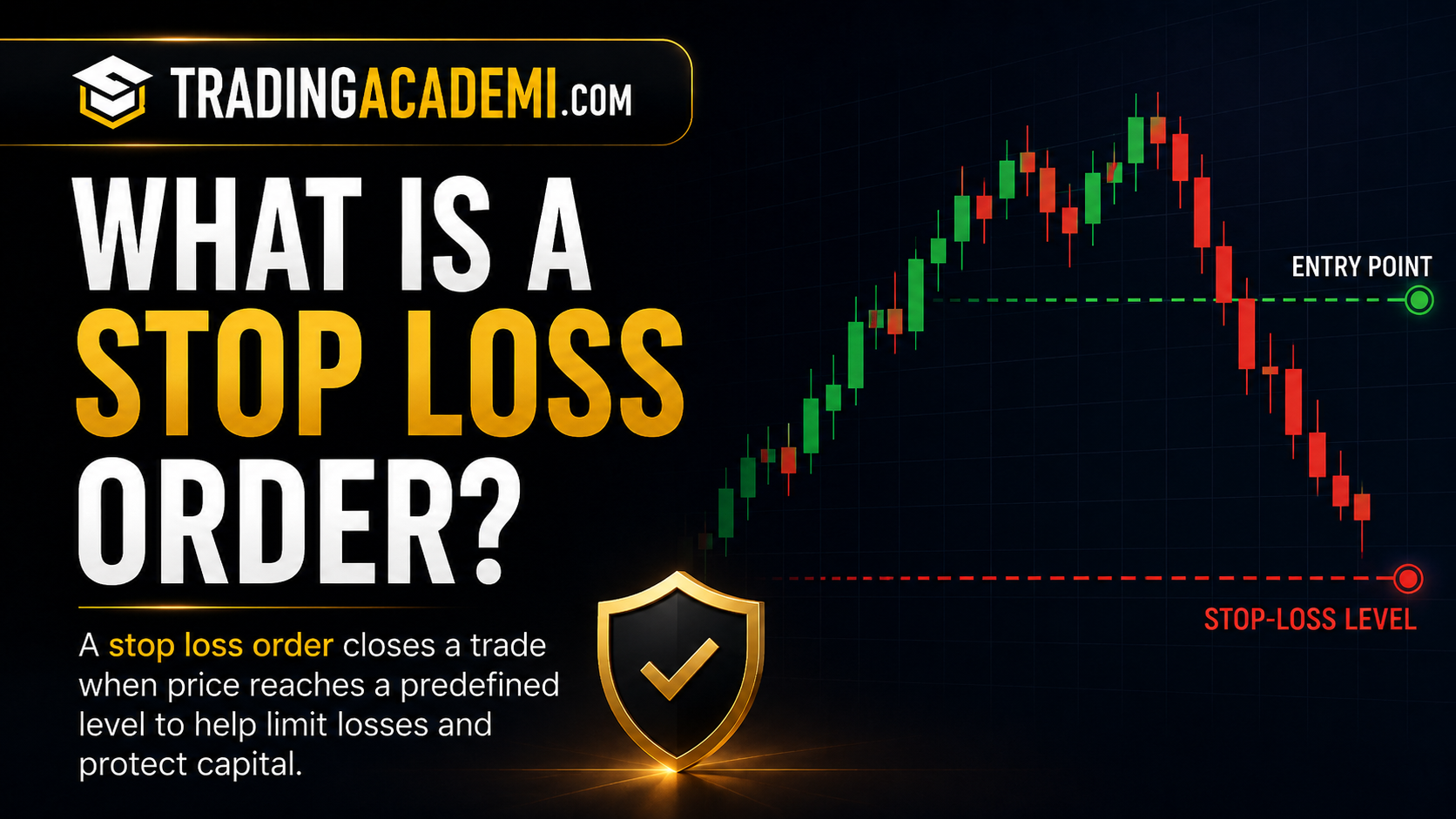
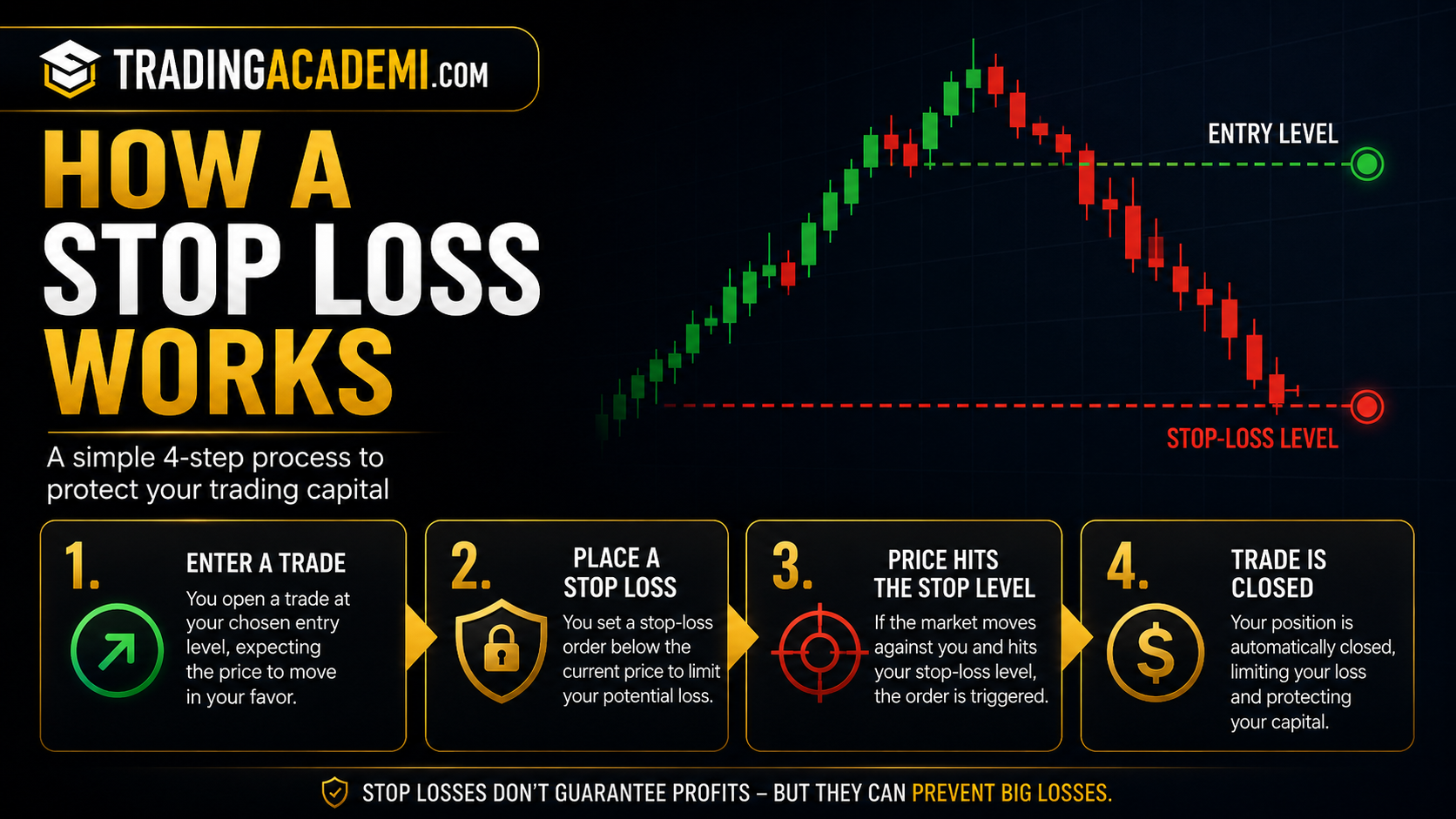
A stop loss order is an instruction that closes a trade when the market reaches a specific price level. The purpose of a stop loss is to limit the amount you can lose on a trade.
For example, imagine you buy a stock at $50. You decide that if the price drops to $48, your trade idea is wrong. So you place a stop loss at $48. If the market falls to that level, the stop loss is triggered and the trade is closed.
This means your loss is planned before the trade begins.
A stop loss is not only a technical tool. It is also a discipline tool. It helps you avoid staying in a losing trade just because you hope the price will recover.
In trading, hope is not a strategy. A stop loss gives you a rule.
Why Stop Loss Orders Matter
Stop loss orders matter because the market does not always move the way you expect. No trader can predict every price movement. Even a good setup can fail, a strong trend can reverse, and a clean technical level can break.
Without a stop loss, a small loss can become a large loss. A large loss can lead to panic, and panic can lead to revenge trading, overtrading, or breaking your trading plan.
A stop loss helps prevent this chain reaction. It gives you a clear point where you accept that the trade did not work.
Good traders do not avoid losses completely. They manage losses before those losses become too large. That is why stop loss orders are a key part of risk management in trading.
How a Stop Loss Works
A stop loss works by triggering an exit when price reaches your stop level. The exact process depends on the order type and the broker or trading platform you use.
In many cases, a stop loss becomes a market order once the stop price is reached. This means the trade is closed at the best available price.
For example, you may buy at $50 and place a stop loss at $48. If price drops to $48, the stop loss is triggered and your position is closed. In normal market conditions, the exit may happen near $48. But in fast-moving markets, the final fill price may be slightly different. This difference is called slippage.
Slippage can happen in stocks, forex, futures, crypto, and other markets, especially during news events or low-liquidity conditions.
This is why stop losses are important, but they are not magic protection. They help manage risk, but traders still need proper position sizing and market awareness.
Stop Loss vs Stop Limit Order
A regular stop loss order and a stop limit order are not the same.
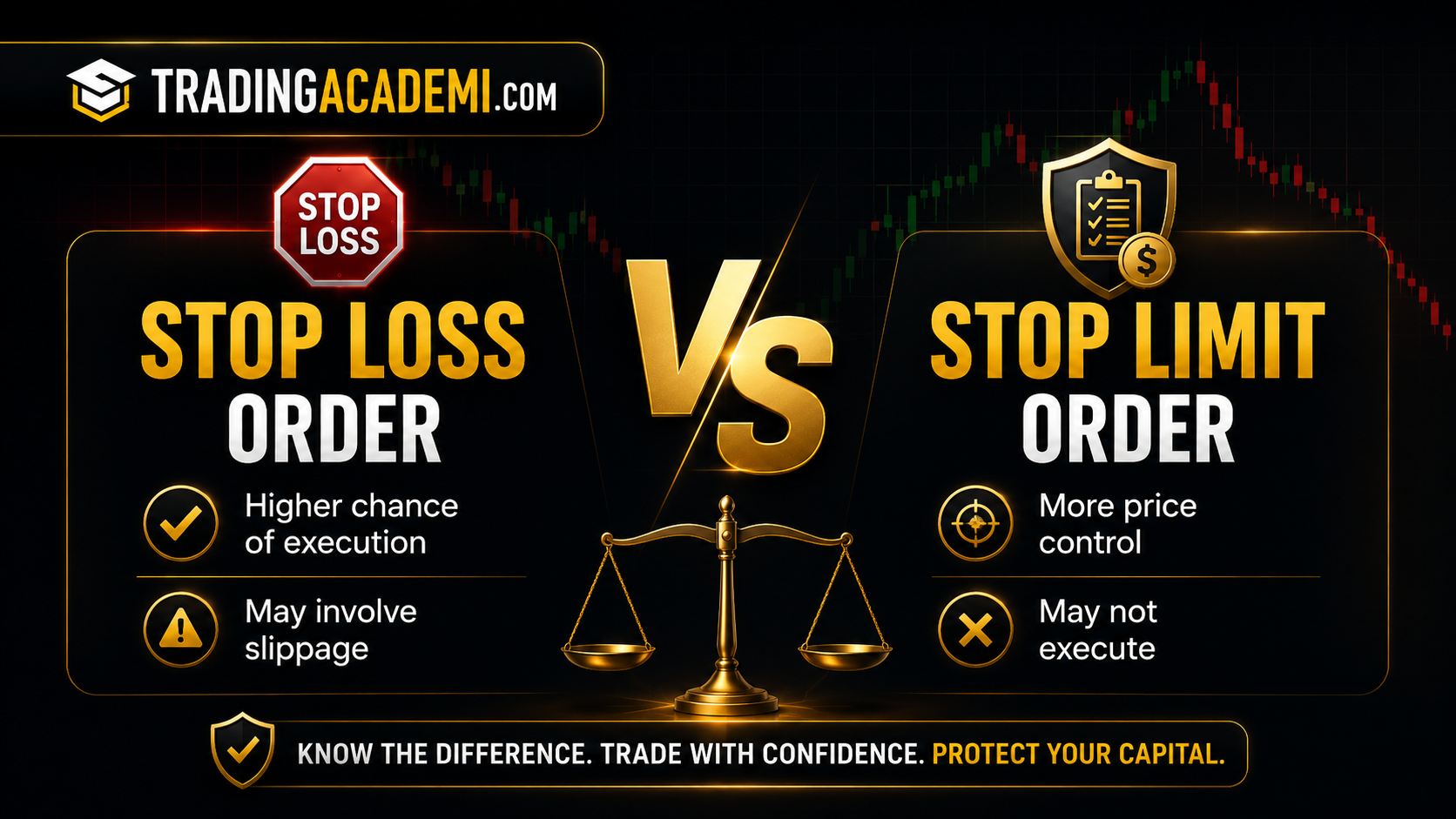
A stop loss order usually becomes a market order after the stop price is reached. This increases the chance of execution, but the final price may be different from the stop level.
A stop limit order triggers a limit order after the stop price is reached. This gives more control over the execution price, but the order may not fill if the market moves too quickly.
| Order Type | Main Advantage | Main Risk |
|---|---|---|
| Stop Loss Order | Higher chance of exit | Possible slippage |
| Stop Limit Order | More price control | May not execute |
For beginners, it is important to understand the difference before using these orders. If your priority is getting out of the trade, a stop loss order may be more practical. If your priority is avoiding a bad fill, a stop limit order may give more control, but it can also leave you stuck in the position.
This connects directly with Market Order vs Limit Order vs Stop Order.
The Main Purpose of a Stop Loss
The main purpose of a stop loss is not to predict the perfect exit. The main purpose is to define your risk.
A stop loss tells you where the trade is invalid, how much you could lose, whether the trade is worth taking, what position size you should use, and how the trade fits your risk plan.
Without a stop loss, it is difficult to calculate risk properly. For example, you cannot calculate your correct position size if you do not know the distance between your entry and your stop loss.
This is why stop loss placement and position sizing must work together.
Example of a Stop Loss Order
Imagine you buy a stock at $100. You look at the chart and decide that if price falls below $95, your trade idea is no longer valid. So you place your stop loss at $95.
Your risk per share is:
$100 - $95 = $5If you buy 20 shares, your planned risk is:
20 shares × $5 = $100Now your trade has structure. You know your entry, stop loss, risk per share, and total planned risk.
This is much better than entering a trade and deciding later what to do. A planned loss is easier to manage than an emotional loss.
Where Should You Place a Stop Loss?
One of the biggest questions beginners ask is where they should place their stop loss. There is no perfect answer because it depends on the market, strategy, timeframe, volatility, and trade idea.
However, a stop loss should usually be placed at a logical level where your trade idea becomes invalid. It should not be placed randomly, and it should not be placed only based on how much money you want to risk. It should also not be moved farther away just because you do not want to accept the loss.
A good stop loss often comes from market structure.
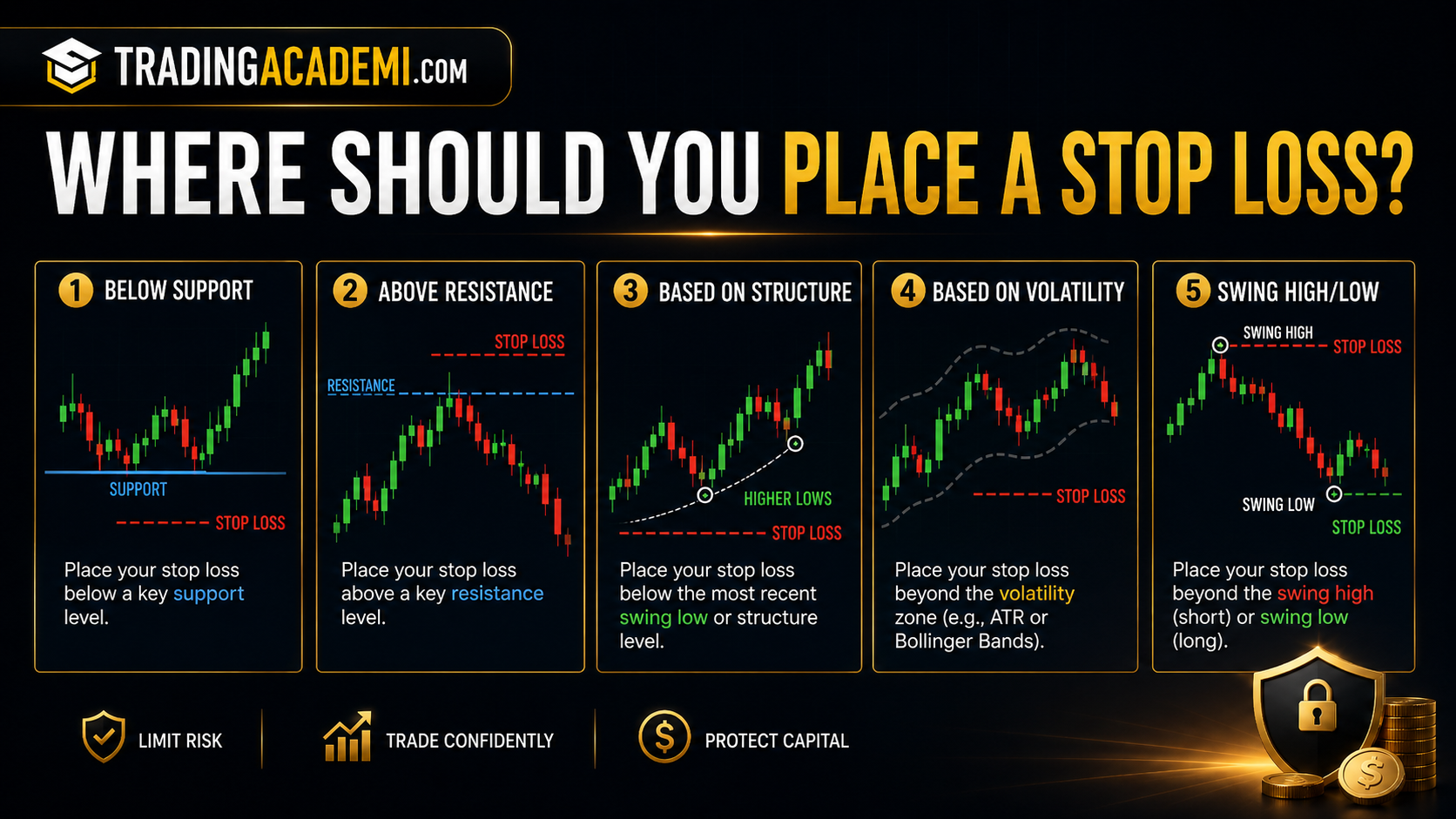
1. Stop Loss Below Support
For a long trade, many traders place a stop loss below a support level. Support is an area where buyers may step in and price may bounce. If price breaks below support, the trade idea may become weaker.
For example, if a stock is trading at $50 and support is near $48, a trader may place the stop loss below $48, maybe around $47.80 or $47.50 depending on the strategy.
The idea is simple: if support fails, the reason for the trade may no longer be valid.
2. Stop Loss Above Resistance
For a short trade, traders may place a stop loss above a resistance level. Resistance is an area where sellers may appear and price may struggle to move higher. If price breaks above resistance, the short trade idea may fail.
For example, if a trader shorts a stock at $80 and resistance is near $82, the trader may place a stop loss above $82.
This gives the trade room to move, but it also defines the point where the idea becomes invalid.
3. Stop Loss Based on Volatility
Some traders place stop losses based on volatility. Volatility means how much price normally moves.
If an asset moves a lot, a very tight stop loss may get hit too easily. For example, a crypto asset or a volatile stock may move several percent in a normal session. A tight stop may not give the trade enough room.
Volatility-based stops are designed to avoid being stopped out by normal market noise. Some traders use tools like Average True Range, also known as ATR, to estimate volatility.
The idea is not to place a stop loss too close in a market that naturally moves a lot. This is especially important in markets like cryptocurrency, forex, and futures.
4. Stop Loss Based on Chart Structure
Many traders use chart structure to place stops. This may include swing lows, swing highs, trendlines, support and resistance, breakout levels, consolidation zones, or previous candle highs and lows.
For example, if you enter a long trade after a breakout, you may place your stop loss below the breakout level or below the recent swing low. The logic is that if price returns below that structure, the breakout may have failed.
This type of stop loss is based on the market’s behavior, not random numbers.
5. Time-Based Stop Loss
Not every stop loss is based only on price. Some traders use a time-based stop, which means they exit a trade if it does not move as expected within a certain time.
For example, a day trader may enter a trade expecting a strong move during the morning session. If the market stays flat for too long, they may exit even if the price stop has not been hit.
A time-based stop can help avoid staying in low-quality trades, but beginners should be careful. A time-based exit still needs clear rules.
Stop Loss and Position Sizing
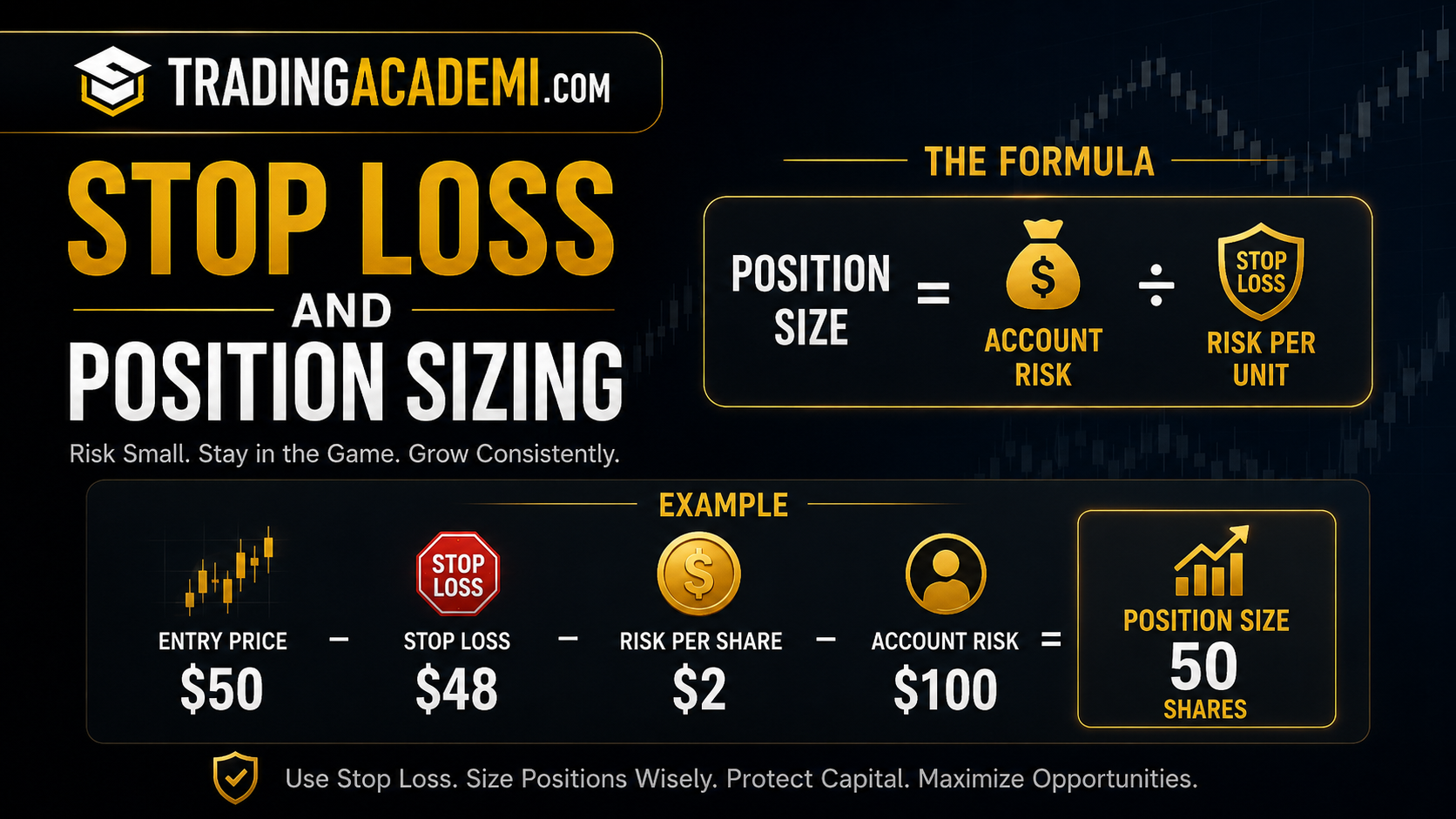
Stop loss and position sizing are connected. Your stop loss tells you the risk per unit, and your position size tells you how many units you can trade.
For example, imagine your account risk is $100. You enter at $50 and place your stop loss at $48. Your risk per share is $2.
The position size calculation is:
$100 ÷ $2 = 50 sharesIf your stop loss is wider, your position size should usually be smaller. If your stop loss is tighter, your position size may be larger, but only if the stop is logical.
A common mistake is choosing a large position first, then placing a tight stop only to reduce risk. This is backwards.
The better process is to choose the trade setup, place a logical stop loss, then calculate position size based on the stop distance. This is explained in more detail in the Position Sizing in Trading guide..
Stop Loss and Risk-to-Reward Ratio
A stop loss also helps calculate your risk-to-reward ratio. Risk-to-reward compares your potential loss with your potential profit.
For example, imagine this setup:
Entry: $50
Stop loss: $48
Target: $54
The risk is $2 per share, and the reward is $4 per share. That creates a risk-to-reward ratio of 1:2, which means you are risking $1 to potentially make $2.
A stop loss gives you the risk side of the equation. Without it, you cannot properly compare risk and reward..
Mental Stop Loss vs Actual Stop Loss
Some traders use a mental stop loss. This means they do not place an actual order in the market, but they decide in their mind where they will exit.
For experienced traders, this may sometimes work. For beginners, it is usually risky because emotions can interfere.
When price reaches the mental stop, the trader may hesitate. They may think the market will come back, wait a little longer, or avoid closing because they do not want to accept the loss.
This can turn a planned small loss into a larger loss. An actual stop loss order can help beginners follow their plan more consistently.
Should You Always Use a Stop Loss?
In active trading, a stop loss is usually an important part of risk control. Day traders, swing traders, forex traders, futures traders, and crypto traders often use stop losses because price can move quickly.
Long-term investors may not always use stop loss orders in the same way. They may manage risk through diversification, position size, asset allocation, and fundamental analysis.
But even investors need an exit plan. A stop loss is one way to manage risk, but the deeper principle is this: you must know when your idea is wrong.
Whether you use a hard stop, mental stop, time stop, or portfolio rule, you need a risk plan..
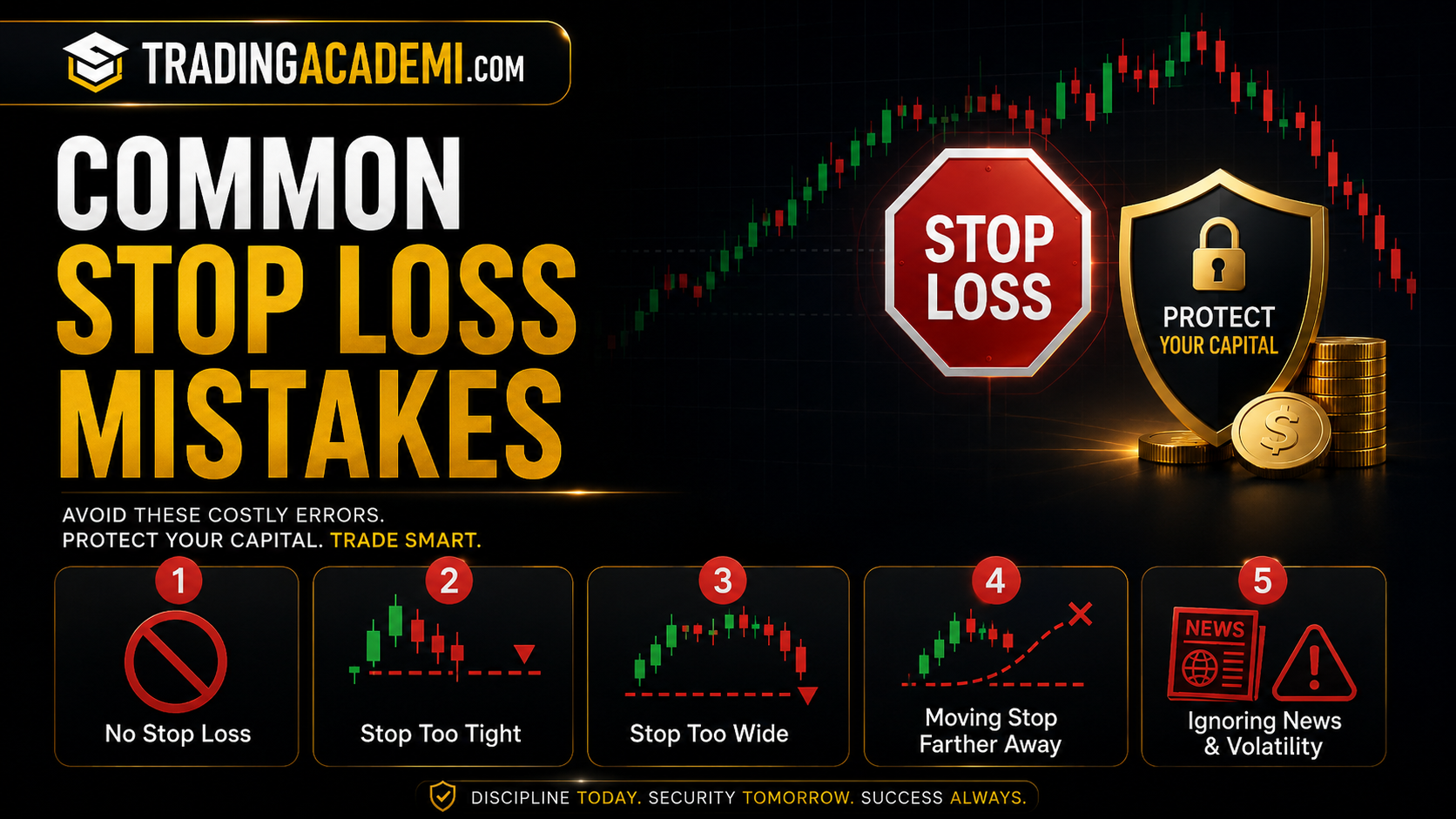
Common Stop Loss Mistakes Beginners Make
One of the most dangerous mistakes is trading without a stop loss. A beginner may enter a trade and say they will close it manually if it goes wrong, but when price moves against them, emotions can take over.
Another common mistake is placing the stop loss too close. Markets do not move in straight lines. They pull back, test levels, and create noise. If your stop is too tight, you may exit good trades too early.
Placing the stop loss too far can also be a problem. Some traders do this because they do not want to be stopped out, but it can create a bad risk-to-reward ratio and make position sizing difficult.
Moving the stop loss farther away is another emotional mistake. A trader places a stop loss, price moves against them, then they move the stop farther away to avoid taking the loss. This usually breaks the trading plan and increases risk after the trade is already going wrong.
Some beginners also use the same stop size on every trade. For example, they always use a $1 stop or a 20-pip stop. But every trade is different. Some assets are more volatile, some setups need more room, and some trades have different structures.
A stop loss should match the market and the setup.
Stop Loss in Different Markets
Stop losses can be used in many markets, but the details can change depending on the asset.
In stock trading, stop losses may be placed below support, below swing lows, or below technical invalidation levels. Stocks can also gap overnight, especially after earnings or news, which means the exit price may be different from the stop level.
In forex, traders often use stops based on pips, structure, or volatility. Because forex often uses leverage, stop losses and position sizing are very important.
In futures, contracts can move quickly and have specific tick values. A stop loss must consider the contract size and the amount of money risked per tick.
In crypto, markets are open 24/7 and can be very volatile. A stop loss may help control downside, but traders must also consider liquidity, exchange reliability, and sharp price spikes.
In options, stop loss decisions can be more complex because options are affected by premium, underlying price movement, time decay, volatility, and expiration.
Stop Loss and Trading Psychology
Stop losses are not only about money. They are also about psychology.
A trader who does not accept losses will often struggle. Losses are part of trading, and a stop loss helps you accept a small planned loss instead of fighting the market.
When you know your risk before entering, you can trade with more discipline. A stop loss also helps reduce fear because the maximum planned loss is already defined and acceptable.
This is why stop loss discipline is closely connected to trading psychology.
How to Build a Stop Loss Plan
A beginner can build a simple stop loss plan by following a clear process.
First, define your trade idea. Then identify the price level where the idea becomes invalid. After that, place the stop loss beyond that level and calculate the risk per unit.
Once you know the risk per unit, calculate your position size and check whether the risk-to-reward ratio makes sense. After entering the trade, avoid moving the stop loss farther away emotionally. Finally, review the trade afterward.
This process helps turn trading from guessing into planned decision-making.
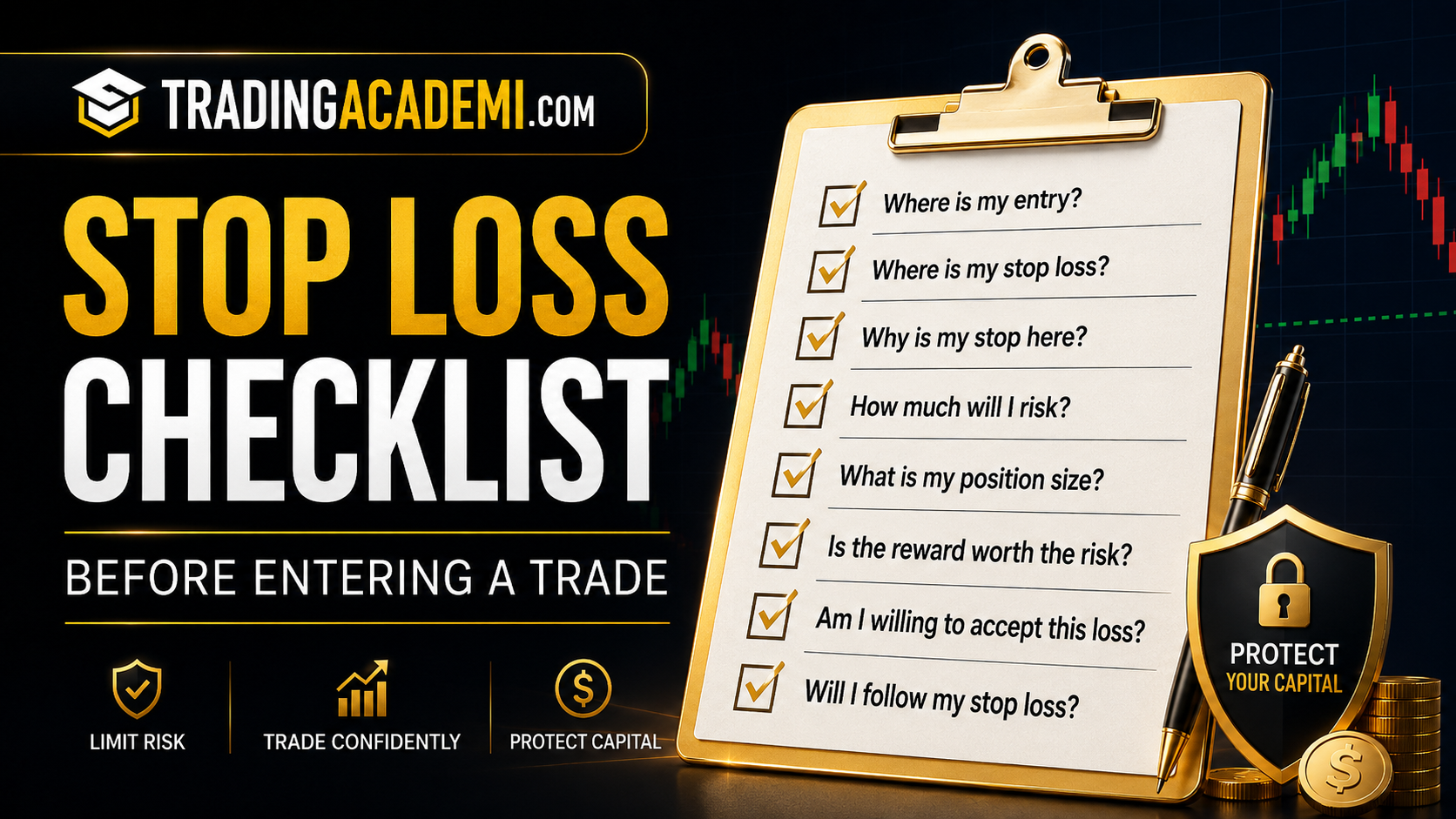
Stop Loss Checklist Before Entering a Trade
Before entering a trade, ask yourself where your entry is, where your stop loss is, and why your stop loss is at that level.
You should also know whether the stop is based on structure or random distance, how much money you will lose if the stop is hit, what your position size is, and whether the reward is worth the risk.
Before entering, check if there is major news that could affect the trade and ask whether you are truly willing to accept the planned loss. If you cannot answer these questions clearly, you may not be ready to enter the trade.
Final Thoughts
A stop loss is one of the simplest but most important tools in trading. It helps you define risk, protect capital, control emotions, and avoid turning small losses into large ones.
A stop loss does not guarantee success. It does not prevent every bad outcome. But it gives structure to your trading decisions.
The best traders understand that losses are part of the game. They do not try to avoid every loss. They try to make sure losses stay controlled.
Before you enter any trade, know your entry, know your stop loss, know your position size, know your risk, and know what you will do if you are wrong.
A stop loss turns an unknown loss into a planned loss. And in trading, planned risk is always better than emotional risk.
Educational Disclaimer
This article is for educational purposes only and should not be considered financial advice. Trading and investing involve risk, including the possible loss of capital. Stop loss orders do not guarantee protection from all losses, especially in fast-moving or low-liquidity markets. Always do your own research or consult a qualified financial professional before making financial decisions.