 By Anzo Trader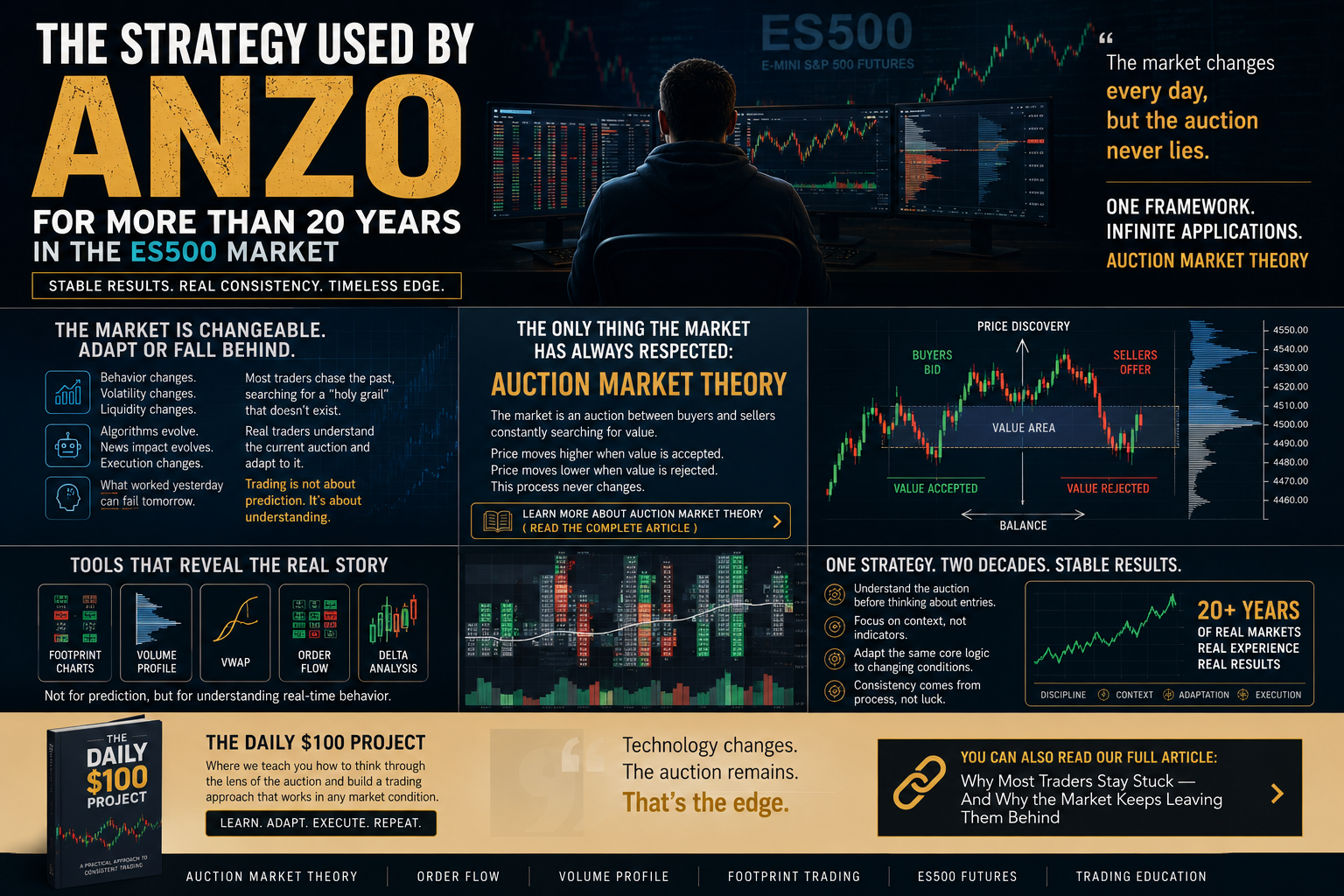
If there is one thing the market has taught me after years of studying, observing, losing, adapting, and evolving, it is this: the market never stays the same. The behavior changes, volatility changes, algorithms change, liquidity changes, and even the reaction to the same economic news changes over time. What worked perfectly years ago can suddenly stop working because the market itself evolves continuously. This is why so many traders spend years jumping from one strategy to another, from one indicator to another, constantly searching for a “holy grail” that does not exist.
Most traders fail because they try to force fixed systems into a market that is constantly changing. They memorize patterns without understanding the logic behind price movement. They learn entries without understanding context. They search for certainty in a business built entirely on probabilities and adaptation. Over time, many traders become trapped inside old concepts, repeating the same outdated methods while the market itself has already moved forward.
That is why I always say that trading is not about prediction. Trading is about understanding the current auction taking place inside the market.
And after all these years, despite every technological evolution, despite algorithms, AI, high-frequency execution, changing volatility, and new market conditions, there is one thing the market has always respected:
Auction Market Theory.
Not because it is a strategy.
Not because it is a magical indicator.
But because it explains the true nature of the market itself.
The market is an auction between buyers and sellers constantly searching for value. Price moves higher when participants accept higher prices and moves lower when value is rejected. This process has existed for decades, and it continues to govern the behavior of financial markets today.
That is why Auction Market Theory is not something that “expires.”
It evolves with the market because it is based on the foundation of how markets operate.
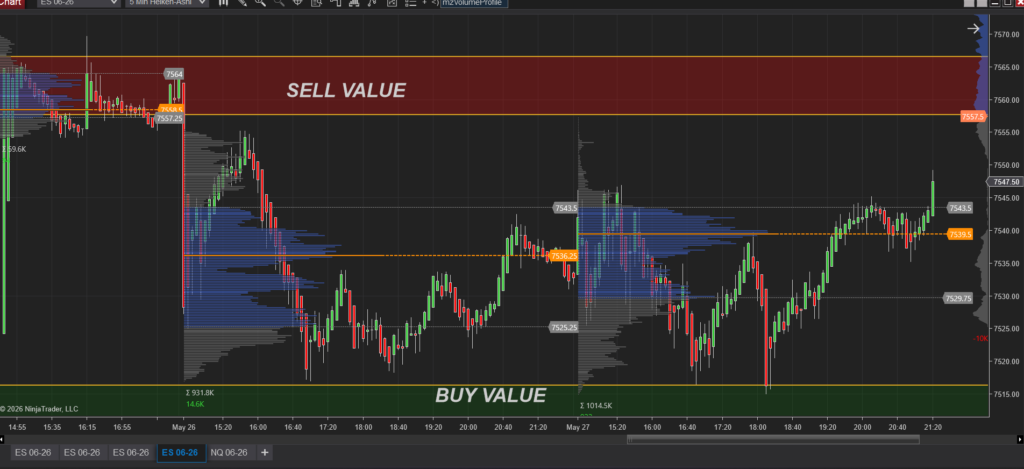
Inside the ES500 market, the strategy I have used for years was never based on blindly buying indicators or chasing random entries. The foundation has always been understanding where the market is located inside the auction. Before thinking about entries, I focus on understanding context. Is the market balanced or imbalanced? Are institutions accepting value higher or rejecting it? Is the current move initiative activity or simply emotional retail participation? Is the market rotating inside value or attempting price discovery outside of value?
These questions matter far more than indicators.
Because once you understand the auction, the chart begins speaking a completely different language.
This is where tools like Volume Profile, Market Profile, VWAP, Footprint Charts, liquidity behavior, delta analysis, and order flow become powerful. Not because they predict the future, but because they reveal what participants are doing in real time.
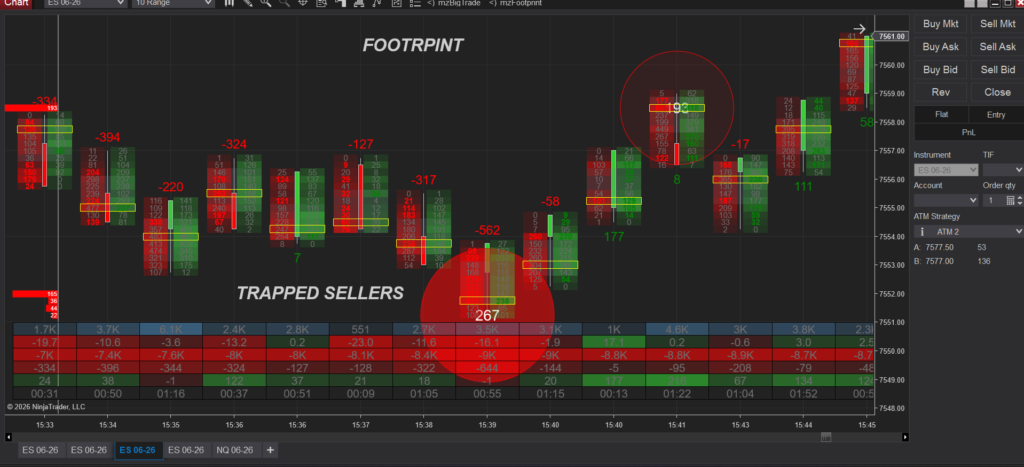
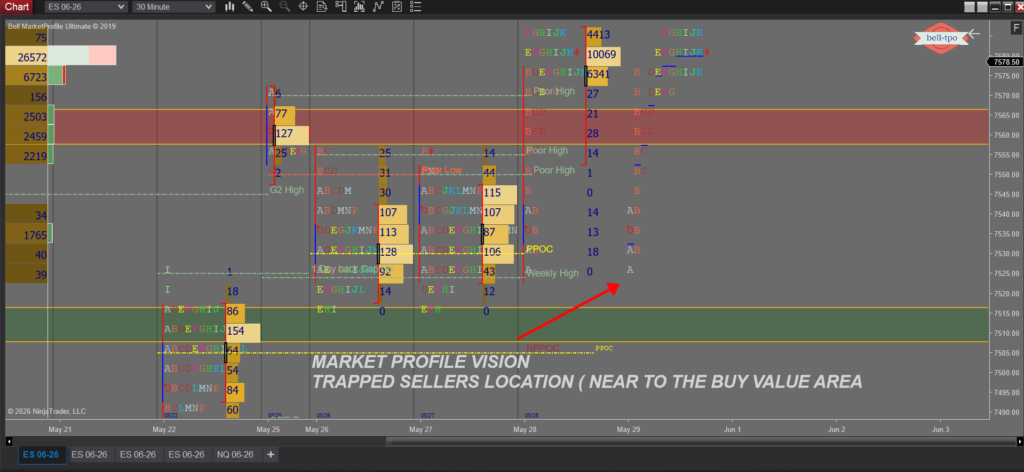
One of the biggest misconceptions in trading is that consistency comes from finding one perfect setup. In reality, consistency comes from understanding how to adapt the same core logic to changing conditions. The market can change volatility, speed, and behavior, but the auction itself remains. Buyers and sellers still negotiate value every single day. That is the edge.
For example, a breakout above value area can look extremely bullish to inexperienced traders, but if the auction fails to gain acceptance above value, that breakout can quickly become a failed auction leading to aggressive reversals. On the other hand, when the market accepts higher prices with strong participation and responsive buyers supporting pullbacks, the auction can continue trending much further than most traders expect.
This is why understanding context is everything.
And this is one of the major concepts discussed deeply inside The Daily $100 Project. The goal was never to create traders who blindly copy setups. The goal was to teach traders how to think through the lens of the auction itself.
Because once you truly understand the auction, you stop chasing the market.
You begin understanding it.
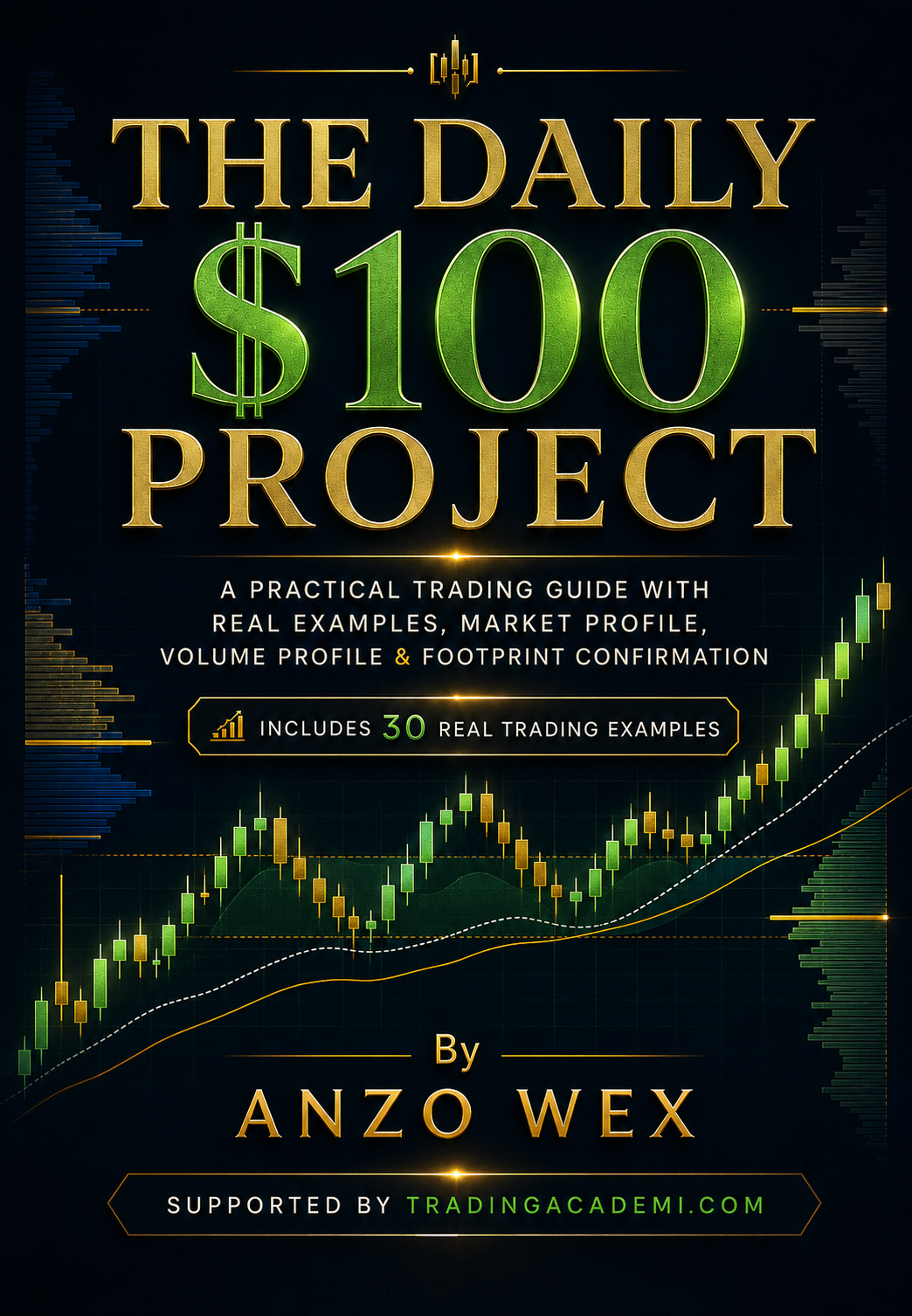
The Daily $100 Project
Stop Guessing. Start Reading the Market With Structure. The Daily $100 Project is designed for traders who are tired of jumping between indicators, strategies, and signals without fully understanding why a trade setup exists....
Description
Stop Guessing. Start Reading the Market With Structure. The Daily $100 Project is designed for traders who are tired of jumping between indicators, strategies, and signals without fully understanding why a trade setup exists....
Stop Guessing. Start Reading the Market With Structure.
The Daily $100 Project is designed for traders who are tired of jumping between indicators, strategies, and signals without fully understanding why a trade setup exists.
Instead of teaching you to blindly follow entries, this ebook shows you how to read the market step by step:
Understand the Context → Identify the Location → Wait for Footprint Proof
Across more than 250 pages, you’ll learn how Auction Market Theory, Market Profile, Volume Profile, VWAP, and Footprint Confirmation work together to create a more structured trading process.
You’ll discover how to:
- Read market context before looking for entries
- Identify meaningful support, resistance, and value areas
- Understand acceptance, rejection, and failed auctions
- Use Volume Profile and Market Profile more effectively
- Interpret VWAP in context
- Read delta shifts, stacked imbalances, absorption, and failed continuation
- Use Footprint confirmation before execution
- Build a repeatable trading routine
- Improve discipline, patience, and risk management
- Study real chart examples and practical scenarios
The goal is not to follow more signals. The goal is to understand why the trade exists.
With The Daily $100 Project, you’re building a process you can study, repeat, review, and improve over time.
Author: ANZO WEX
Supported by: TradingAcademi.com
Risk Disclaimer: This ebook is for educational purposes only. Trading involves risk, and profits or specific results are never guaranteed.
- 266
- May 12, 2026
Even today, after all these years, the ES500 market still respects the same core principles of Auction Market Theory. Technology changed. Execution changed. Speed changed. But the auction remains alive.
And that is exactly why this approach continues to produce stable results over time.
Not because the market stays the same.
But because the strategy is built on understanding the one thing the market can never escape:
The auction itself.