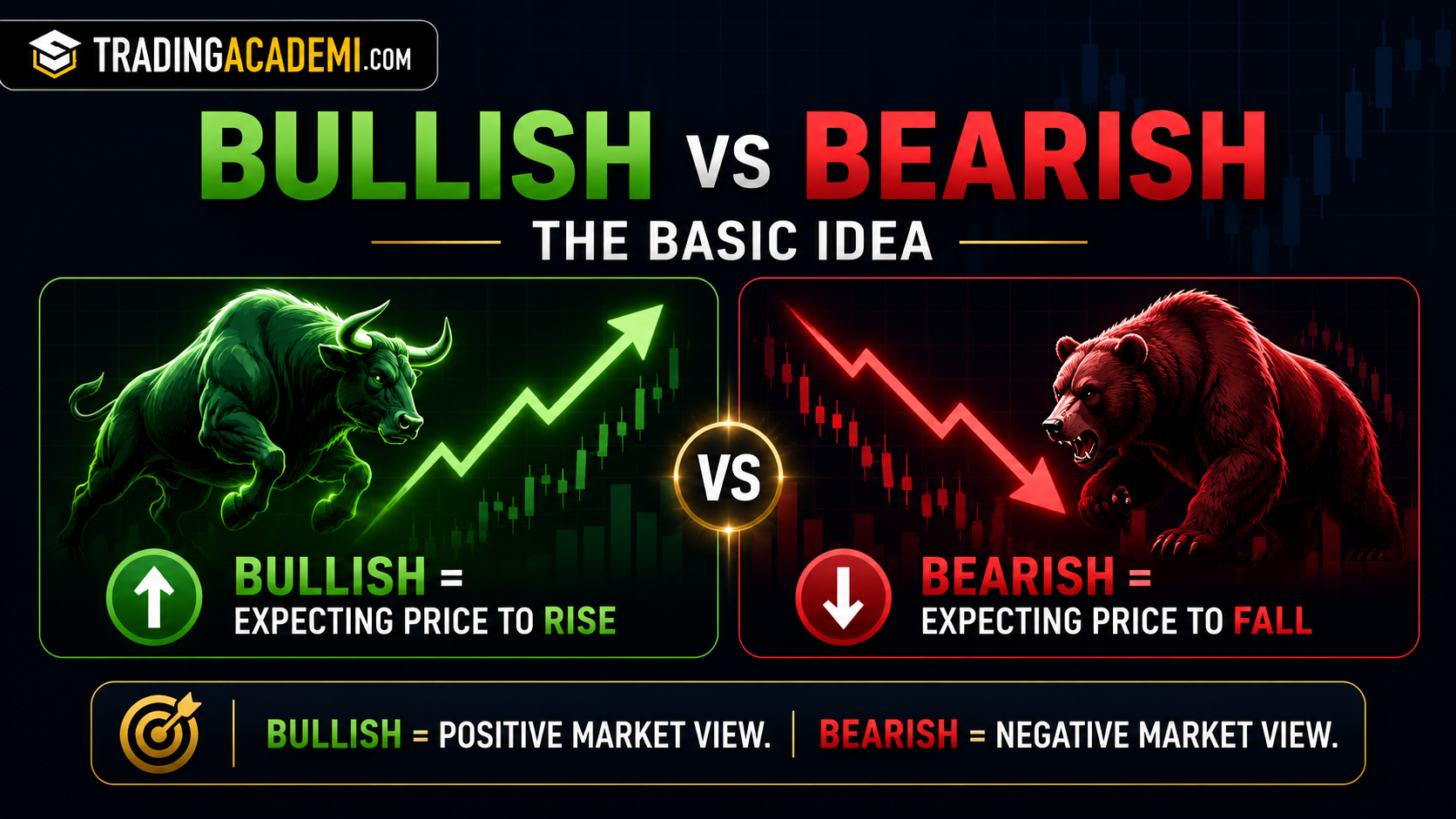
 Market Direction
Bullish vs Bearish Meaning in Trading
Learn what bullish and bearish mean, how they describe market direction, and how traders use them to understand buyer and seller control.
Read Lesson
Master the essential trading terms every beginner needs to understand before reading charts, placing orders, or building a trading plan.
Market DirectionLearn what bullish and bearish mean, how they describe market direction, and how traders use them to understand buyer and seller control.
Read Lesson Trade Direction
Understand the difference between going long and going short, when traders use each direction, and how risk works on both sides.
Read Lesson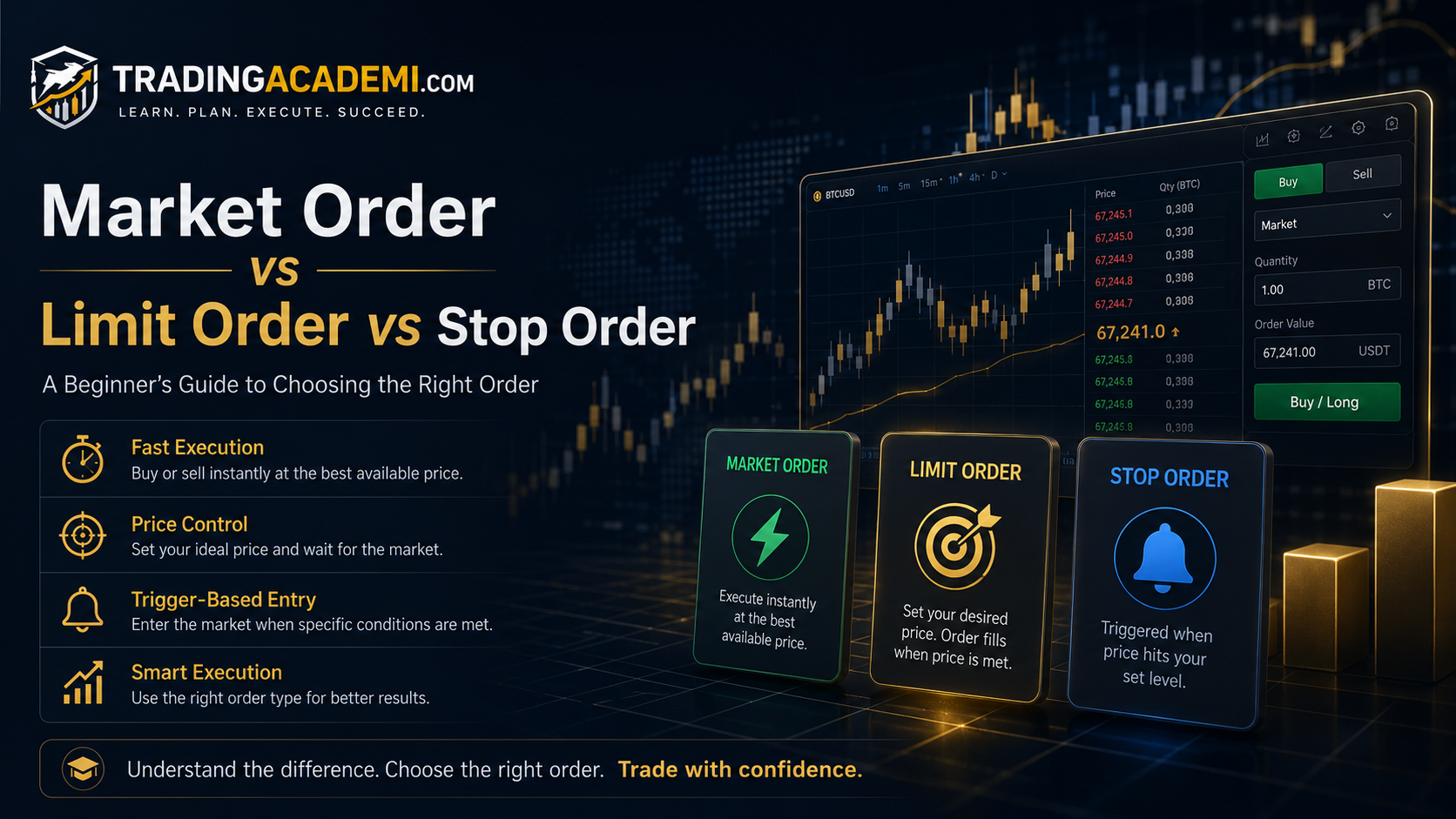 Order Types
Learn how market, limit, and stop orders work, how traders use them, and why choosing the right order type matters for execution.
Read Lesson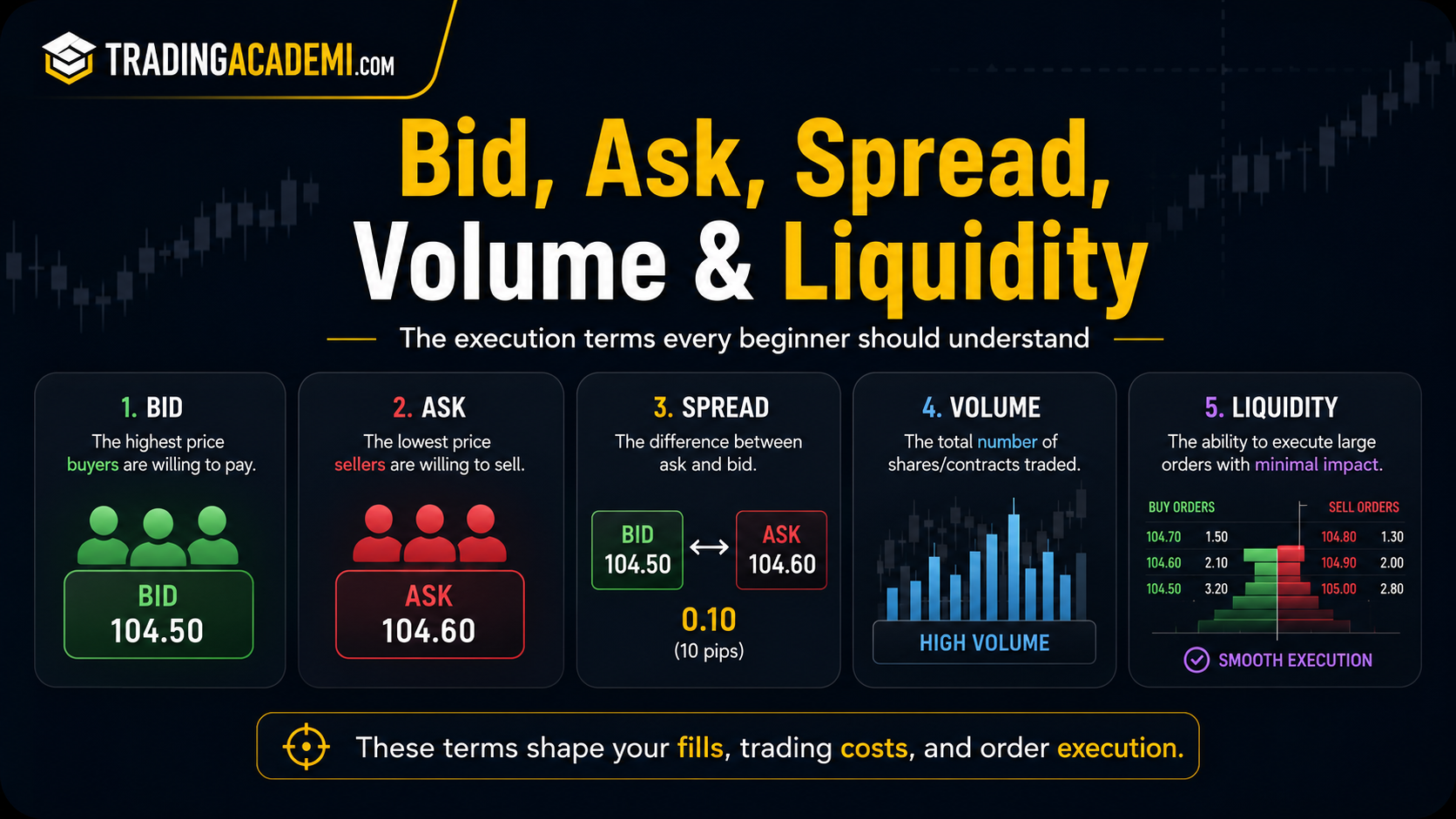 Execution Basics
Discover how bid, ask, spread, volume, and liquidity affect trading costs, slippage, market activity, and order execution.
Read Lesson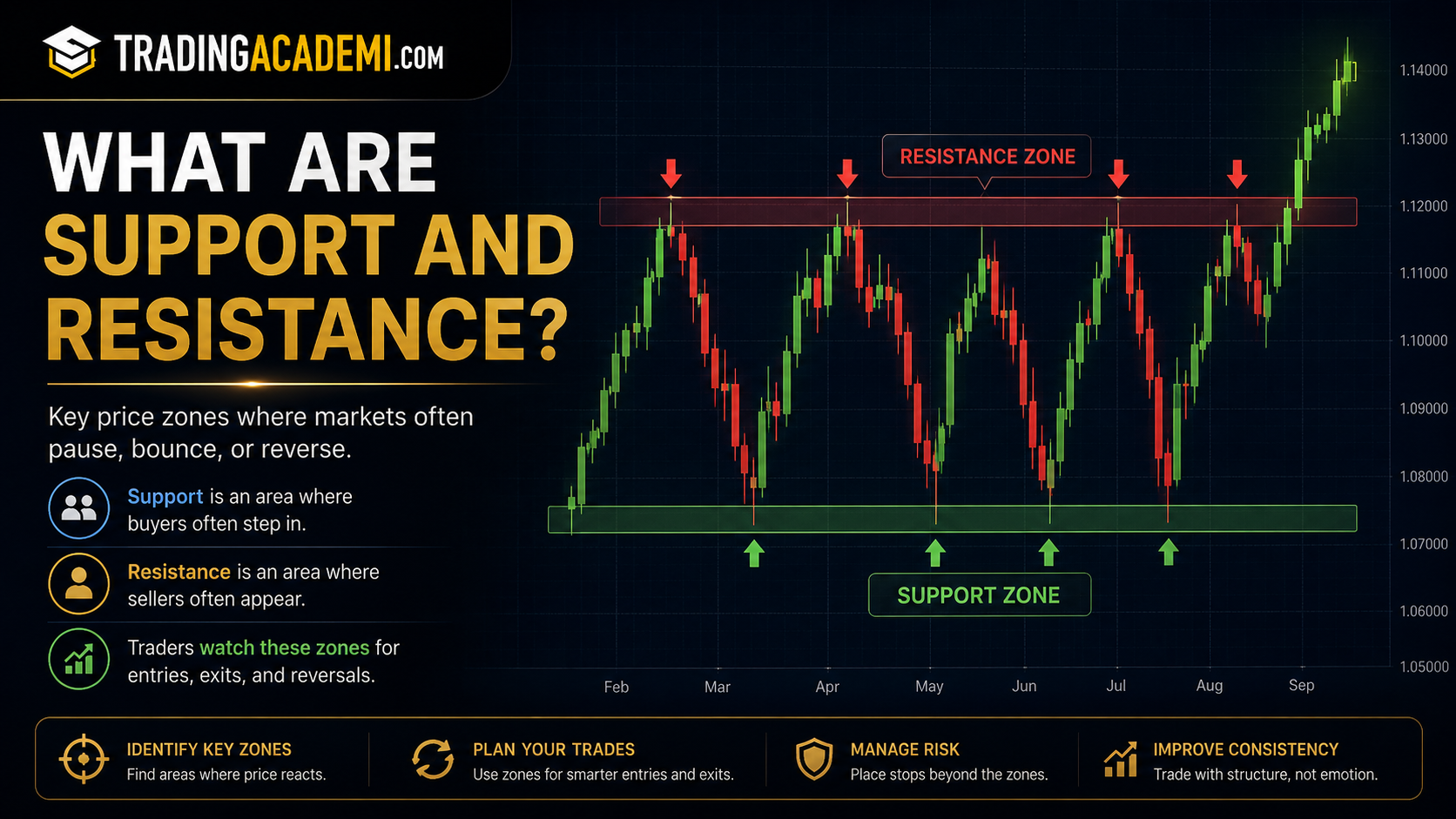 Chart Levels
Learn how support and resistance zones help traders identify possible bounces, rejections, breakouts, entries, exits, and risk levels.
Read Lesson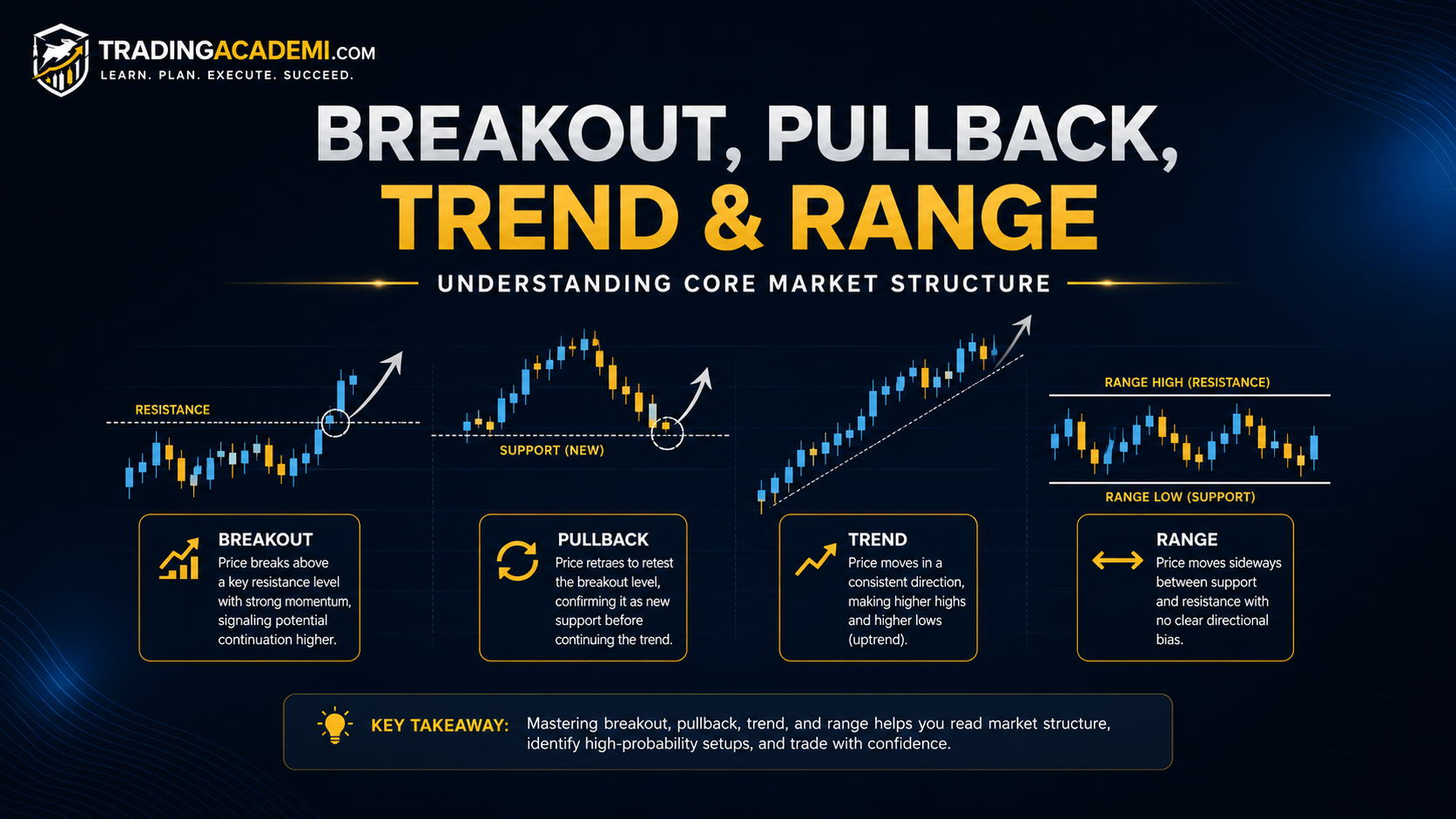 Market Structure
Understand core market structure by learning how breakouts, pullbacks, trends, and ranges appear on real trading charts.
Read Lesson